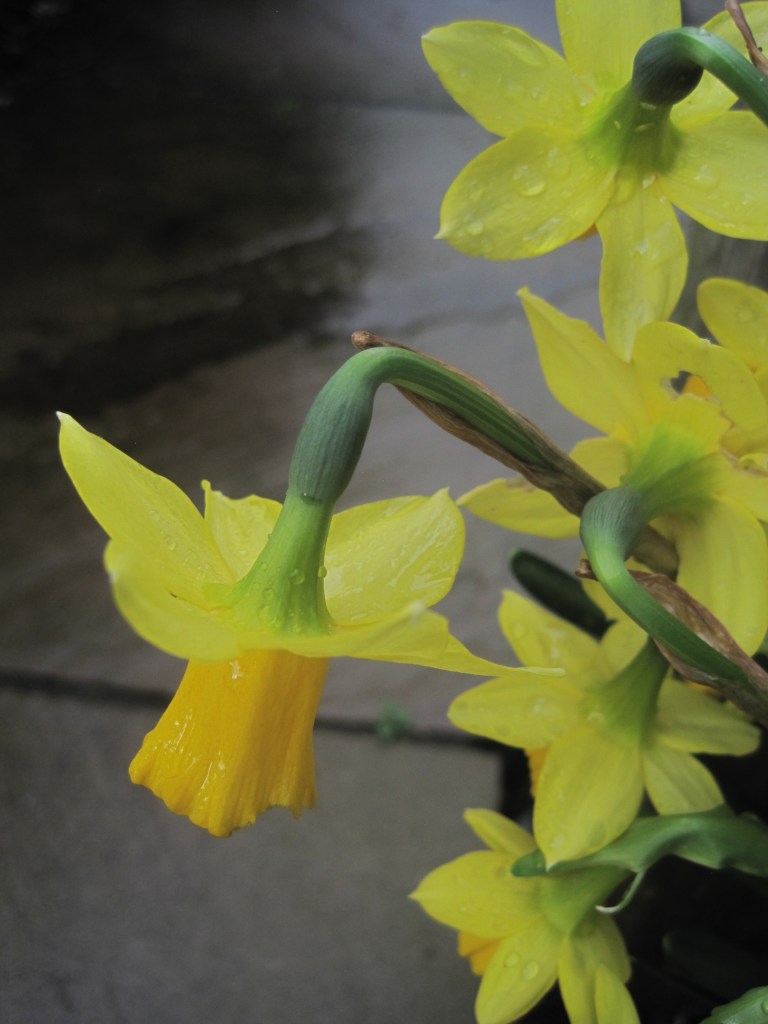
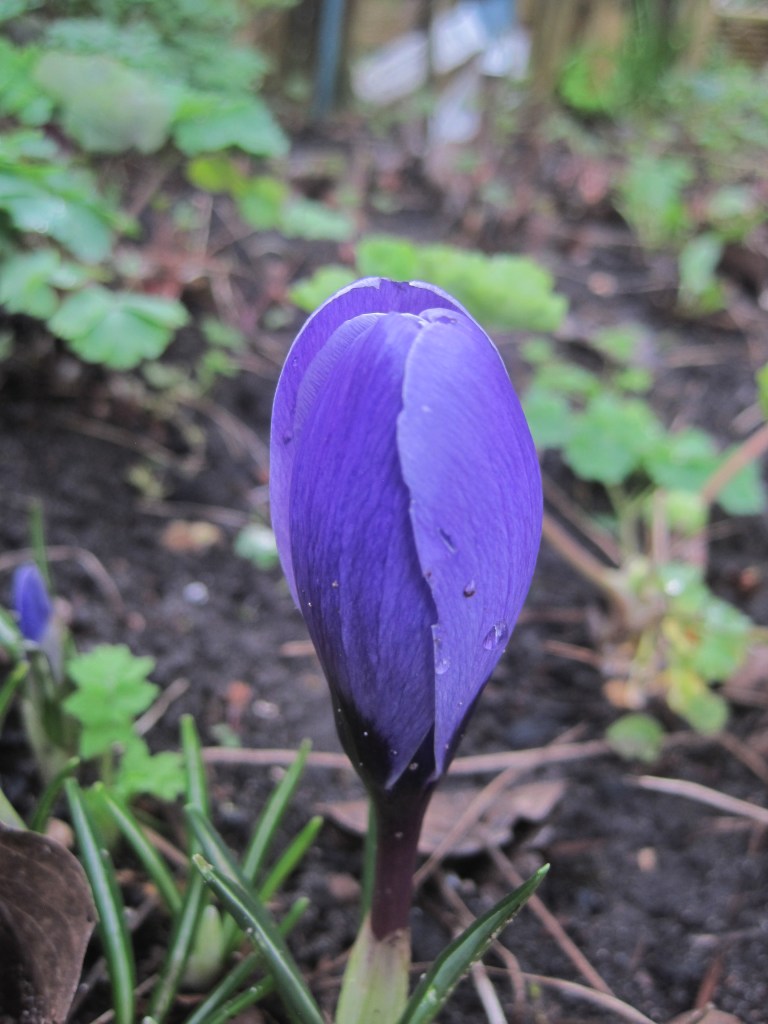
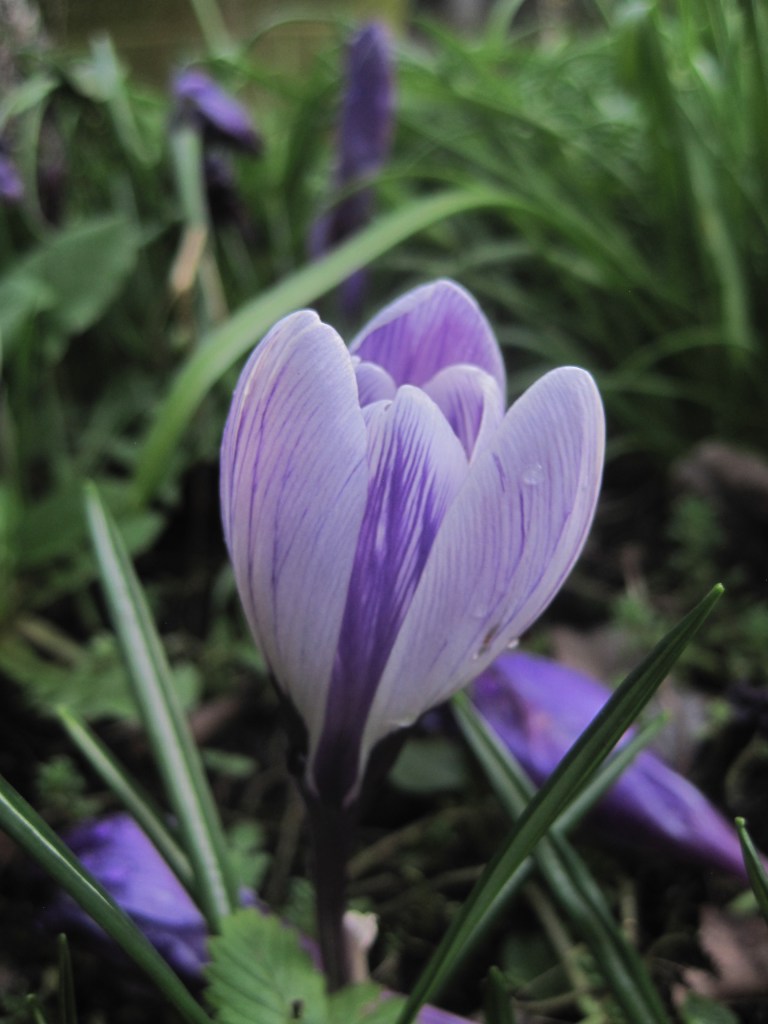
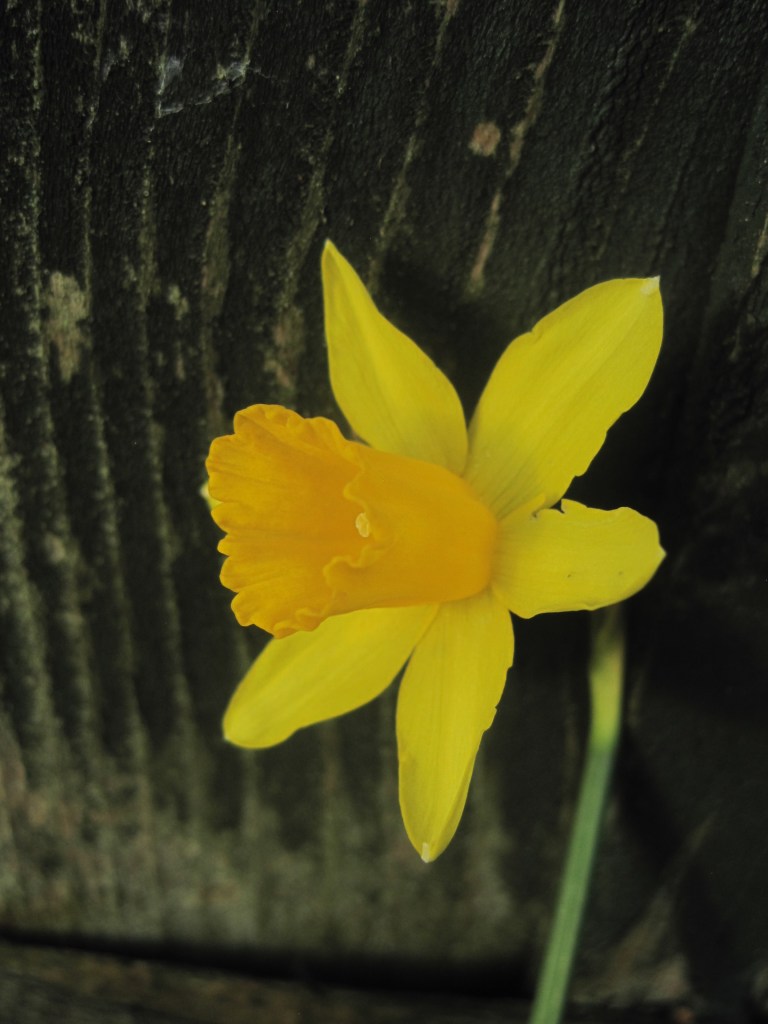
This time of year is what old gardeners call a “fool’s Spring”. Flowers appear and people insist that Spring has arrived. Not yet, it’s too early for Spring.
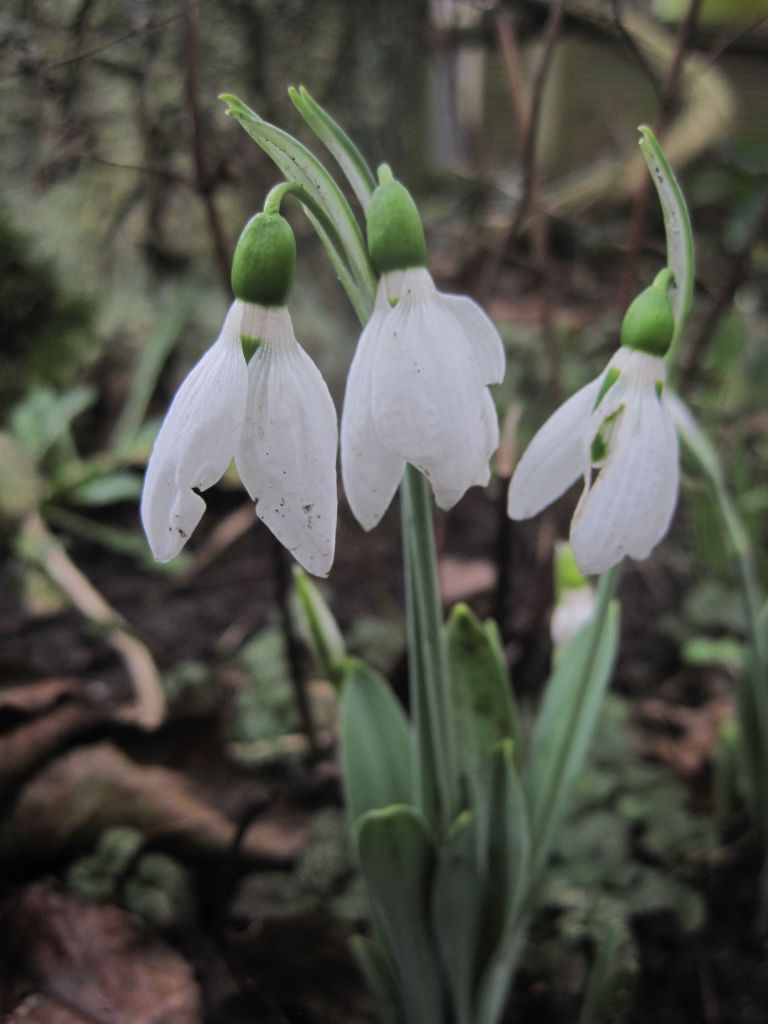
The beautiful Winter flowers, like snowdrops, crocuses and very early daffodils are very welcome and brighten the dreary days, but the Vernal Equinox isn’t until March 20th. That’s when Spring really does begin with much more to follow. Meanwhile let’s celebrate these glorious colours and enjoy the show.
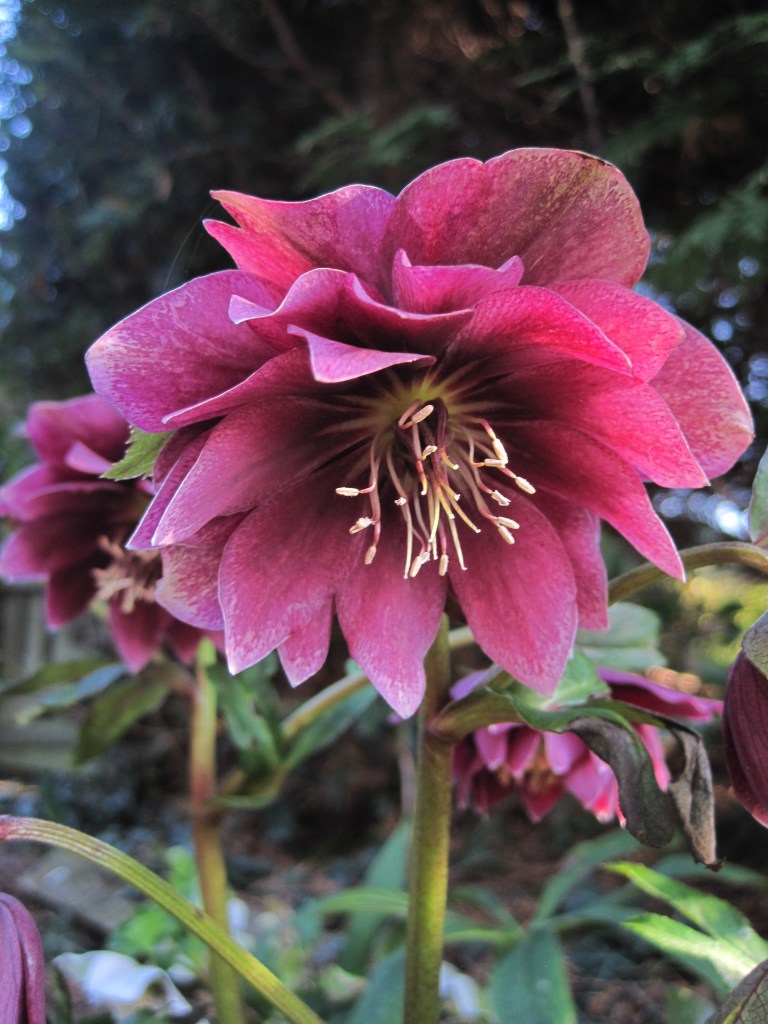
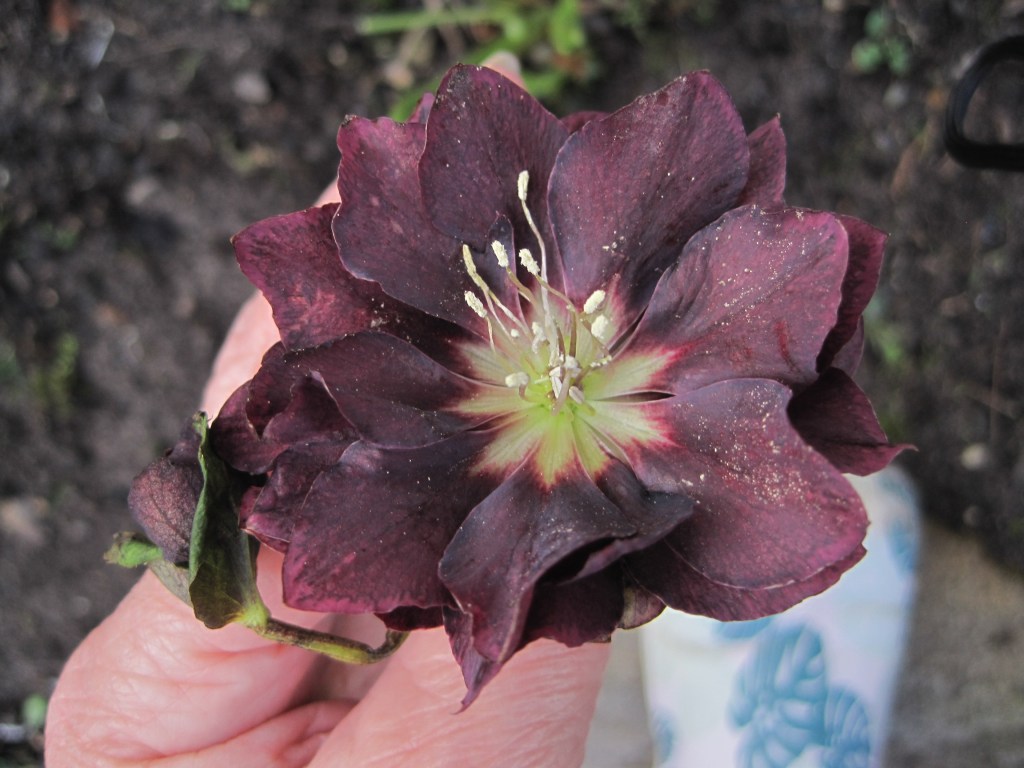
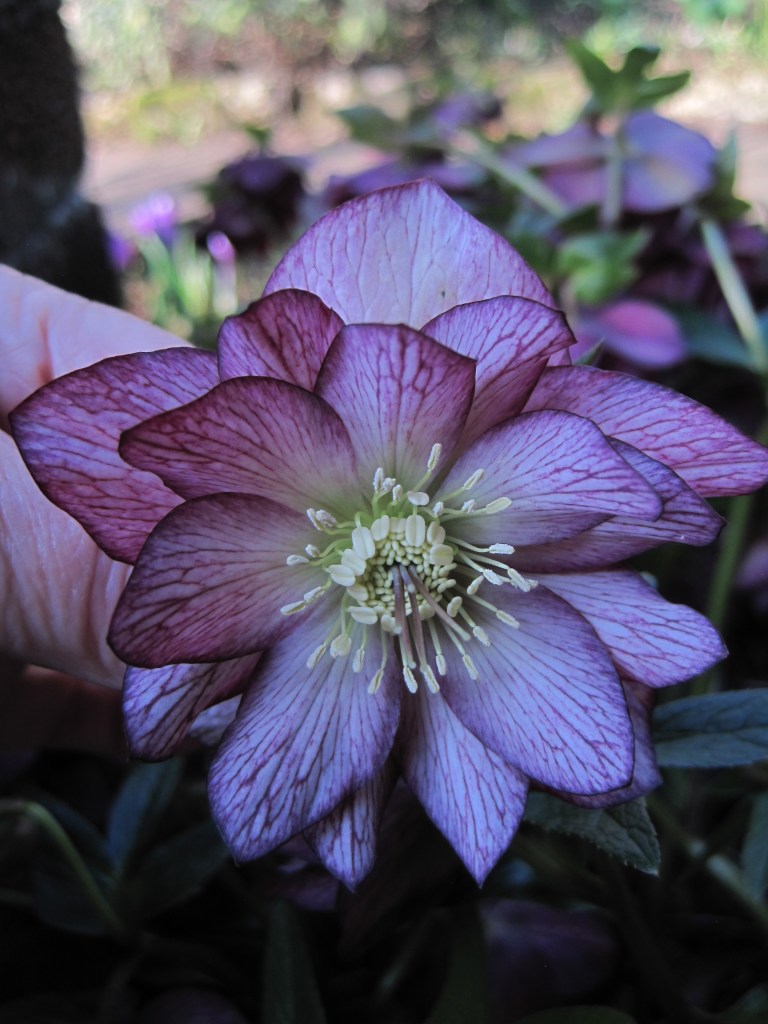
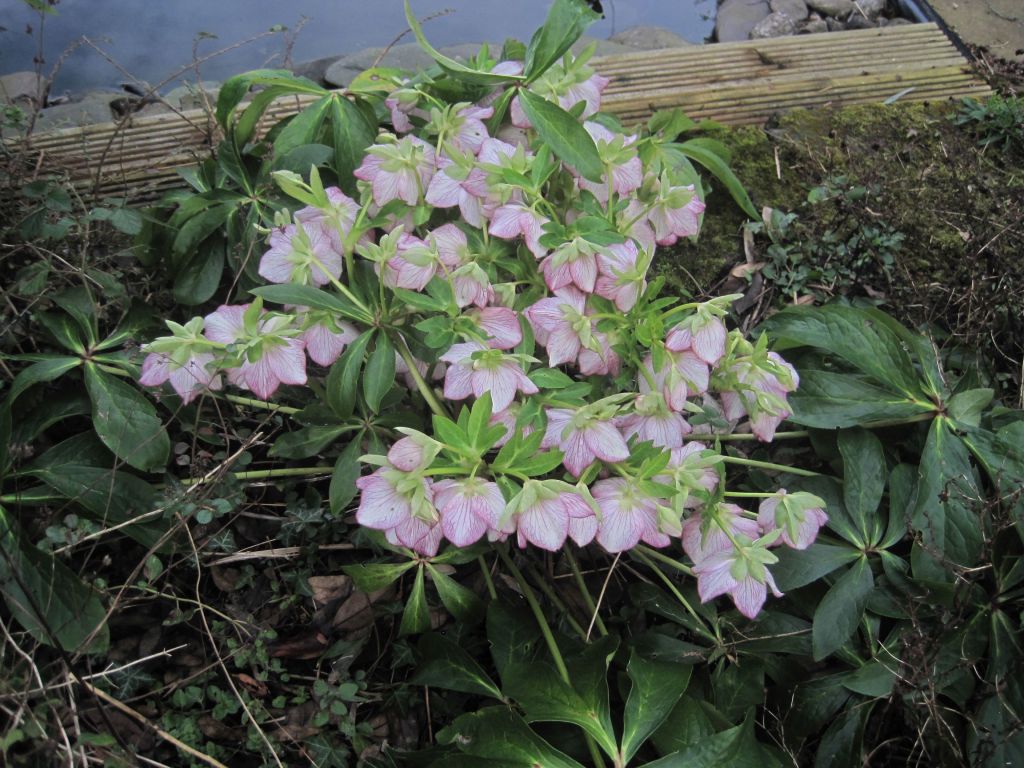
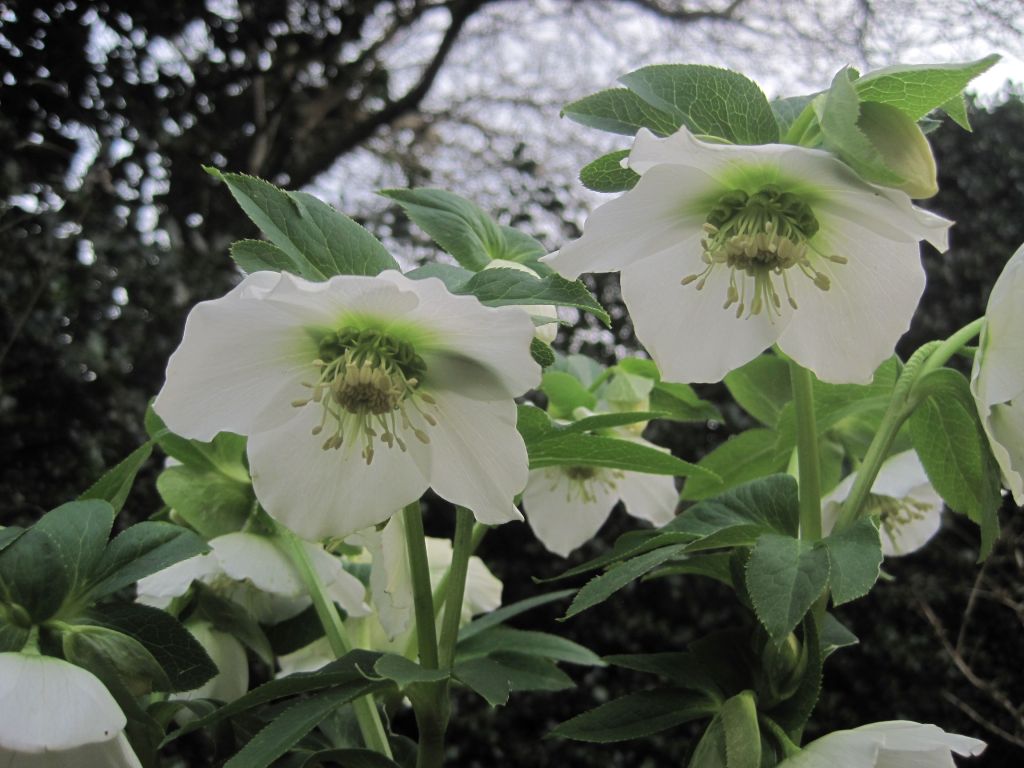
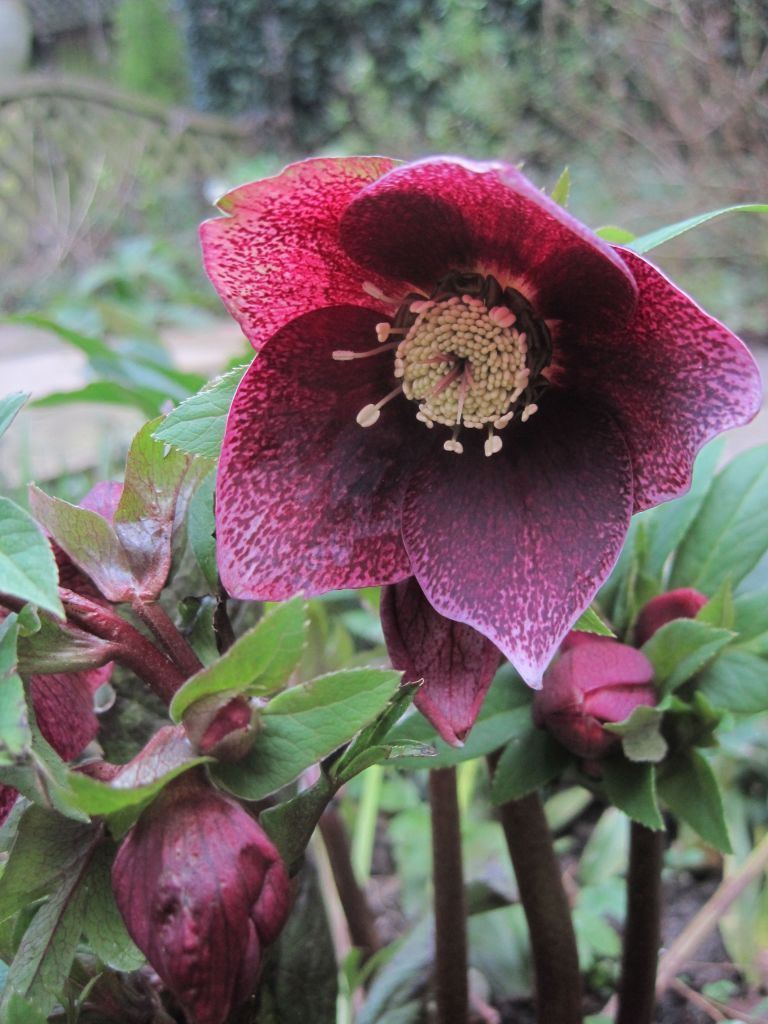
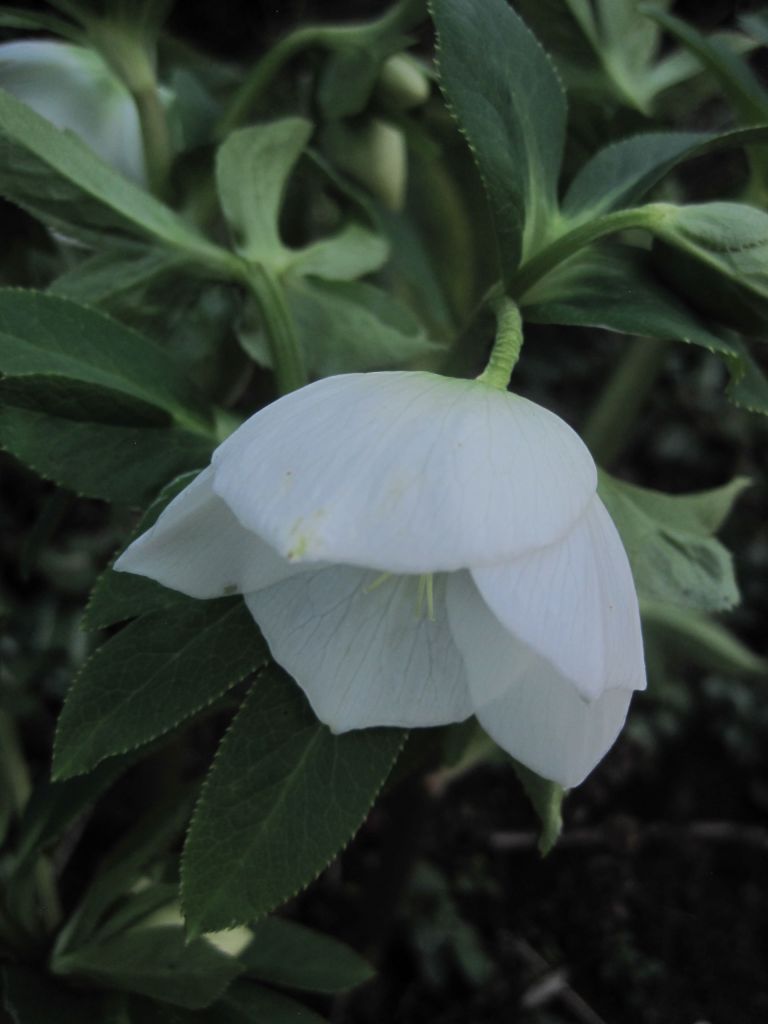
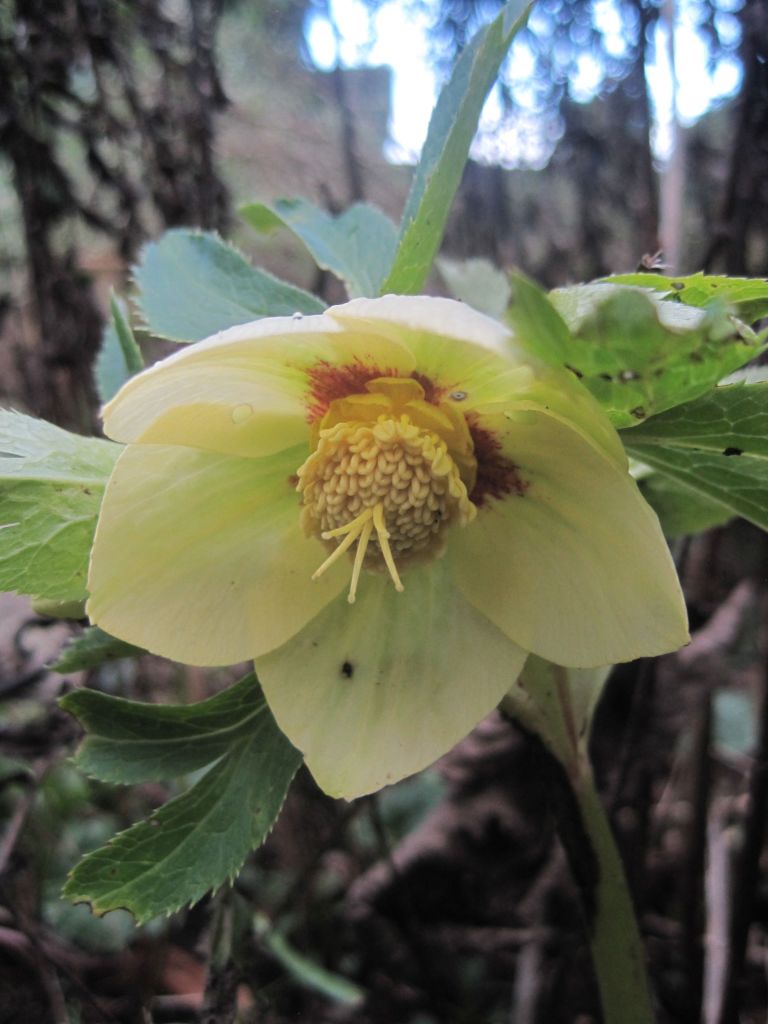
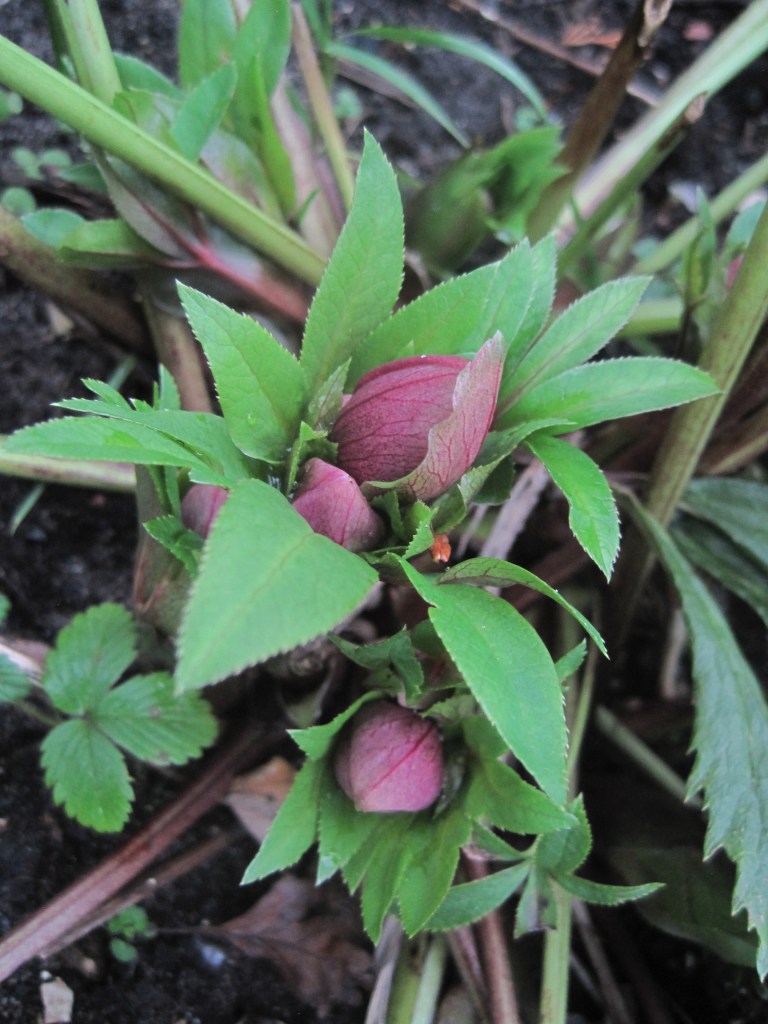
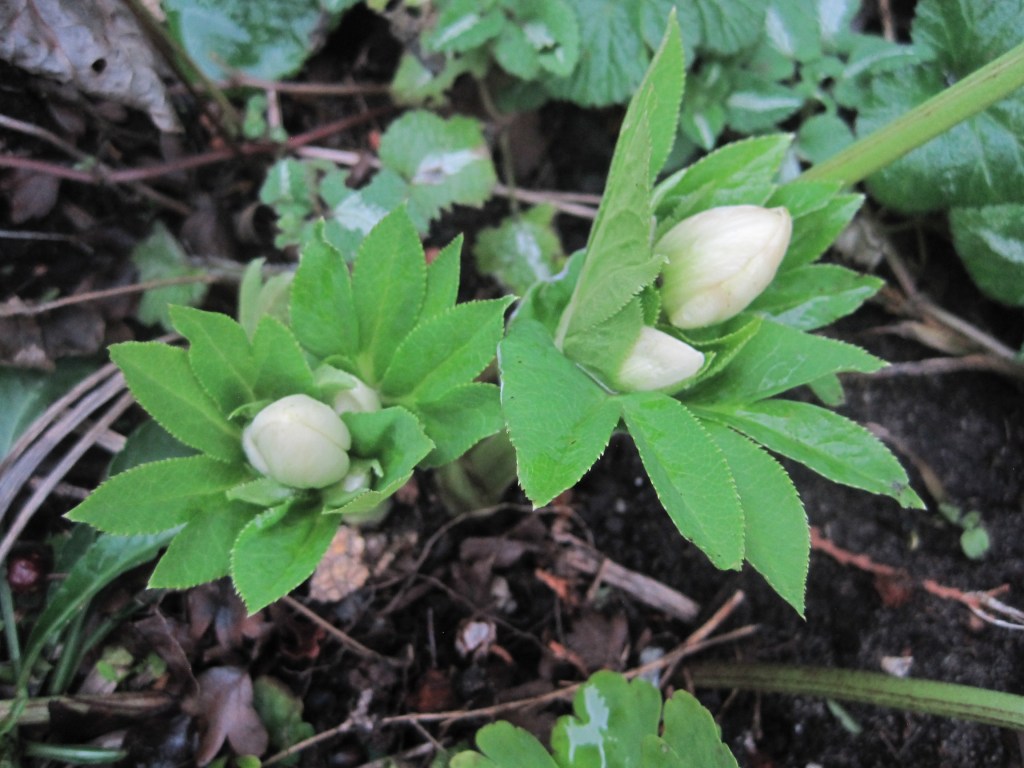
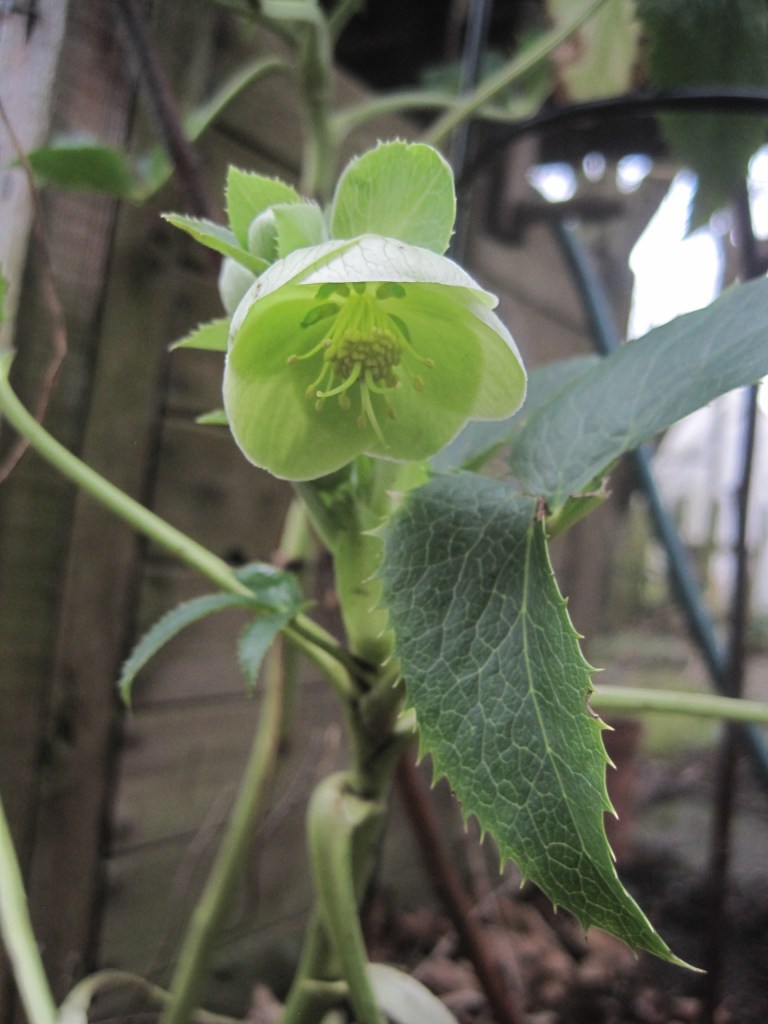
I know I’ve mentioned hellebores before but they really are a wonderful plant for the worst months of the year. There are many beautiful variations in the oriental varieties. The arrangement of the petals, the colours and the centres are very different. Here’s a selection of mine.
I love the little surprises in a garden. I found a pretty pulmonaria flowering despite having dug it out (or so I thought) a couple of years ago. The leaves suffer in the summer in my poor dry soil so I decided to remove the plants and find something better. Then a few days ago up popped these lovely blue flowers to defy my intentions! Enough to melt any old gardener’s heart.
Now that February is bringing longer days and a few sunny spells, the vegetables in the polytunnels are putting on a spurt of growth.
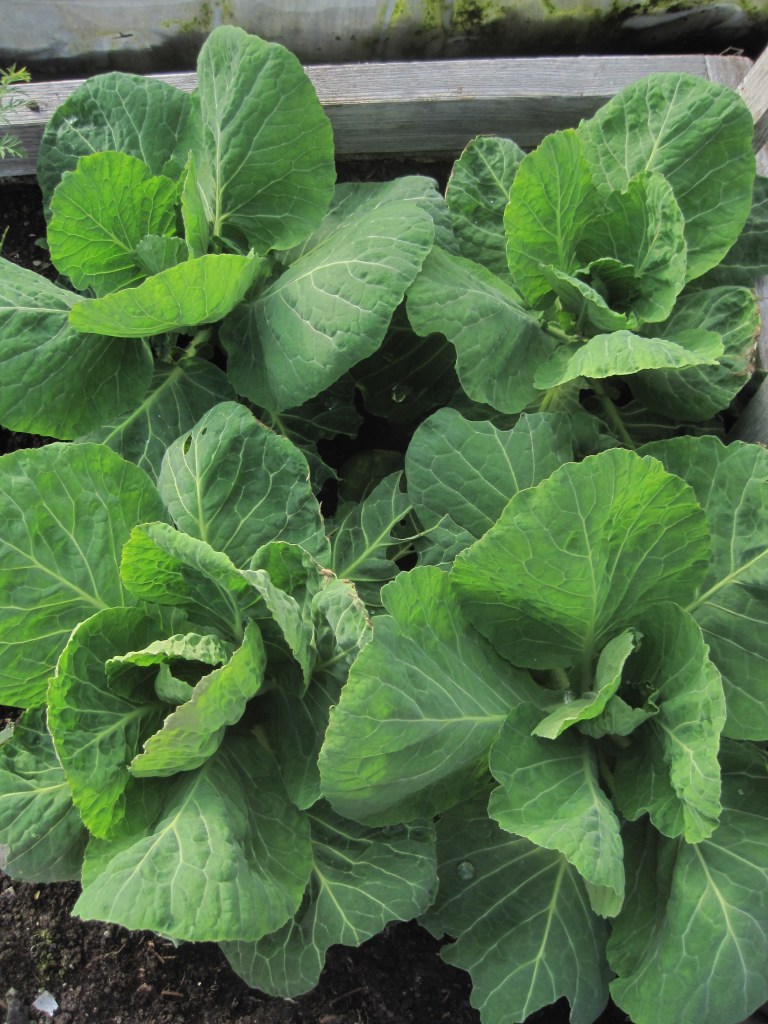
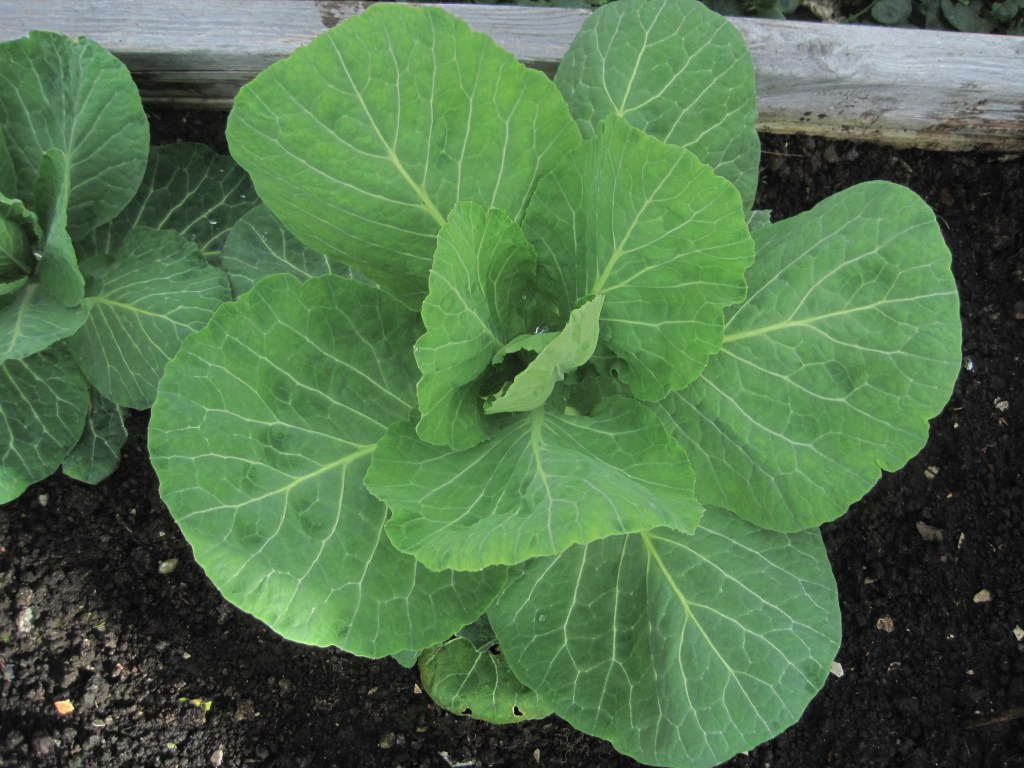
The Spring cabbages look healthier after suffering early attacks by slugs and caterpillars and in a few weeks they’ll form delicious ball heads. No need to spray and overfeed plants. They usually recover with a little care.
I’ ‘ve had a problem with my cauliflowers. Last year they were perfect. This year they have less than perfect heads. Some developed brown spots. I asked Garden Organic about the cause and they said cauliflowers are notoriously difficult to grow. They may lack boron which is not present in good amounts in poor sandy soil like mine. So at least I know that despite my efforts it could still go wrong. A few are ok so I’m hoping to enjoy some later on.
I leave most of my sowing until mid March but I thought I’d pop a few mange-tout seeds in the polytunnel and see if I can have an early crop. They’re just peeping through the soil so at least they’ve germinated. I also put some “May King” lettuce seeds in but they haven’t made a showing yet. I shall keep checking.
I need to use the parsnips soon because they’ve been in the ground for many months and will go woody if they’re left too long. Older gardeners insist that parsnips are sweeter when they’ve been frosted. I grow mine in the polytunnels so I don’t know if the frost penetrates enough. They’re still deliciously sweet so I wonder if it really makes any difference.
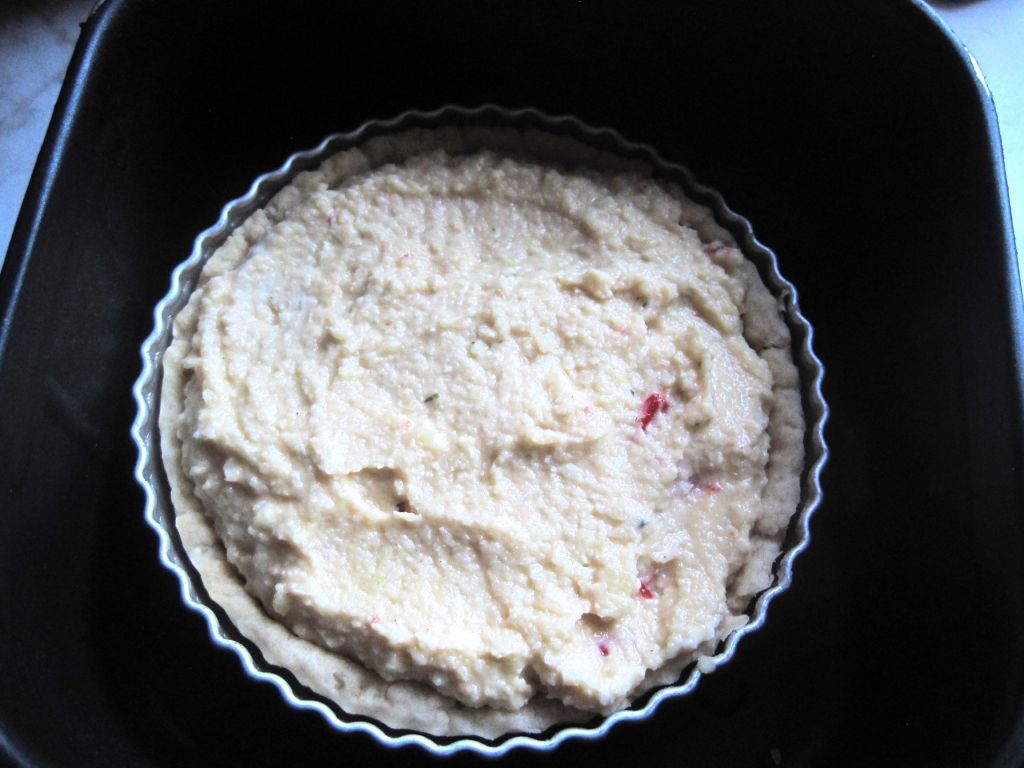
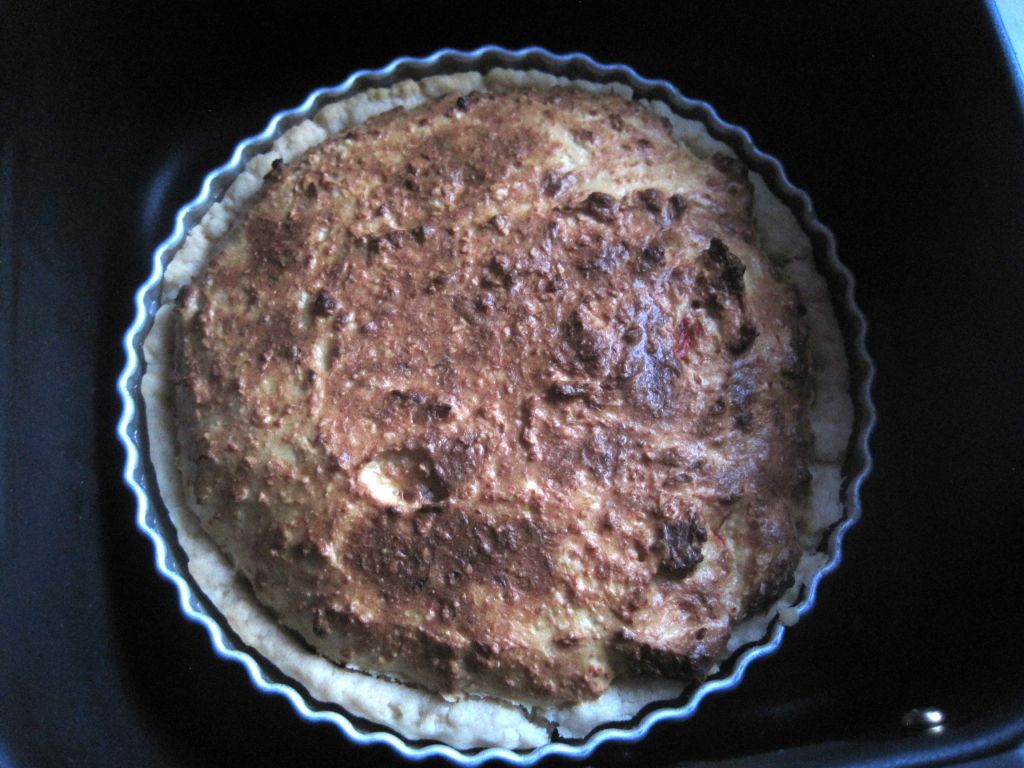
I made my creamy parsnip flan. I halve my recipe to make it in my tiny airfryer. After pricking the pastry all over with a fork to stop it bubbling up, I bake the flan case for eight minutes at 170C. Because my little flan tin only just fits in the airfryer basket I leave the pastry case in the basket after pre-baking. Then I make the creamy parsnip filling with the pre-cooked parsnips, cashew nuts, egg, onion, a bit of chilli and some soured cream or creme fraiche, whizzed together in my food processor. It’s easier to spoon the filling into the pastry without having to lift it out and replace it. I baked it for fifteen minutes at 170C.
It’s a delicious and satisfying meal served with a green vegetable. Really tasty, hot or cold. The original recipe for baking in the conventional oven is in my Earthy Homemaker’s Cookbook. It can be found with this link.
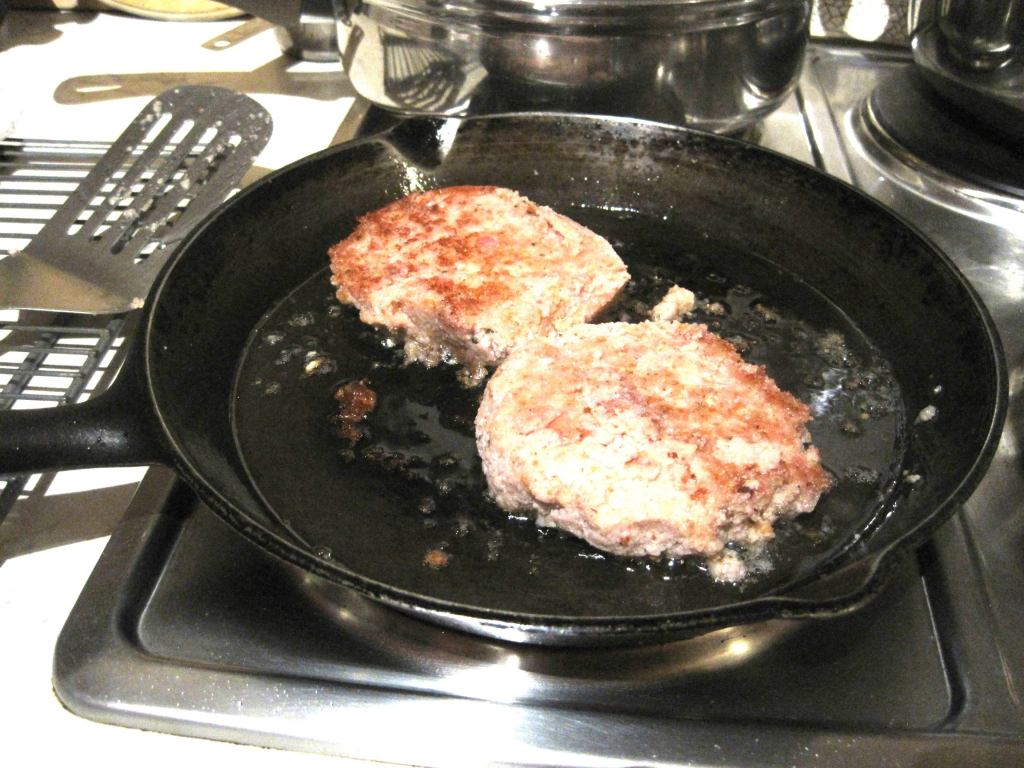
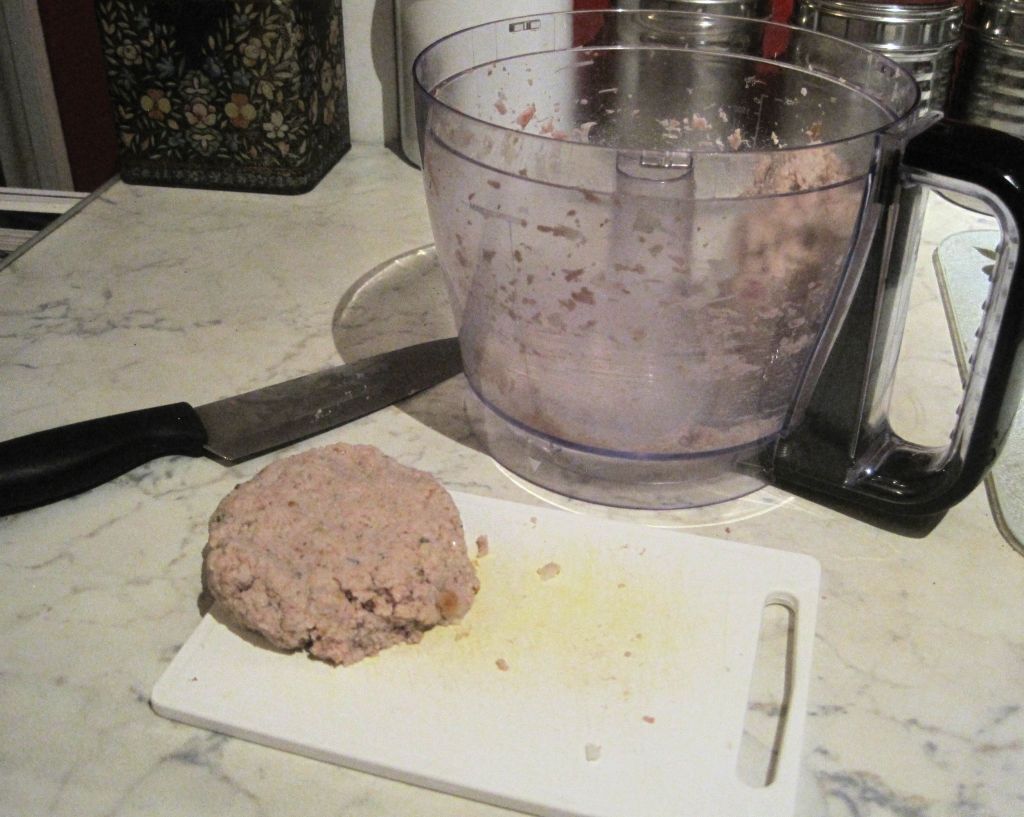
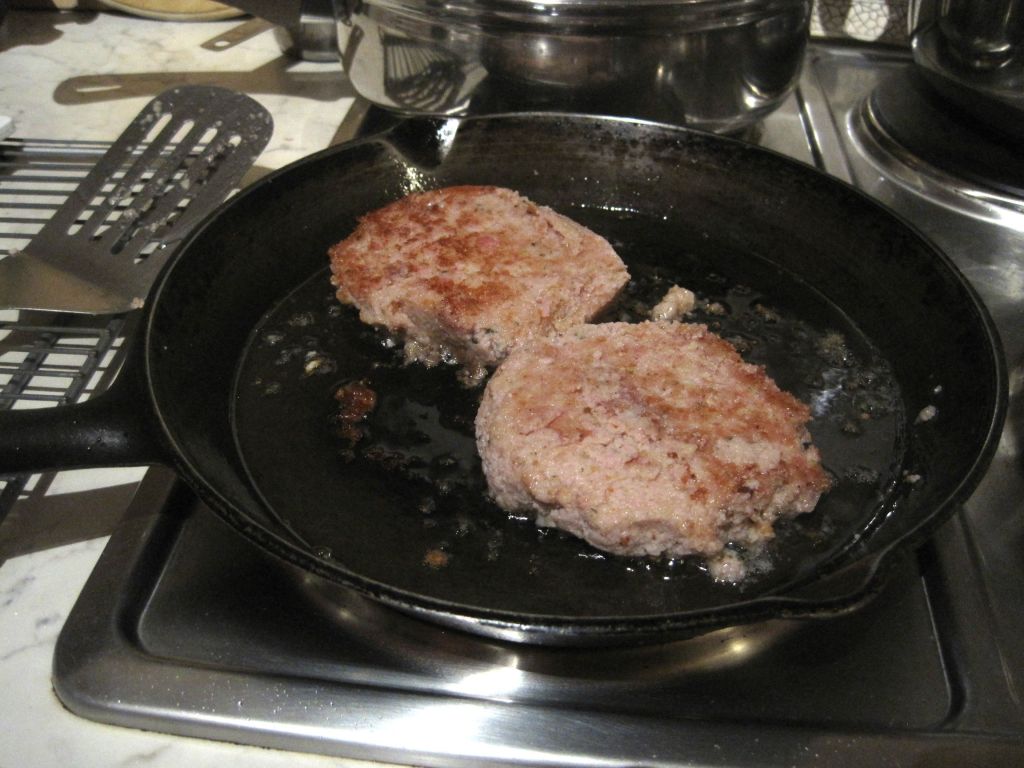
I find it interesting to think of tasty ways of using leftovers. For example, when a bit of cooked chicken is left in the fridge, it can be stretched with a few additions to make a delicious alternative meal. A food processor is useful for this. I put in the chicken, add onion, bread pieces, apple slices, egg, salt and pepper, with any herbs I might have such as basil, and mix thoroughly. I make the mixture into flattened rounds like burgers and fry in a little hot oil until browned on both sides. So tasty and filling, with vegetables and chutney.
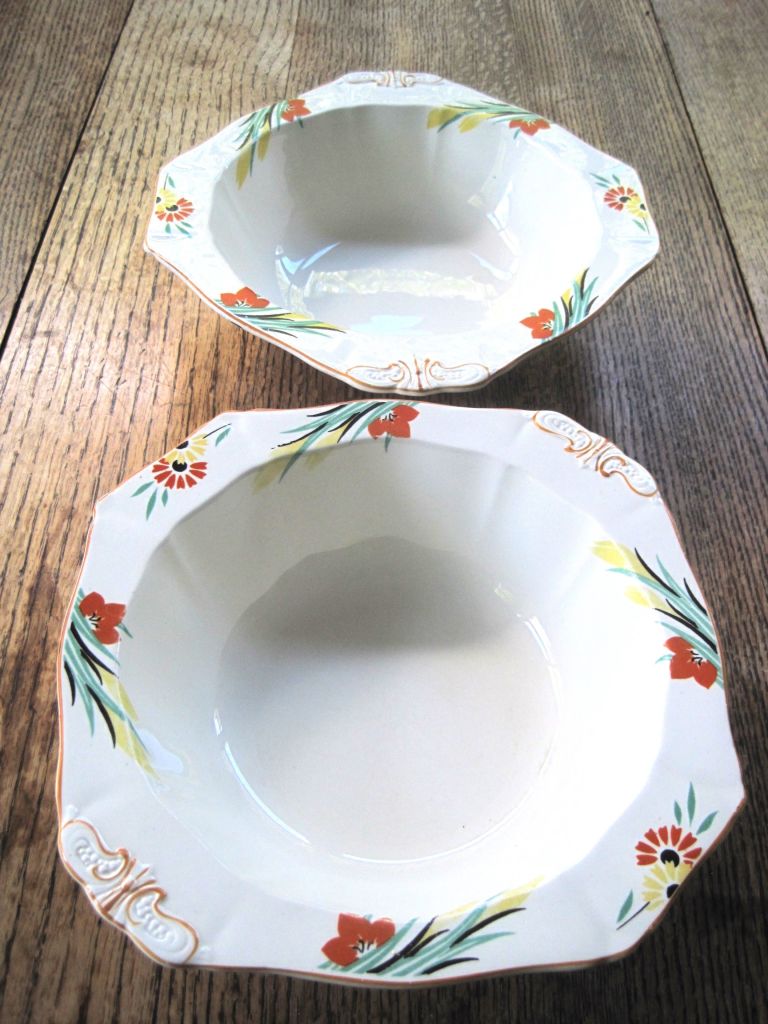
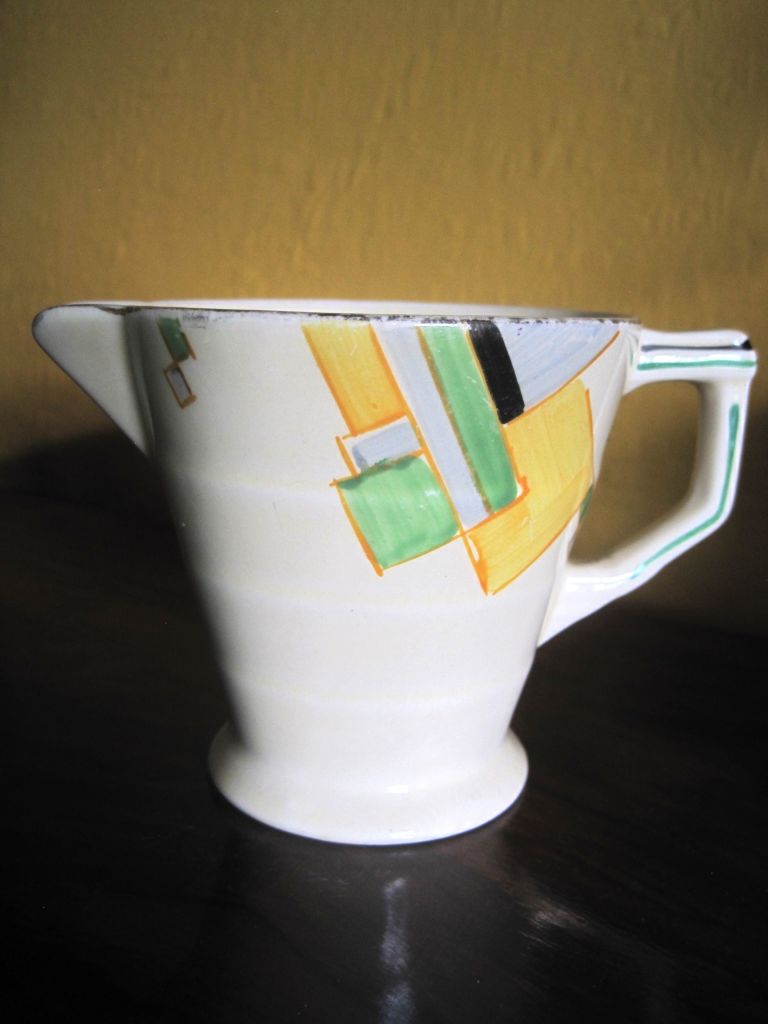
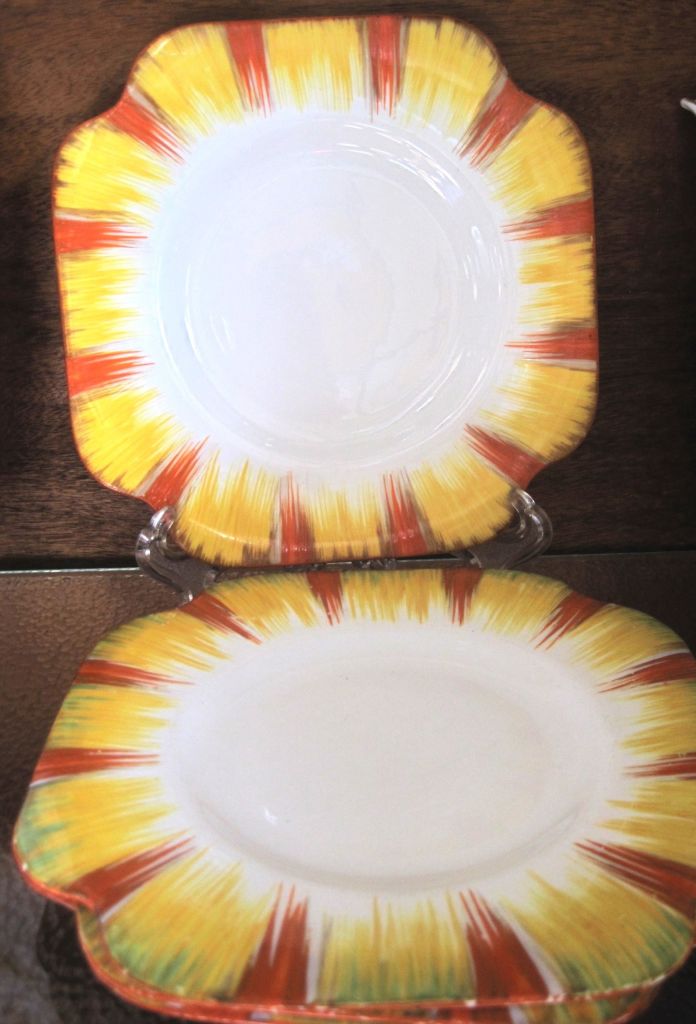
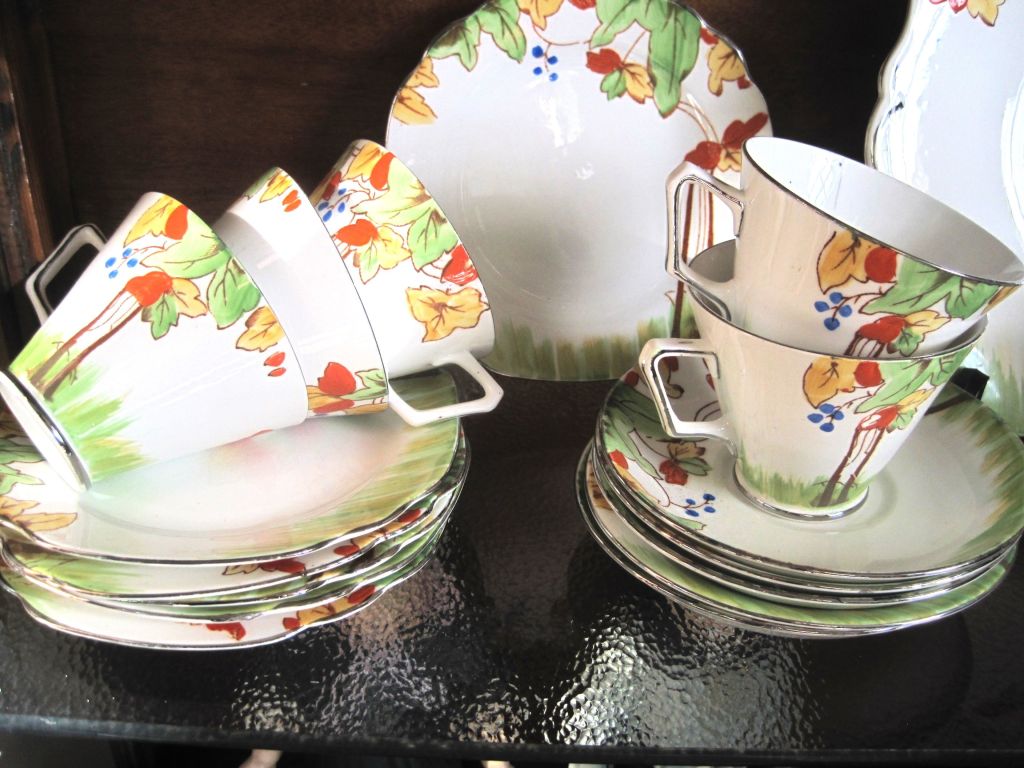
Regular readers know that I love pottery whether old or contemporary. Some of my favourites are in Art Deco styles from the 1930s. I picked up bits and pieces many years ago from charity shops and vintage markets. Often, I only paid pennies for them. I love the shapes, colours and decorations. Here are some of my treasures.
Looking forward to warmer days and Summer when roses will bloom beautifully so I painted a picture of some my “Golden Showers”. Drawn from my photo on a day with a blue sky, then painted with gouache.
Longer days are coming and the sun will shine on us. Meanwhile there is much to enjoy and I hope you find many pleasures to fill your time. Bye for now and I’ll be with you again in a couple of weeks.
Longer days and a few lovely sunsets lift the spirits. The drab brown-ness of the garden is punctuated here and there with the vivid crocus colours, pure white beauty of snowdrops and the elegance of hellebores.
The weather is topsy-turvy. One day it rains, then it snows, then the sun shines and I rush out to catch up with some necessary work. Lots of tidying up to do. Cutting back dead stems refreshes the scene and prepares for the Spring show. The dry woody stems make very good kindling for starting the log fire so they are saved in the wood store.
In the polytunnels I sowed some “Sugar Ann” mangetout seeds, a few “May King” lettuces and some “Vit” corn salad. With a bit of luck and some milder weather they might come up and give some tender pods and fresh green leaves.
The winter lettuces in the greenhouse have finished. A few salad leaves are still growing but not many of them. In April I will top up the bed with home-made compost to nourish the tomato plants.
I need to use the rest of the parsnips soon to make way for new crops like carrots and kohl rabi. I will also be sowing spring onions, lettuces and radishes in the tunnels every two or three weeks, when it’s a bit warmer, for a steady supply. These are a world away from the ones in the shops. The radishes I prefer are ” French Breakfast”, long, red ones with a white tip. I saw them once in Paris in a street market arranged in tiers of wonderful perfect bunches. I wish I’d taken a photo. The salad onions are best eaten while they’re tiny and sweet. Such a treat snipped onto a sandwich or a salad.
I don’t sow too early for most things with the exception of tomatoes which I start in the house in late February. I can’t see the point of producing leggy seedlings with nowhere to go while the outdoor climate is still risky. Sowing seeds in March and April gives the best results. The plants romp away with the longer days and greater chances of warmth from the sun.
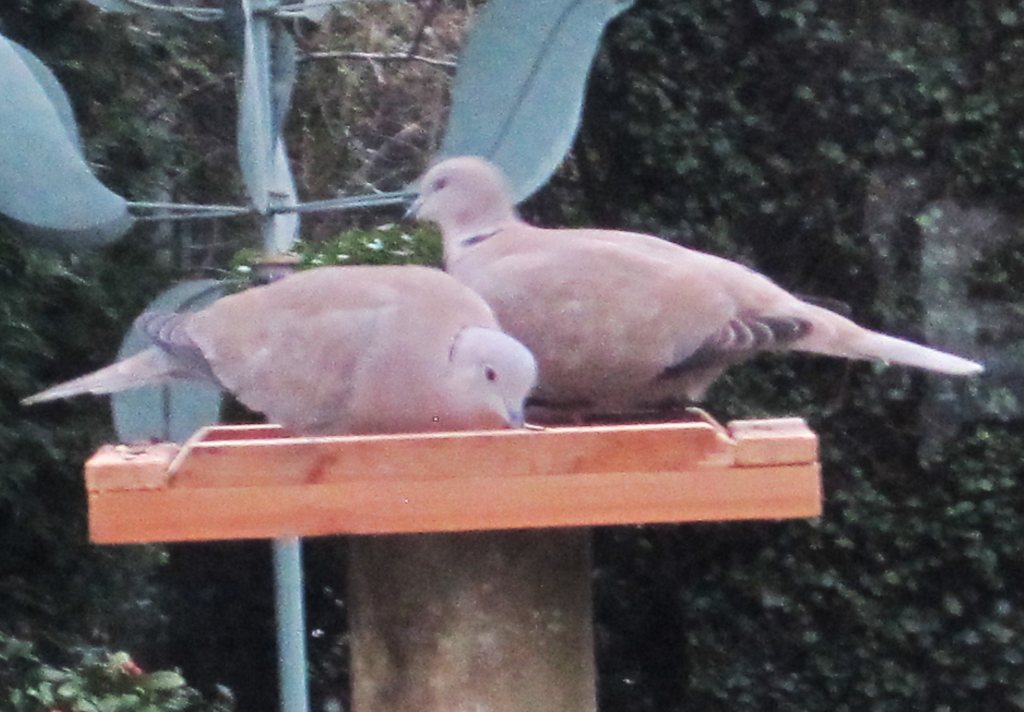
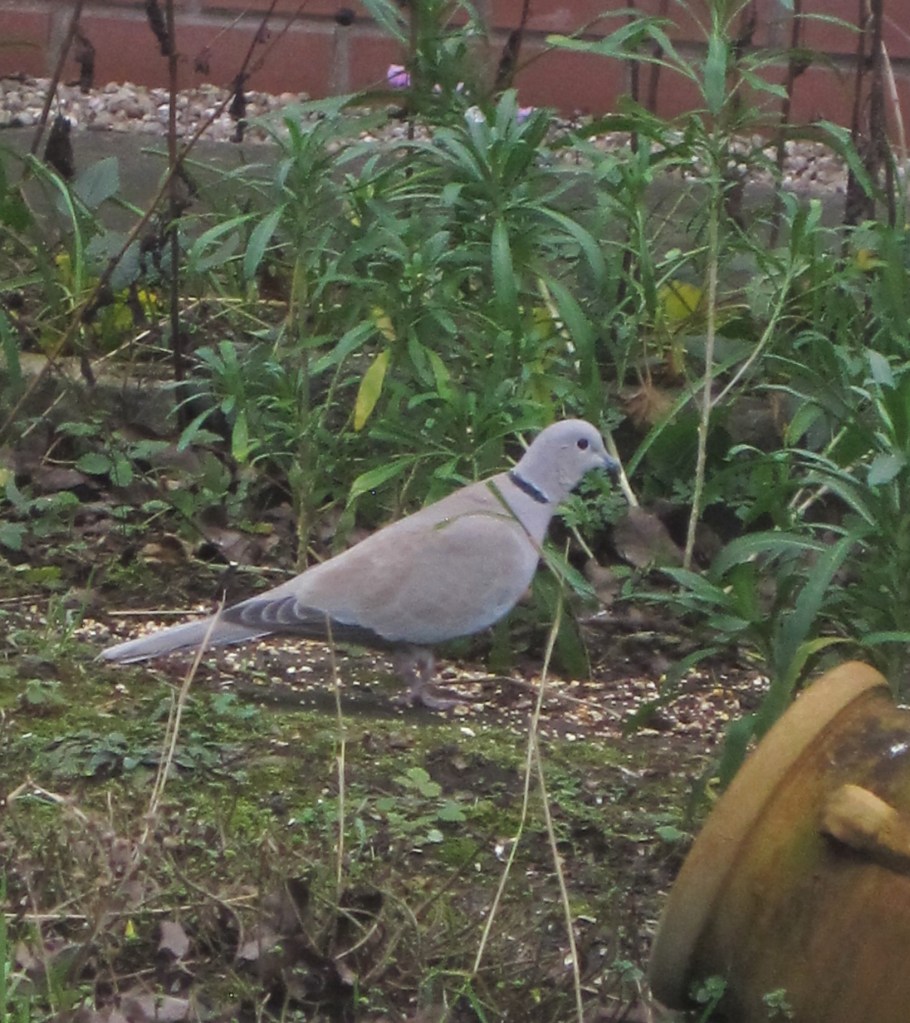
The birds are already calling around the garden. A friendly robin joined us as we worked and the collared doves have been regular visitors to the bird table. I think collared doves might mate for life because they always turn up in pairs. Such lovely birds.
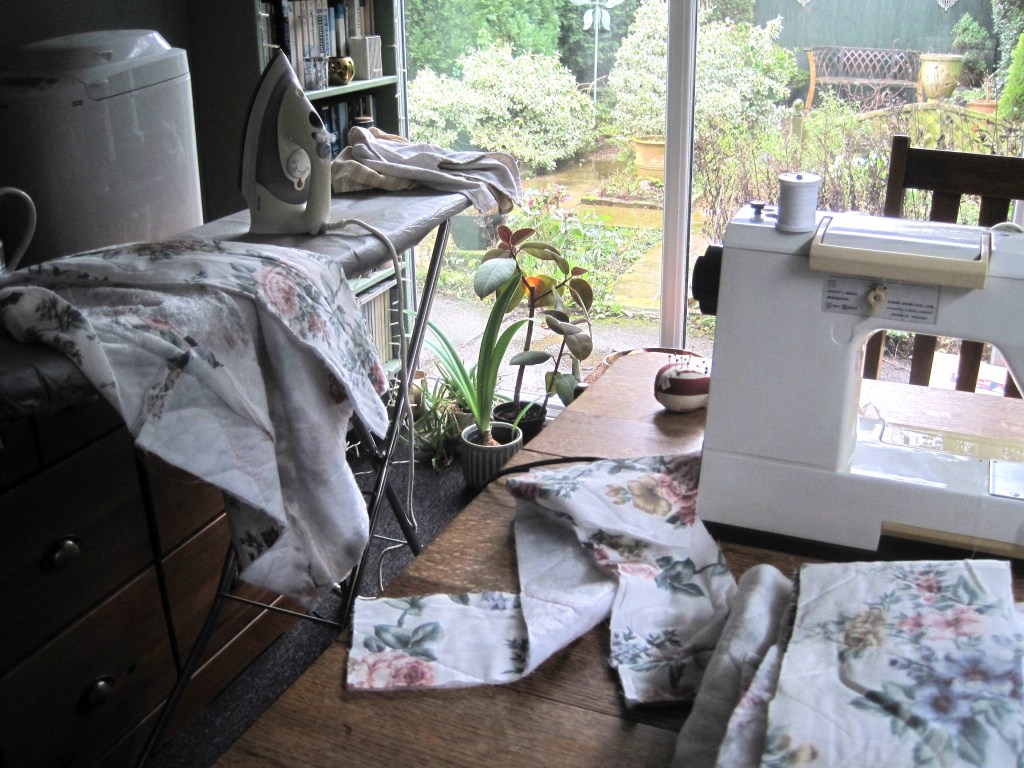
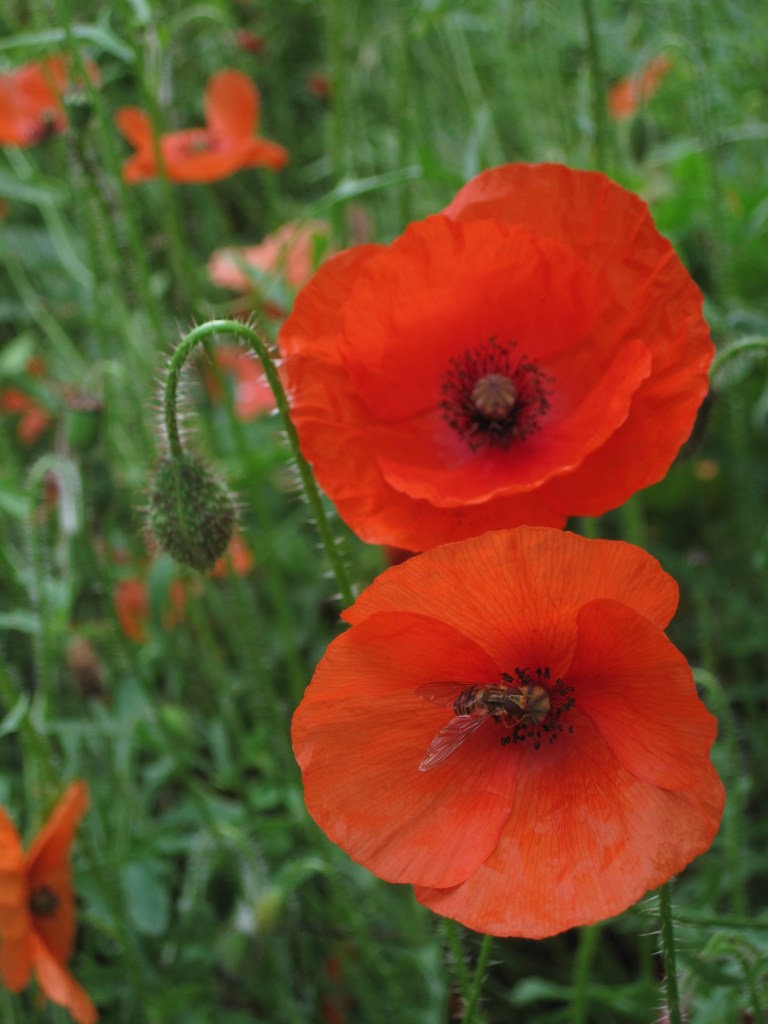
On cold, wet days I’ve occupied my time with knitting and sewing. An appeal was made for knitted or crocheted poppies for a D Day exhibition to be held locally, later in the year. It was ideal as I wanted something simple rather than knitting a jumper or big item. Of course, very few things turn out to be simple in reality and these proved to be a bit trickier than I expected. A bit fiddly and hard on the fingers. No pain, no gain though! So far I’ve done two. I will do a few more.
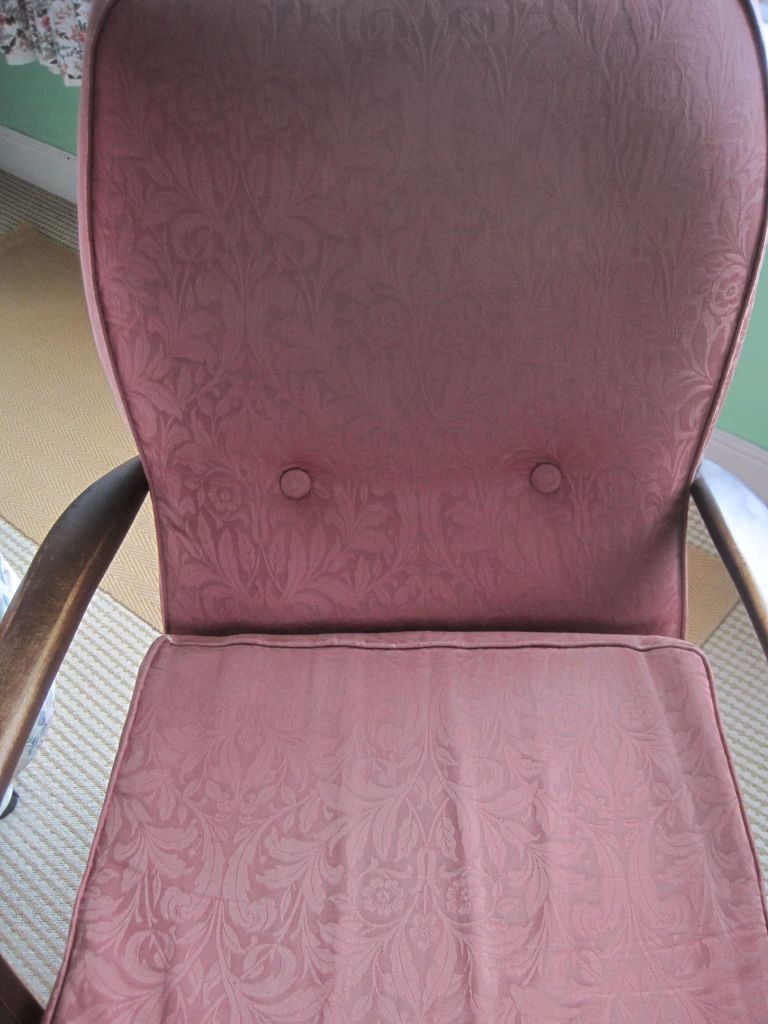
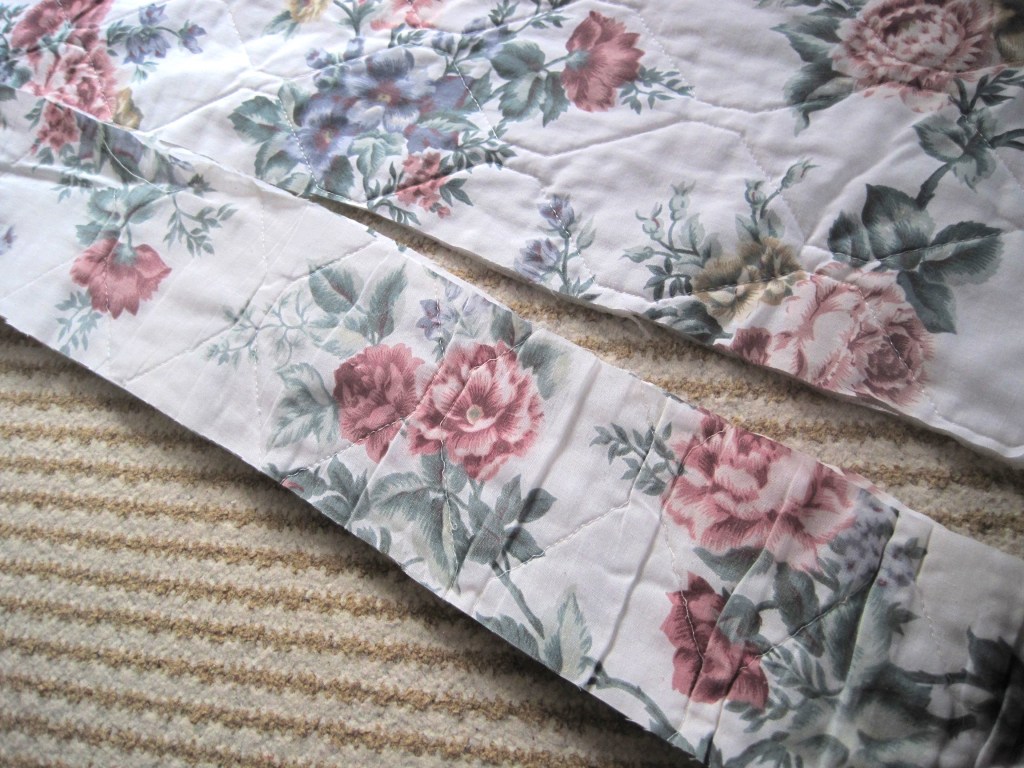
I had a bigger project which was on my mind for some time. I’ve intended to re-cover an armchair in the bedroom for quite a while. It stood by a south facing window for many years and the strong light rotted the fabric. I had an old bedspread which I loved and saved with the intention of using for something. The frill was faded and thin but the main part was useful and I liked the roses printed on it very much. I suddenly thought it might do the job for covering the chair.
I hadn’t enough fabric to do the thorough job I did last time when I piped the edges, buttoned the back and used good quality material, but I thought it would be a good way to spruce up the chair and make use of existing resources. As my regular readers know, I do love a bit of “make do and mend”.
I’m never going to pretend it’s easy to make and mend things but it’s so satisfying and when you pull it off it makes you feel good. It’s something I have always done. To begin with, when we were young, a lack of money encouraged me to be resourceful but it became a way of life. It now comes naturally to work out how I can do something myself and I have a very able spouse who does exactly the same. People who are creative by nature will fully understand this but I recommend anyone to give it a go. Experience is the best teacher and there are lots of ways to learn, from books, courses or working it out for yourself. It’s not just a way of saving money. It is profoundly enjoyable and makes you feel self-sufficient.
Of course, plenty of chocolate is required to fuel such efforts! Still finishing the Christmas supplies.
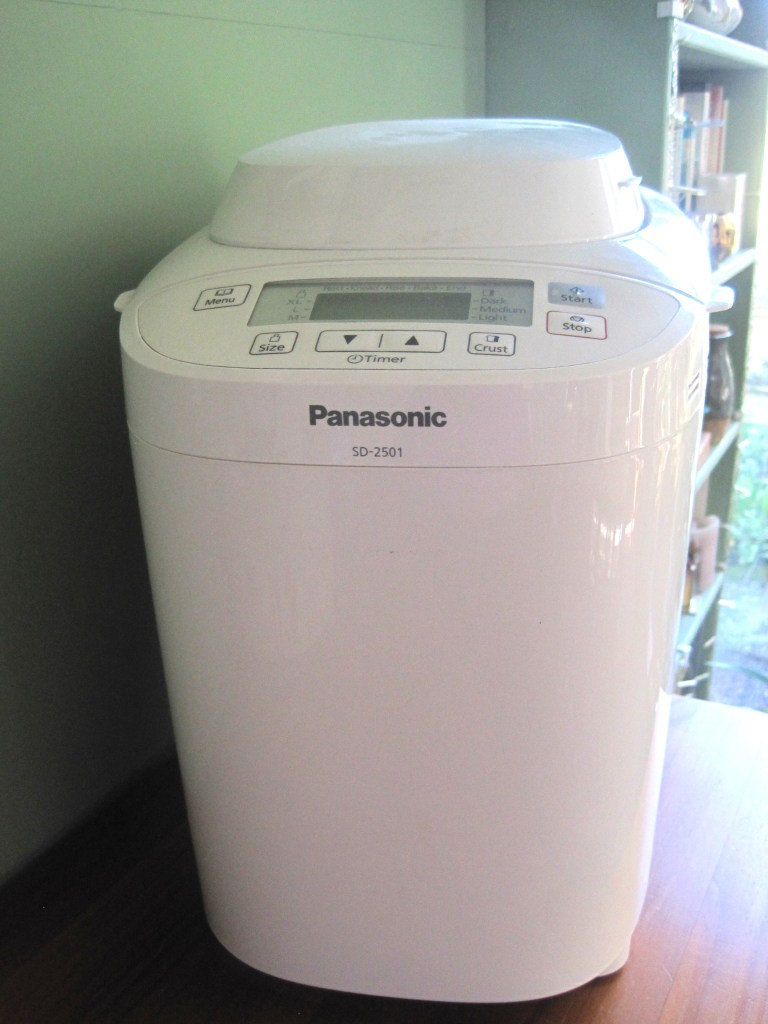
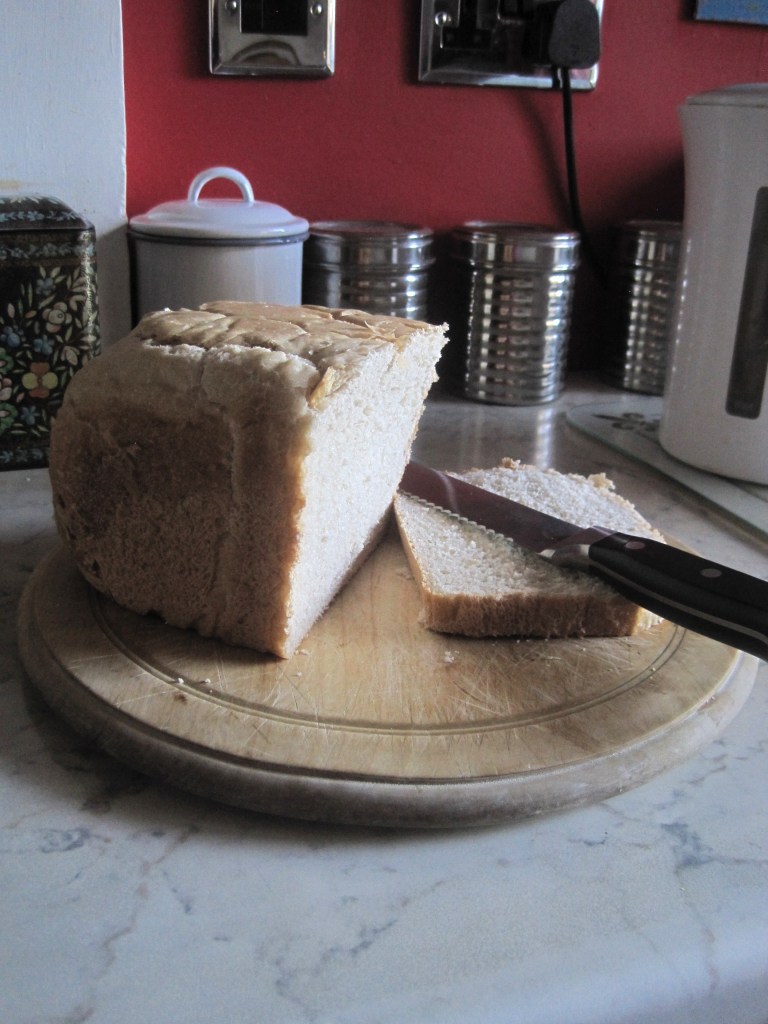
I need to top up the cake supply so will be baking soon. I have been making bread though but not by own blood, sweat and tears this time. Although I have often tried to make bread it’s something I’m not good at. I started using my bread making machine again and the loaves are really good. So easy. I was never any good at kneading, no matter how hard I tried, but the wonderful machine does that for me while producing a lovely loaf without the additives and plastic packaging of a bought one. It’s just yeast, flour, a teaspoon of sugar, a teaspoon of salt, a bit of butter and water. Pure, nutritious ingredients. And I can time the machine to work overnight so we wake up in the morning to the smell of fresh bread. Lovely.
What could be nicer than a slice of fresh bread covered in butter and homemade strawberry jam? Takes some beating.
I hope you’re finding lots to do to pass the winter. Spring is just around the corner and we’ll soon be surrounded by daffodils and bright sunshine. Keep that happy thought in mind! I’ll say bye for now. With you again in a couple of weeks.
Frost, snow, storms, rain and a few nice days! All to be expected in January. The month is a hard one. The hatches have been truly battened and the fire has been lit for some cosier evenings.
There were few opportunities to go out into the garden but whenever I could I was out there. If not to work, at least for a look around with my camera.
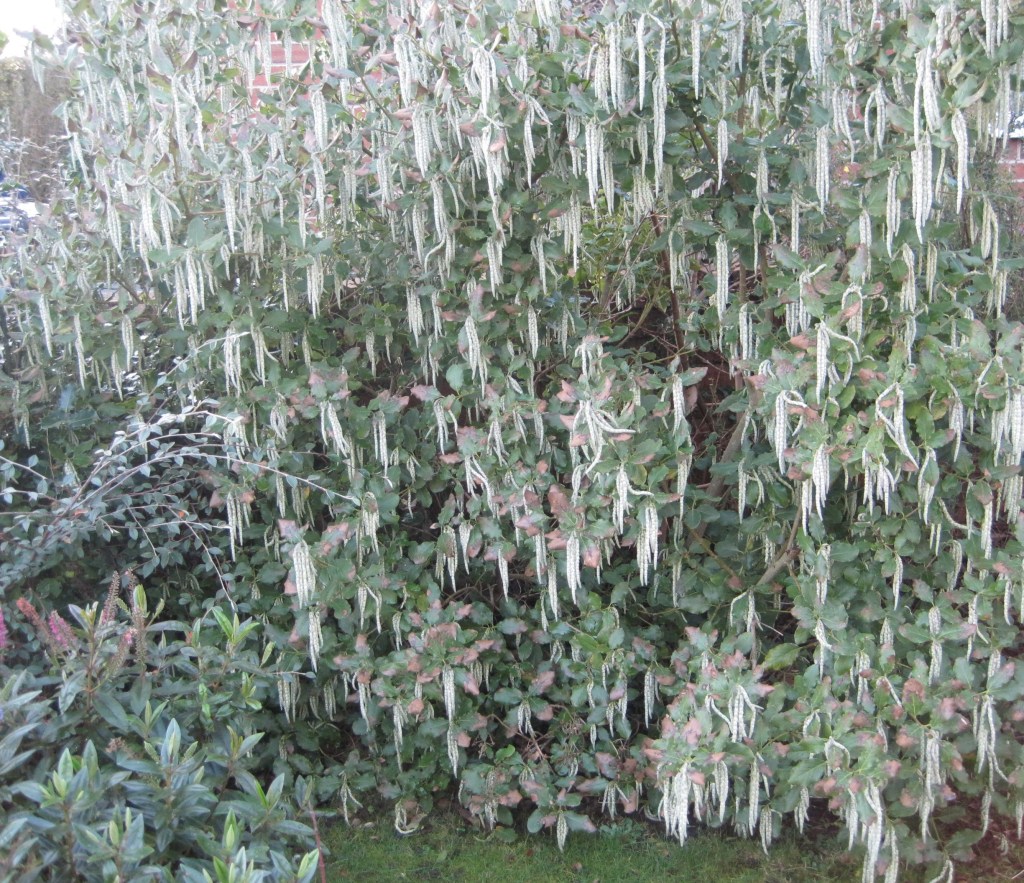
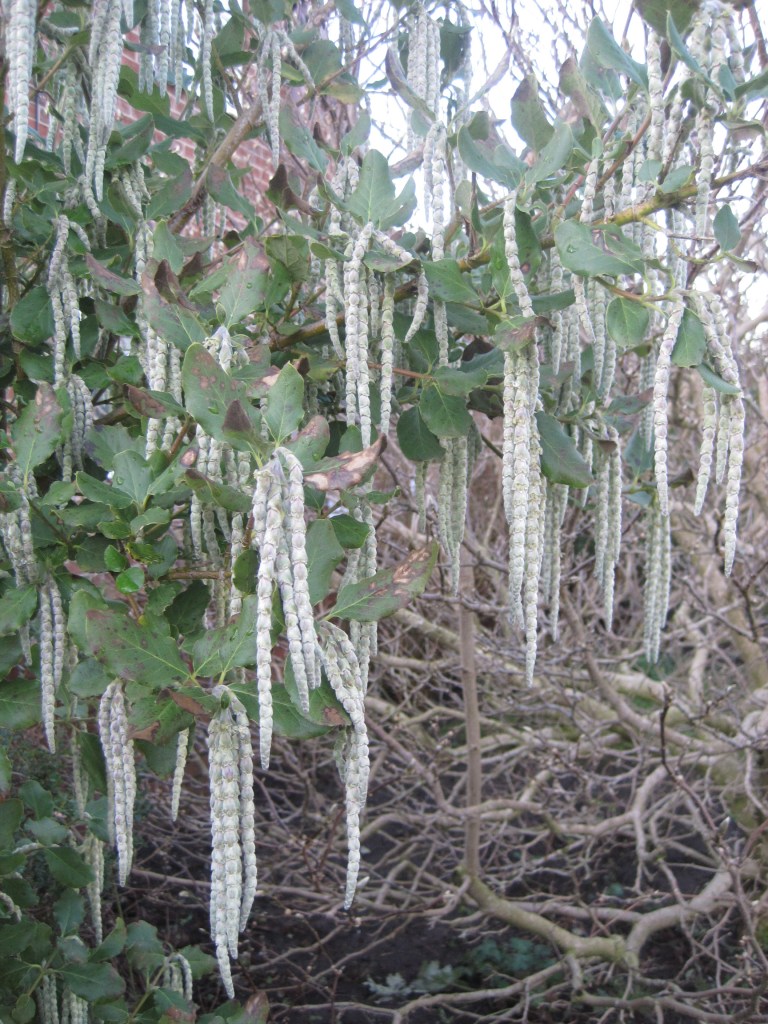
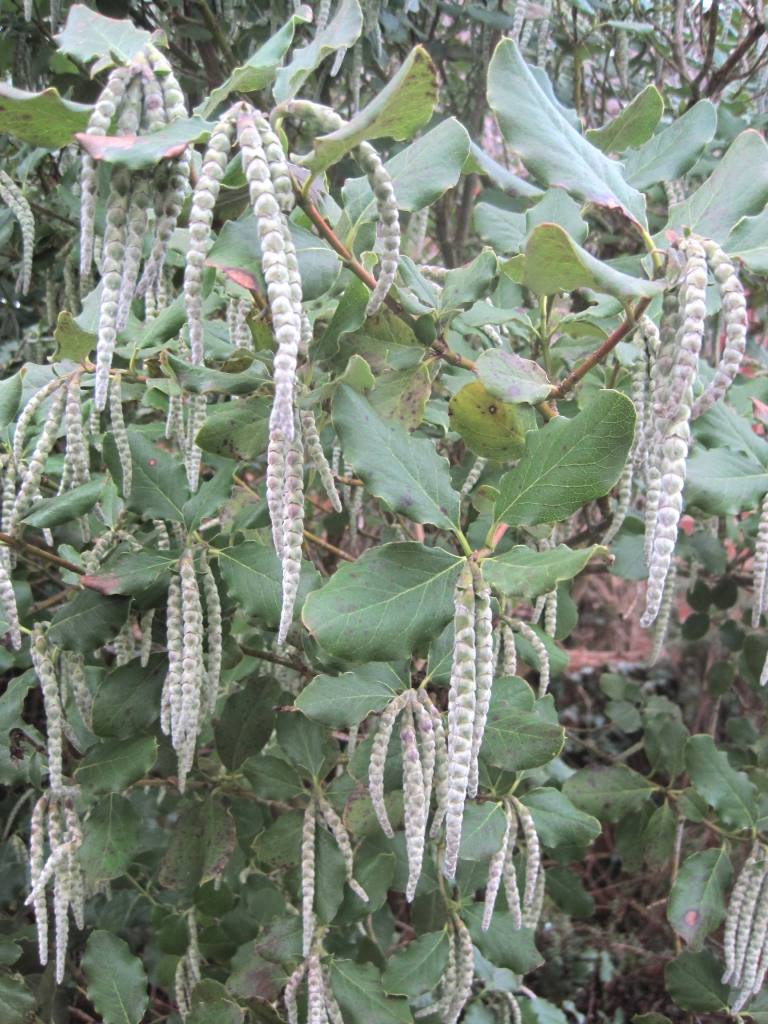
The Garrya eliptica is at its best right now. It has beautiful long silver catkins. The bush has grown tremendously this year. Probably this was caused by the torrential rain we’ve had. Once the show is over it looks a bit bedraggled but I shall enjoy it while it lasts.
The snowdrops are coming along. Some of the taller ones are already flowering but the biggest show will be under the apple tree. They have a little way to go yet.
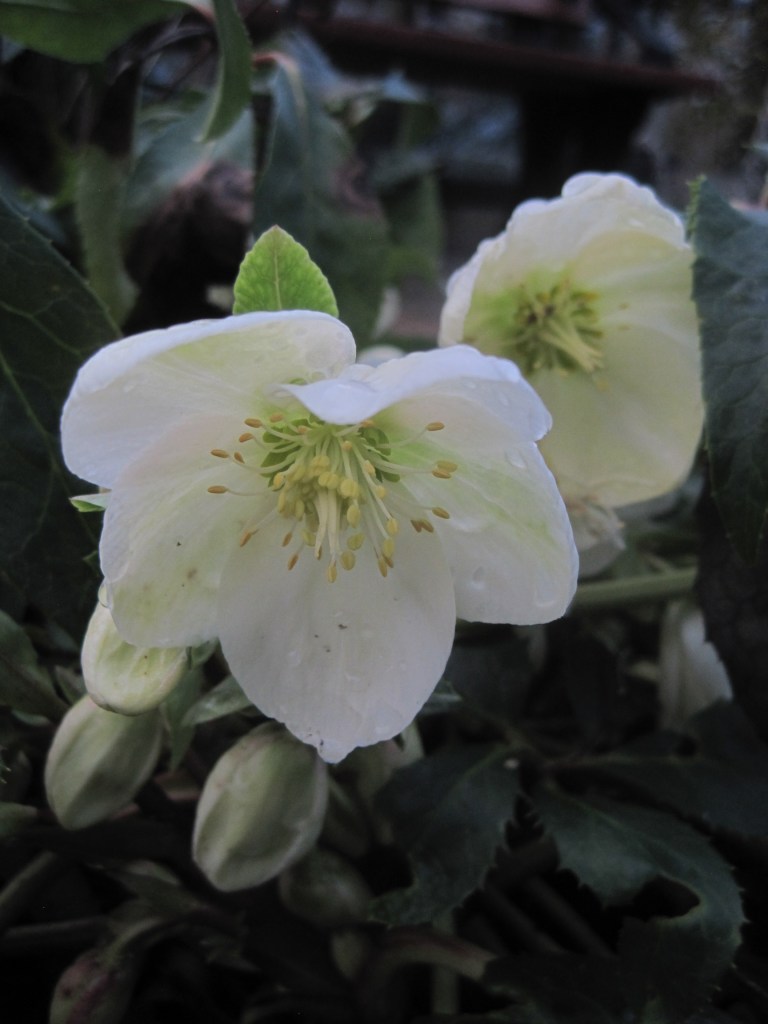
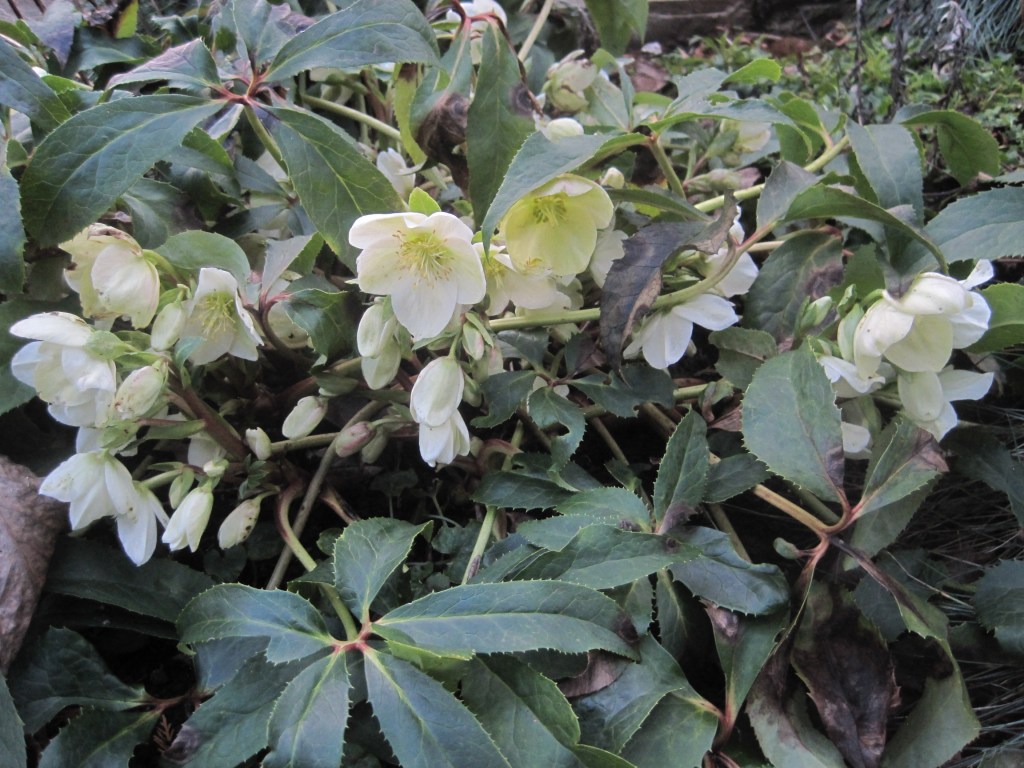
Oriental hellebores are wonderful winter flowers. So beautiful and yet they withstand all that the weather can throw at them. Some lovely ones are opening their gorgeous blooms now. They give me such pleasure. I have pink ones, a big cream-flowered one, a pure white and an unusual yellow one. More will follow as the weeks go by.
It’s a good time to make changes while plants are dormant or slowly ticking over. I had two lovely sage bushes which looked fabulous for a few years but had come to the end of their best days. They have been removed and I’ve replaced them with some cuttings I took in autumn. I hope the new ones will soon fill out as generously as the old ones.
In the vegetable garden the parsnips have been good. The severe frost has increased the sweet taste. Boiled with carrots, then mashed together and a little soured cream added they are delicious. I always put some parsnips in when I make chicken soup and of course they are lovely roasted. When I make parsnip wine I cook them first but only the resulting liquid is used. Rather than throwing the lovely vegetables away, I cool and freeze them in small containers so they’re ready for making soup or other meals.
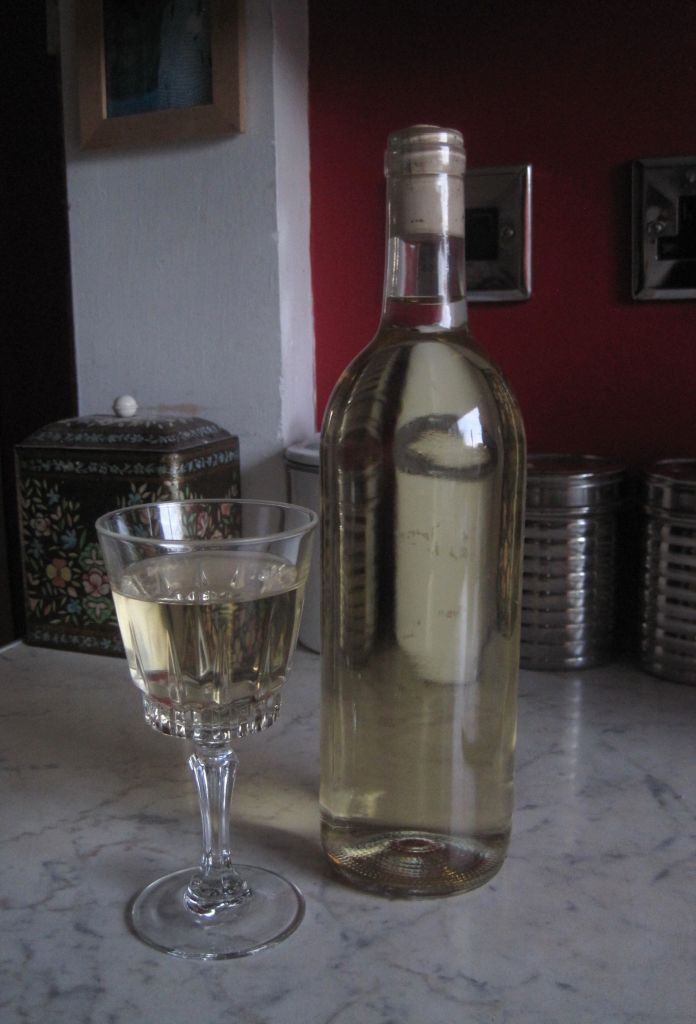
Talking of parsnip wine – we have been enjoying last year’s which I bottled a little while ago. Such a warming winter drink, the golden liquid is appealing to look at and very satisfying to drink. Using my recipe and natural methods there is no need to add anything to make the wine clear. If left to mature for a few months it becomes like crystal.
My recipe and step by step instructions are in my Earthy Homemaker’s Cookbook, which I published after requests from my readers. It can be found by clicking this link. https://geni.us/eANQu
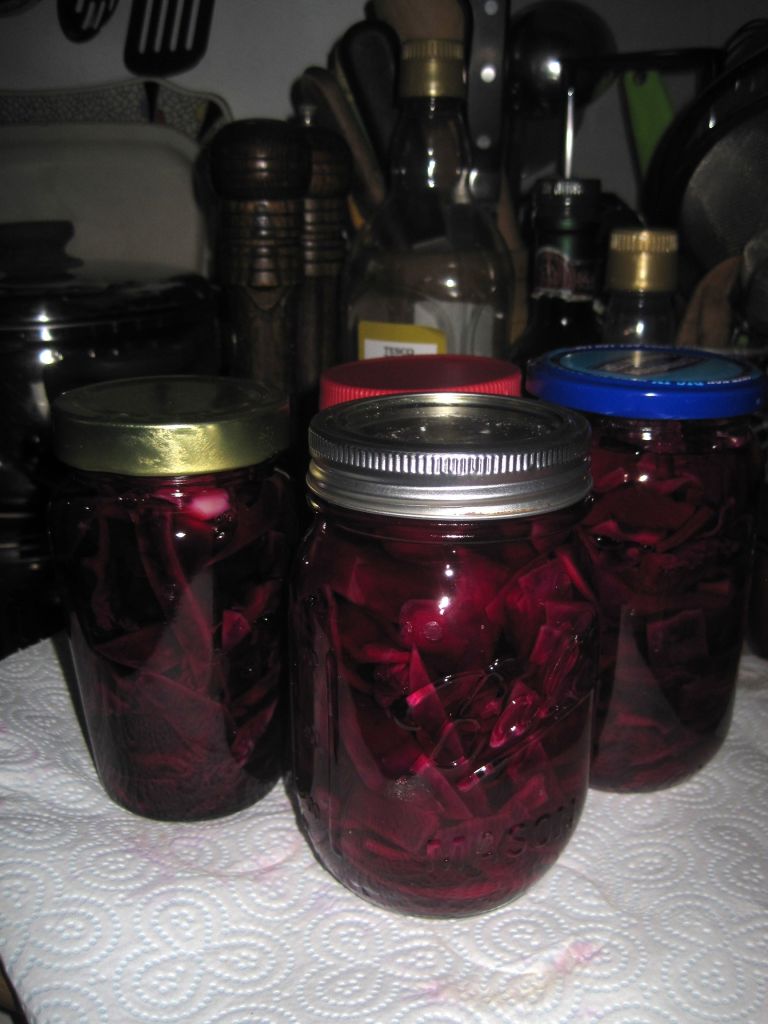
Indoors I made some more pickled red cabbage. I didn’t grow the cabbages – something I really ought to do. I love the pickle when it’s fresh and still a bit crunchy. One of the easiest pickles to make, I think. Just shredded cabbage, and vinegar boiled with pickling spices, strained through a sieve and poured over in clean hot jars. Simple and delicious. Looks great too.
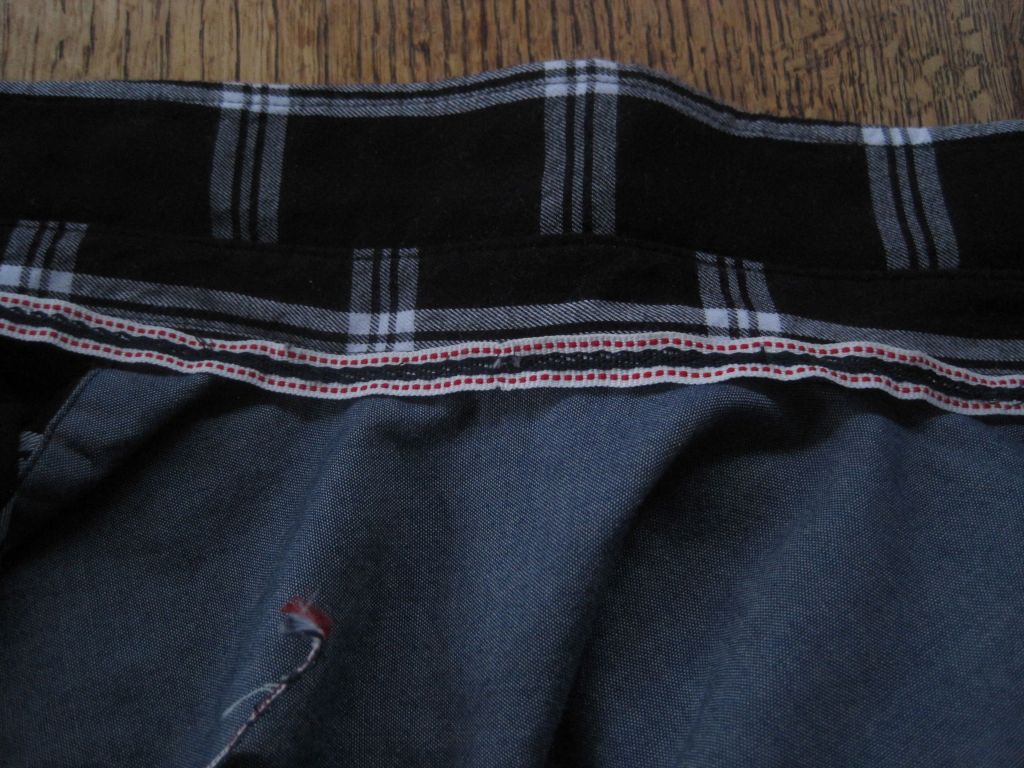
Had my sewing machine out for bit of make do and mend. My husband had two shirts with a very silly strip of inserted material inside the collars. Rubbing his neck and driving him mad. With my little stitch ripper, I unpicked the inside lower edge of the collars and removed the horrible strips. Then I sewed the collar edges back in place. Result, two very comfortable shirts and one happy husband.
I forgot to take a “before” photo but I placed the strip on the collar after I removed it to show what it was like. Why the manufacturer did this I really don’t know! It served no useful purpose and was very irritating. The second photo shows the collar after I stitched it back in place. I’m not pretending this is easy to do! It is a bit tricky and care has to be taken not to damage the fabric and to stitch the collar back into the right position. Worth doing though, rather than wasting a good shirt.
There is absolutely no need to be bored. There is always something pleasantly useful or satisfying to fill the time. It’s a busy world but a few moments of creativity can keep us all sane and happy. At least it does for me.
I hope you’re finding good ways to pass the winter months and time is flying. With you again in a couple of weeks. Bye for now.
Halfway through January. Real winter! Time for cosy cushions, blankets, hot drinks and daydreams about Spring.
Some cold grey days but dry enough to work outside. I did some tidying in the greenhouse. Far too many plastic pots and plug trays. They tend to pile up whenever I buy plants. Sadly, the black ones can’t be recycled so I try to re-use them. I’m pleased to see my local nursery is now supplying light coloured ones so I will be able to put any I don’t need in the recycling bin.
The polytunnels need weeding. I pulled out most of the carrots and stirred up the soil in the gaps. At the end of the month I might try a sowing of mangetout. I especially like “Sugar Anne”. They produce lots of tender pods, then any which mature are filled with lovely peas.
The cabbages have been very nibbled. I found several caterpillars. Green ones and brown ones. Not sure which moths or butterflies they belong to but they’re not welcome when they’re munching our food. Surprising that they found their way into the tunnel, especially during Autumn. We keep the mesh doors closed at all times except while we’re watering. Must have sneaked in! I fed the cabbages with comfrey pellets to revive them and also the cauliflowers. Worked them into the soil for extra, organic nutrition.
I was delighted to find the caulis are already forming lovely white heads. Didn’t expect them for months yet. I sowed the seeds in late Summer. I think the variety is called “Maystar”.
Outdoors, the Kale had been thoroughly pecked by wood pigeons. They’re covered with nets now so I’m hoping they will recover. It’s a constant battle against pests and the weather but it’s well worth it in the end. Homegrown food is so delicious.
In the tunnels I have seasonal veggies for soothing soups and satisfying meals. Parsnips, celeriac and carrots have done well. Boiled and mashed with a spoonful of soured cream, they are delicious. In the house I still have a couple of my favourite “Buttercup” squashes to use. Good for soups or roasting, these are a real treat with their sweet orange flesh.
The garden has a few treasures at this time of year but they are more subtle than summer flowers. Here are some little pleasures I picked up as I looked around.
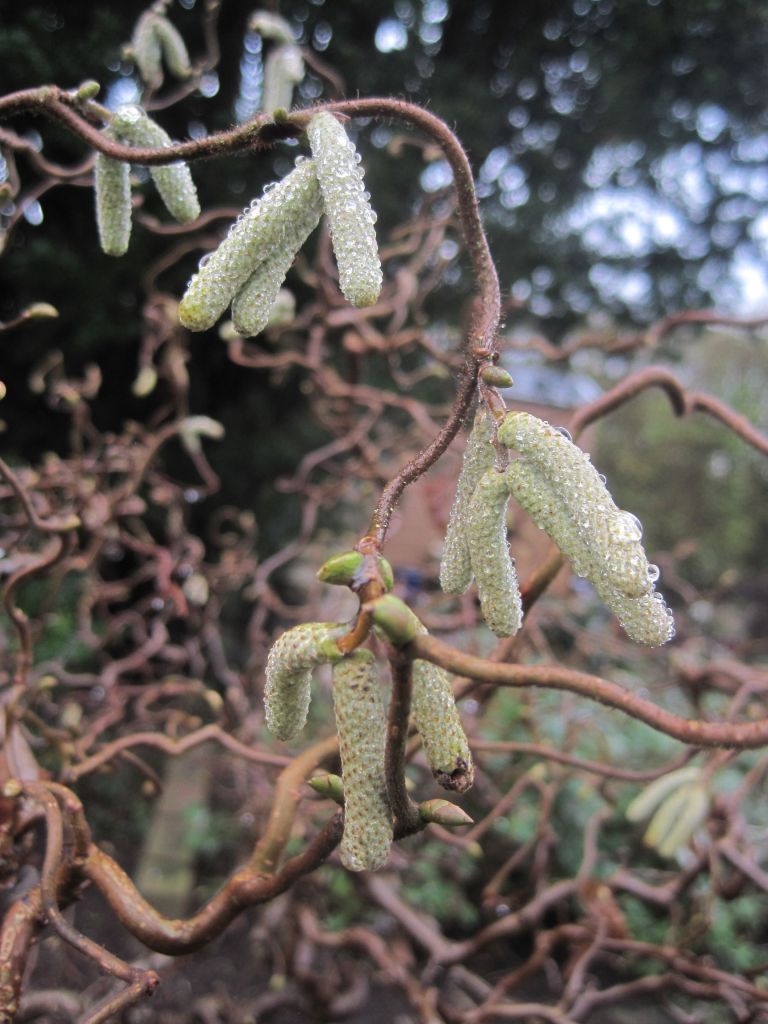
Our neighbours have a corkscrew hazel. I could just see the lovely catkins over the fence.
Home comforts are so necessary in winter, especially if you’re unlucky enough to catch a cold as I did just after Christmas. I don’t take much in the way of medicine for a cold but here’s a little tip you might not know about. If you have a cold your nose can become sore and inflamed. Keep a lip salve in the house and if you have a cold rub the salve around your nose each time you’ve blown it. It will stop it from becoming sore. One less misery to put up with.
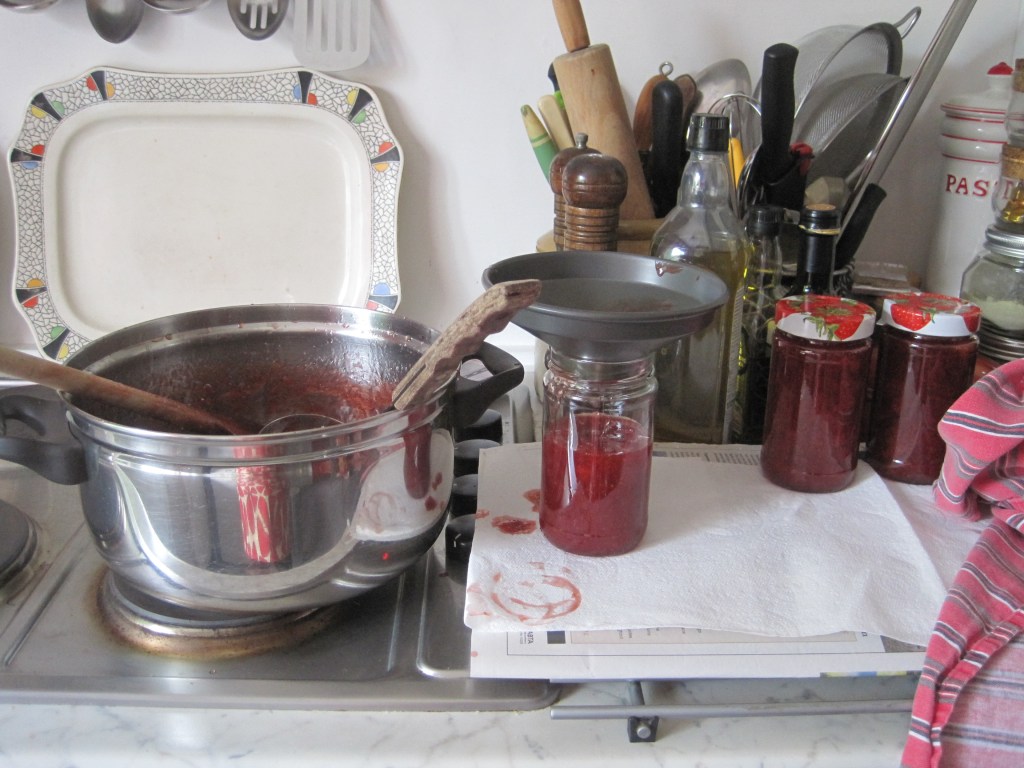
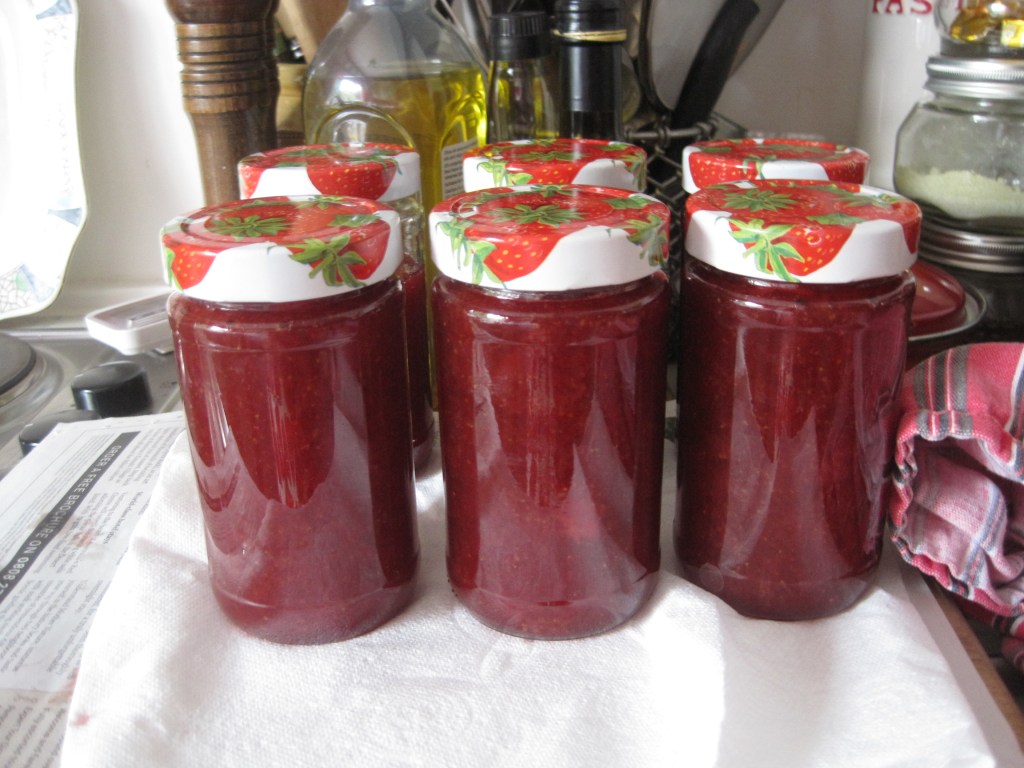
On cold days I enjoy being cosy in the kitchen and making jam always seems a good thing to do in Winter. I froze a large bag of strawberries from the garden last Summer so I thought it was time to get on with it.
Jam making is easy if you follow a few simple rules. Only use sound fruit, nothing mouldy. Keep everything clean. Wash and rinse the jars before you begin cooking. Put them in the oven and heat gently until the jam is ready to fill them. Dry the lids with kitchen paper and put somewhere warm to finish drying but not in the oven as some lids have a plastic coating inside. Keep a cold plate ready for testing a spoonful of jam now and then until the setting point is reached. The surface of the jam should wrinkle as it cools. This is so easy that I’ve never used a thermometer. Keeping it simple seems to work well.
Strawberry jam is difficult to set as the fruit has very little pectin. Apples are rich in pectin so I added three small, peeled and cored, cooking apples cut into tiny pieces, to the stewing strawberries. You can buy bottles of pectin to add, or jam sugar which has added pectin, but as I have a few of my apples leftover from Autumn I preferred to use these.
When the fruit had cooked I stirred in an equal weight of sugar and mixed well before bringing to a rapid boil. The smell of strawberries was wonderful as the steam sent it around the kitchen.
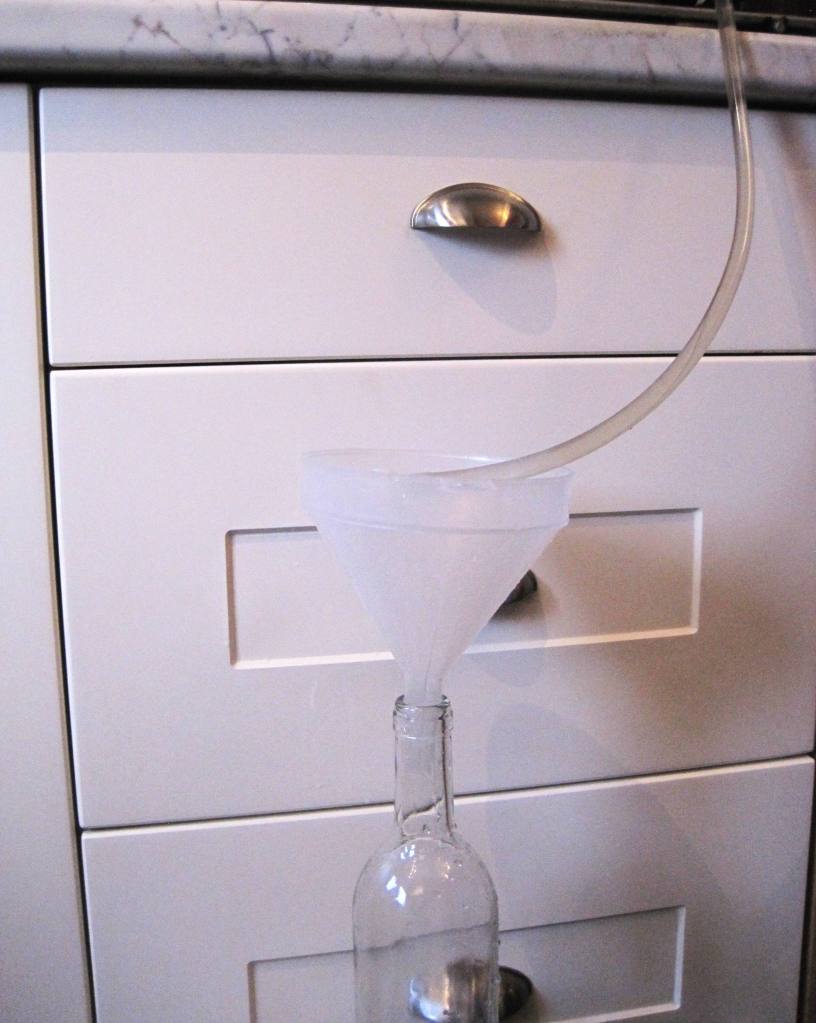
Once setting point was reached I stood the jars, one by one, on a board covered with kitchen paper to prevent the hot glass from touching a cold surface and, using a funnel, I ladled the hot jam into each jar and screwed the lids on tightly. It’s important to leave a gap at the top rather than filling right up. This helps the jam to form a vacuum as it cools and seals the lid on.
More tips for jam making are in my Earthy Homemaker’s Cookbook.
Winter can seem long and dreary. Gardeners, like me, are eager to start growing again. When I look back at my summer photos I can hardly believe the glorious colours and abundant produce in my garden but Spring will be here before we know it and it will all begin again.
Last May I painted a picture of a pot of pansies and although I showed it at the time, I think it’s cheerful enough to show again. So, here is my painting, done with gouache from my own photo.
With you again in a couple of weeks. I hope you have happy moments, stay warm and keep well. Bye for now.
Happy New Year everyone! I hope you’ve had a happy Christmas with good food and pleasant company.
Our family Christmas get-together was a little delayed but a happy event in the end.
Now it’s over, it’s time to think ahead. Another year begins with all the freshness and good intentions. Much to put behind us and many things to look forward to.
Although the garden is looking drab, here and there winter flowers are beginning to bring a little brightness to the dullness of the season. The hellebores have fat buds with one or two already putting on a show. These are valuable plants to have in the winter garden. Generously flowering in all weathers and very lovely.
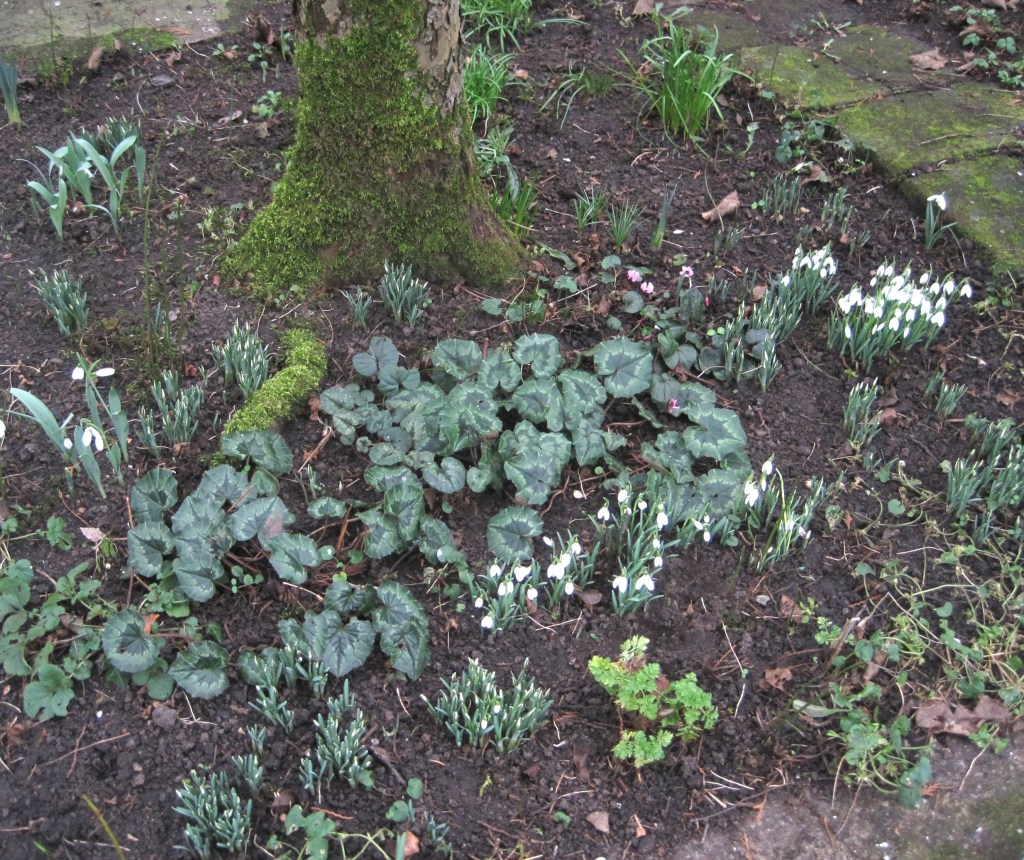
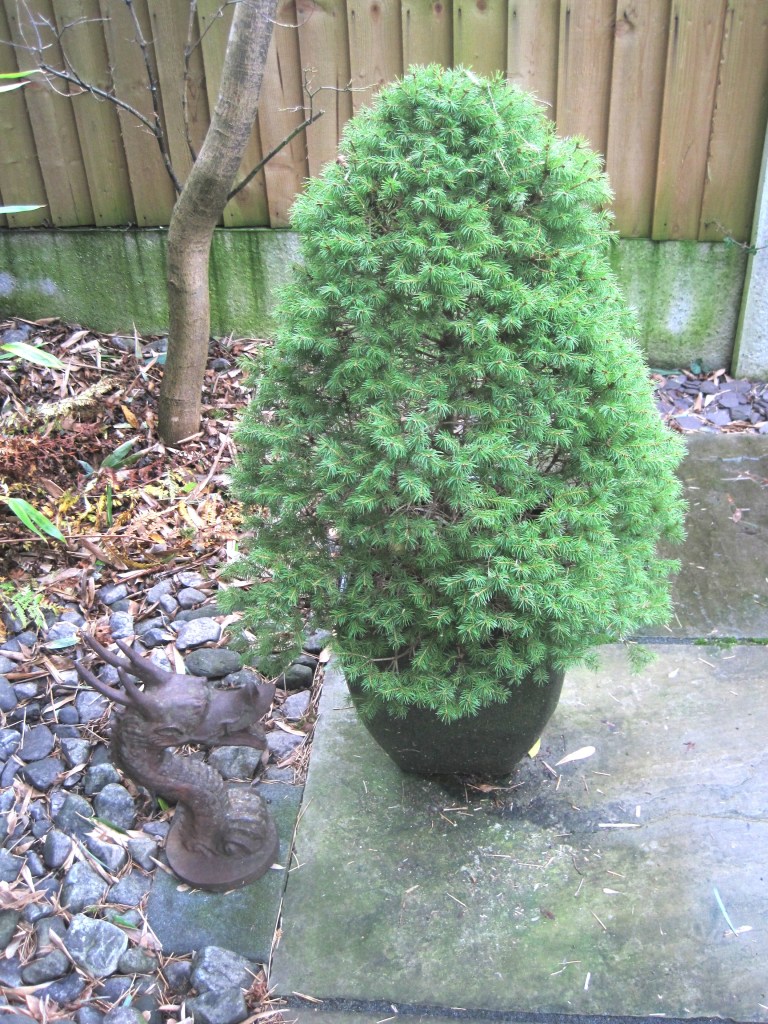
I have a few snowdrops out although the main display will not be for a few weeks yet. Slightly mud-splashed with the heavy rain we’ve had. Lovely to see new life in the garden. The Garrya eliptica has beautiful catkins and the conifers stay green and fresh looking whatever the season.
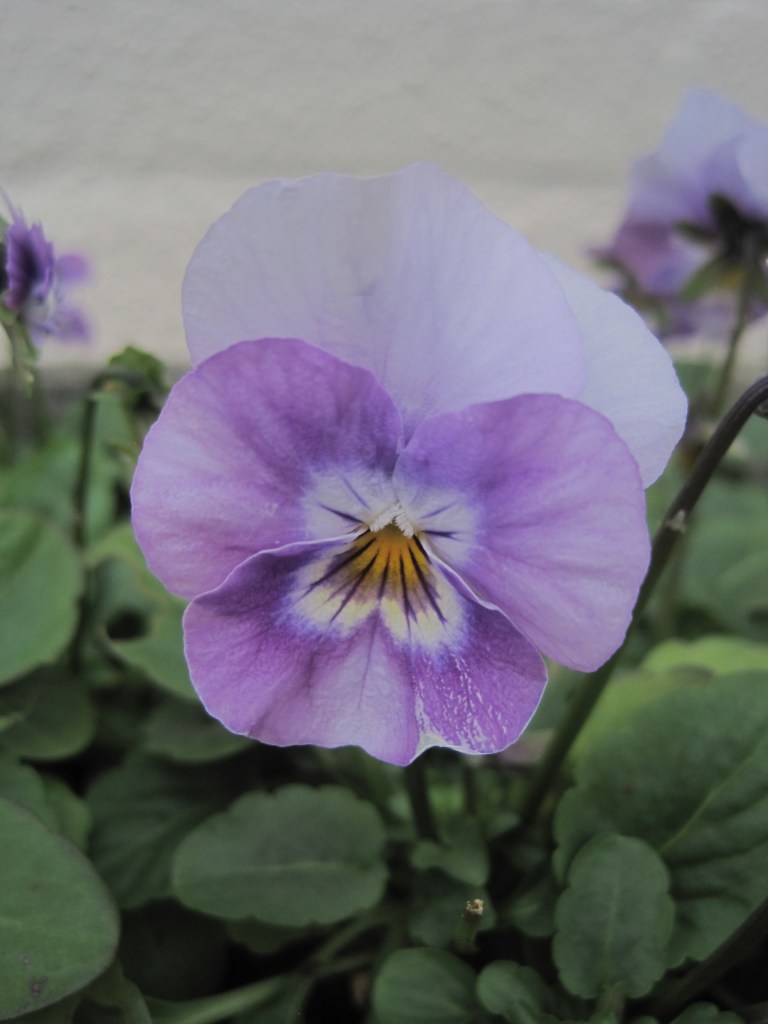
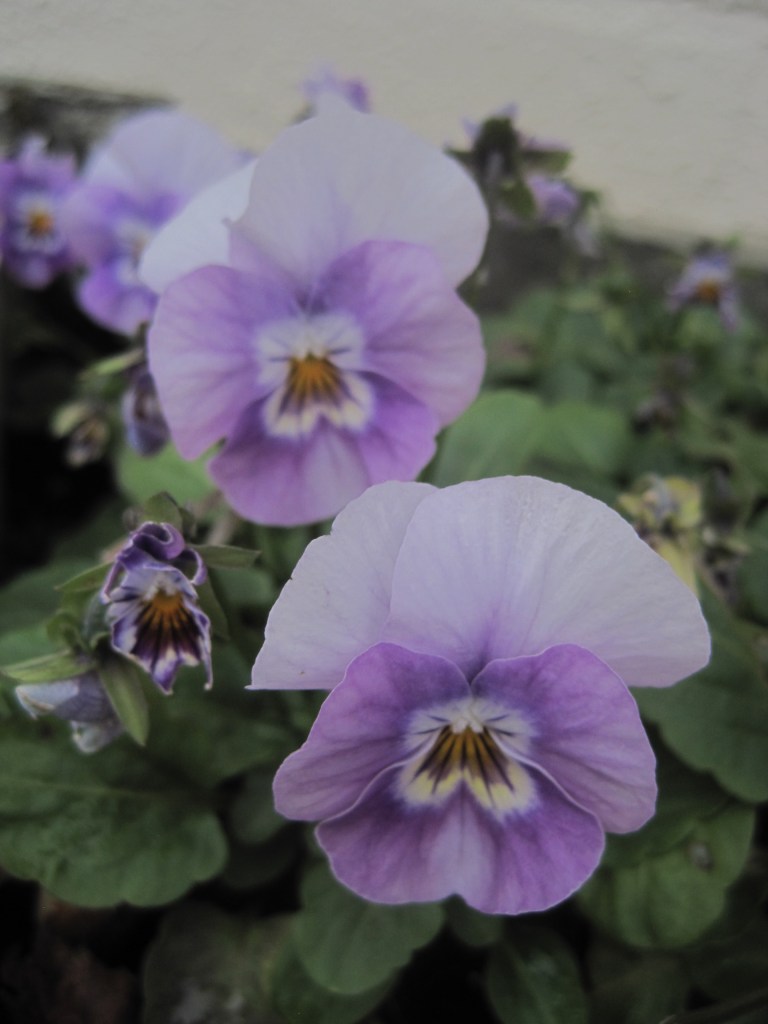
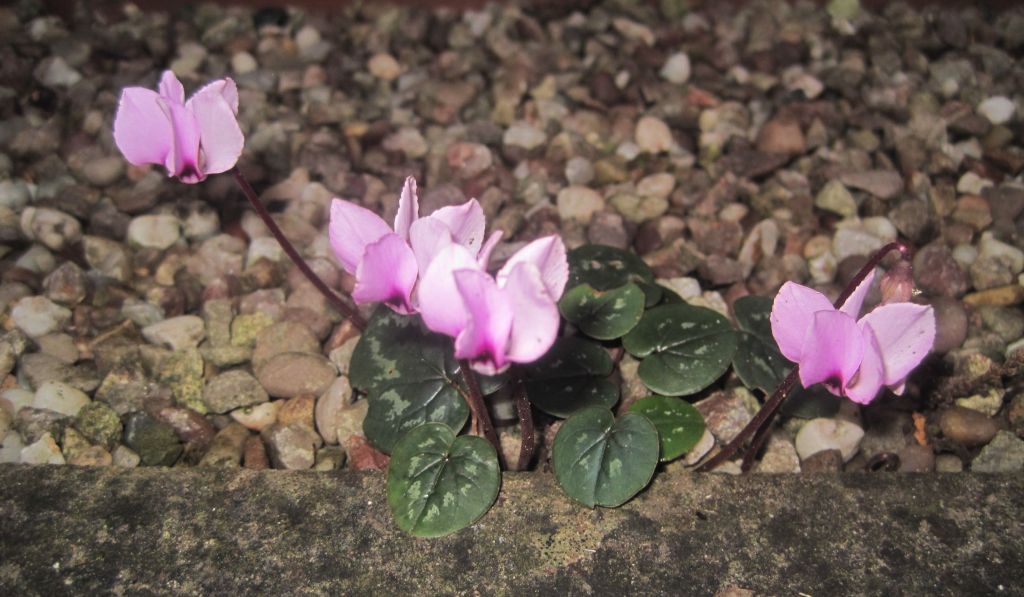
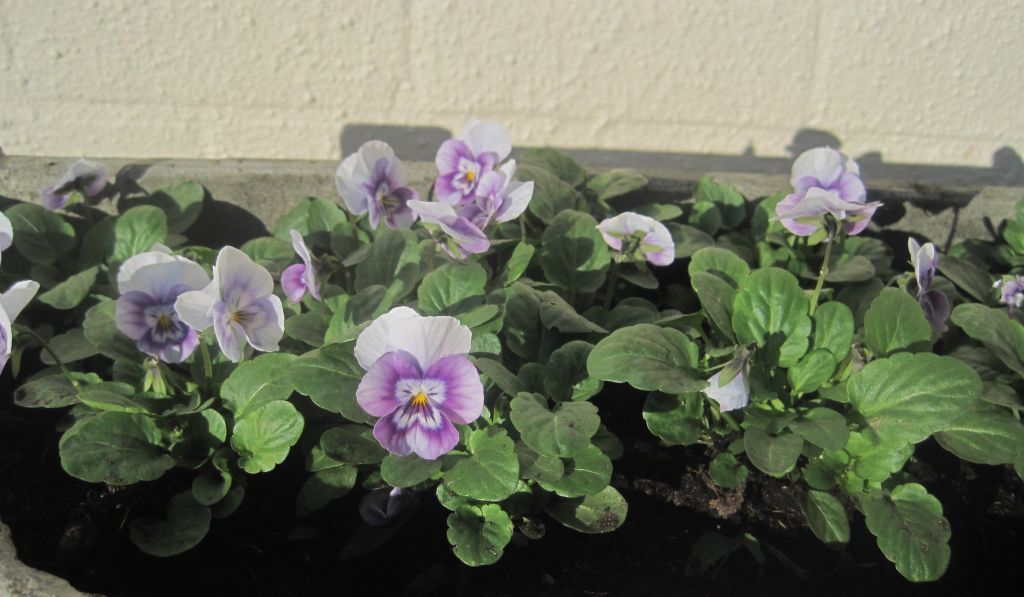
Winter pansies add a little colour and a self-seeded cyclamen has popped up by the side of a path.
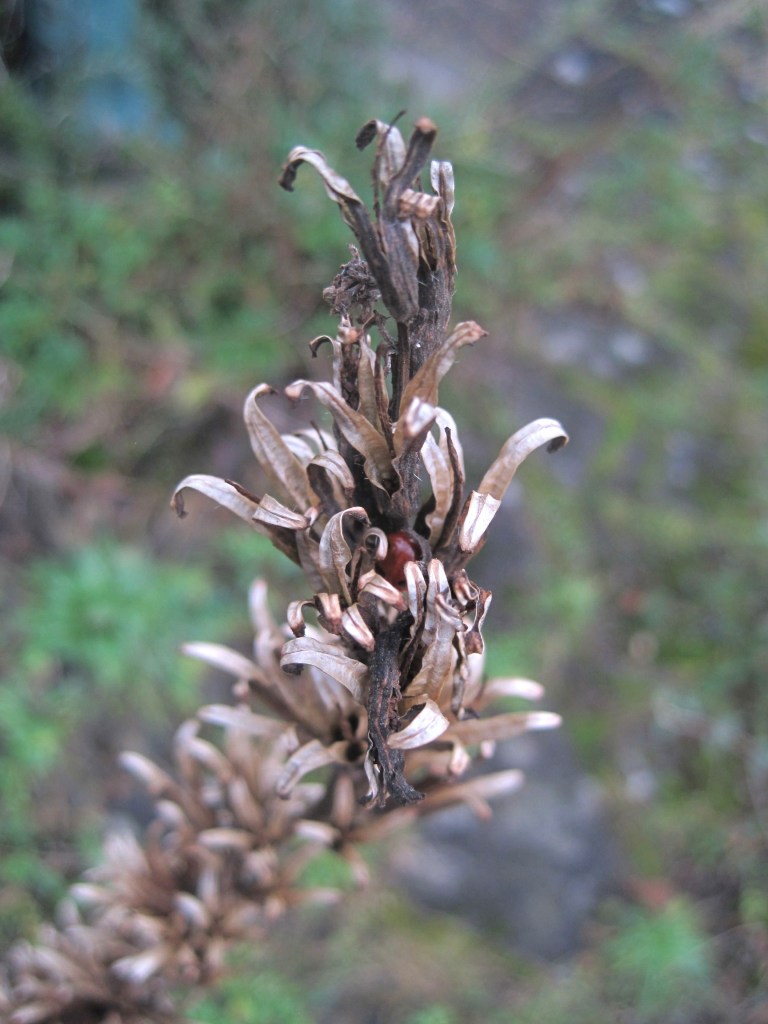
The garden looks sad with so many dead stems but it’s a good idea to leave some until Spring because insects shelter in the curled leaves. I noticed, for example, a ladybird nestled into a seedhead when I went around the garden with my camera. If you look closely it’s just visible among the dried fronds.
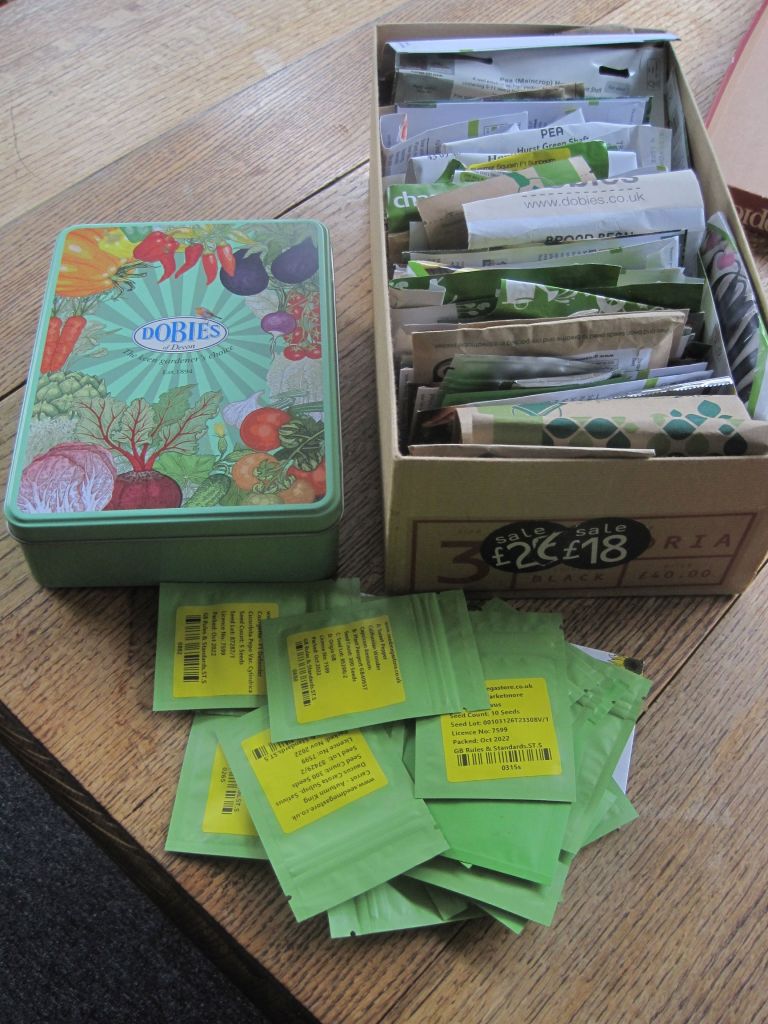
I love buying new seeds for Spring and Summer sowing. New life is always a thrill. Got out my seed boxes and sorted the packets to see what I have already, then ordered a few items to fill in the gaps.
I can’t buy them now from the department store I used to and packets are so expensive from garden centres but I’ve found a company online. They supply smaller packets if you want them. It means you don’t end up with lots of surplus old seed. Although some seeds last a long time, I find it’s better to have fresh seed as often as possible. Besides, I love buying new seeds. It’s like buying treats.
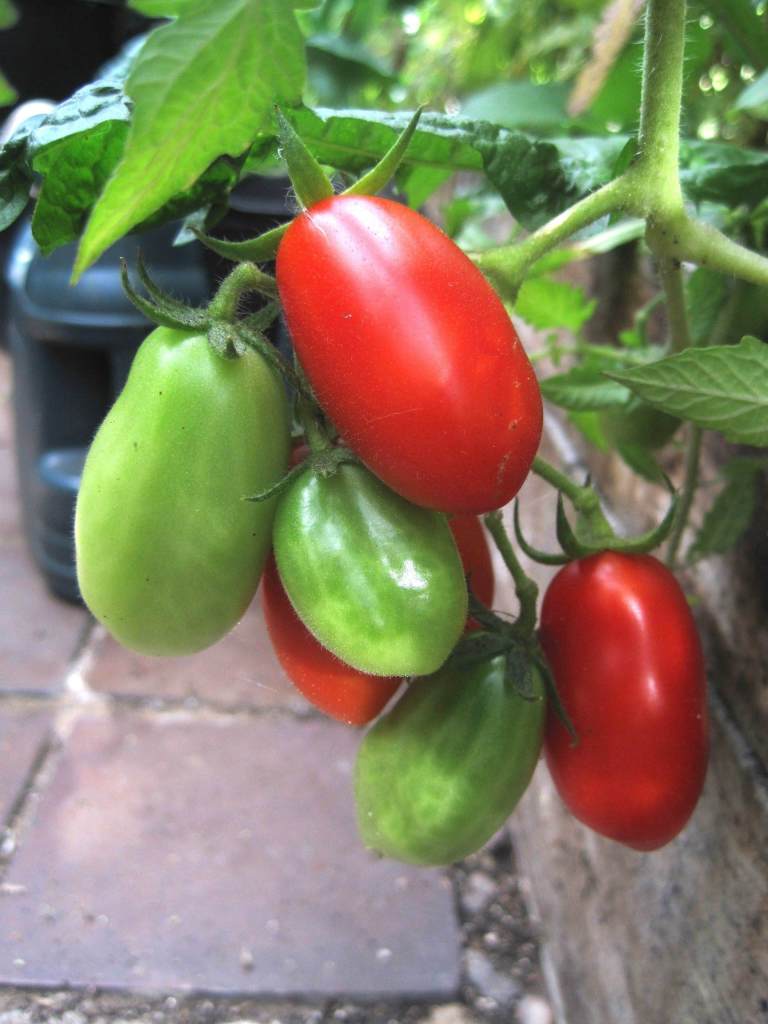
I will definitely grow “Roma” tomatoes again. Delicious big plum ones with thin skin and few seeds.
I’ve also saved some St. Marzano tomato seeds from last year’s crop so I’ll sow them and see what develops.
About the end of February is a good time for me to sow tomatoes in a warm room. It’s important to give the emerging seedlings as much light as possible. Turning the trays or pots a couple of times a day helps to stop them stretching towards the light if they’re in a windowsill. This is important to prevent them from developing thin, “leggy” stems which will delay the growth of sturdy plants. I can put the plants into the greenhouse sometime in April if the weather permits.
I do buy tomatoes in winter but they are so disappointing compared to home-grown. I wish I could grow them all year round but they are sensitive to cold and need plenty of sunlight.
Talking of food, there’s always something to use up after Christmas. I had ham and sausages so I put them in the food processor with bread, sliced onion and a few sage leaves from the garden. Whizzed them together and formed sausage and ham burgers which I fried in a little olive oil until they were browned on both sides. Very tasty and made a nice change from cold portions.
The birds who visit the garden need feeding too. The bird table blew down in one of the storms we’ve had recently. The post had rotted at the bottom and the strong wind toppled it. Another job for my very practical spouse. The collared doves were very puzzled by it’s absence but a scattering of seed on the ground settled them down.
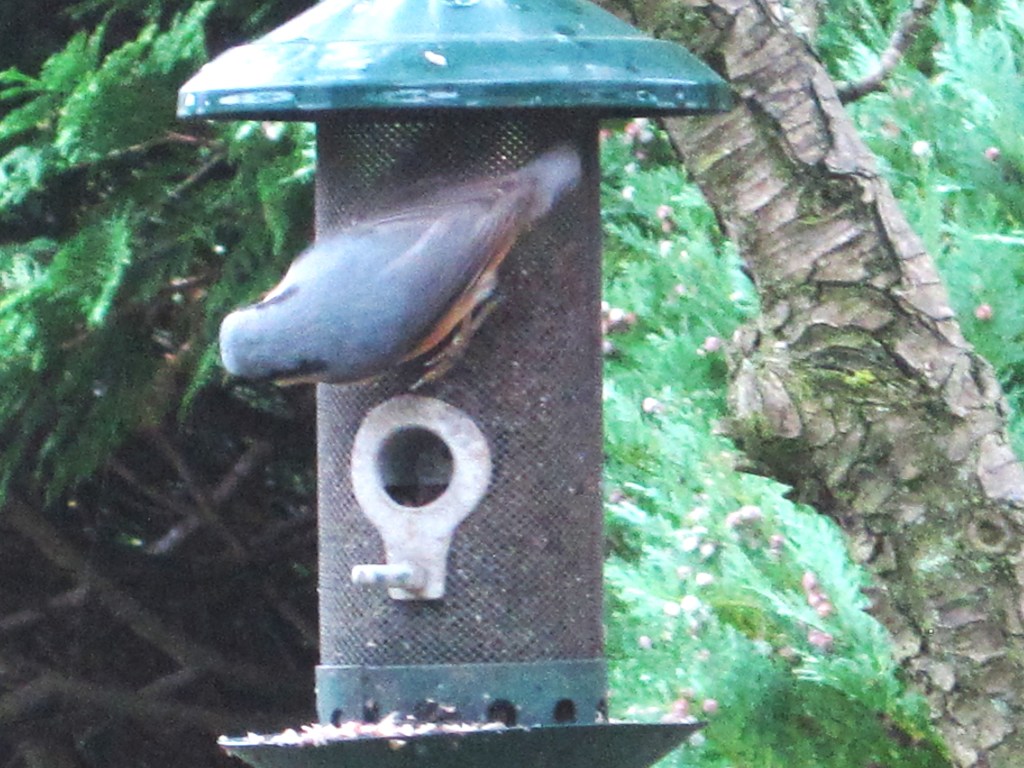
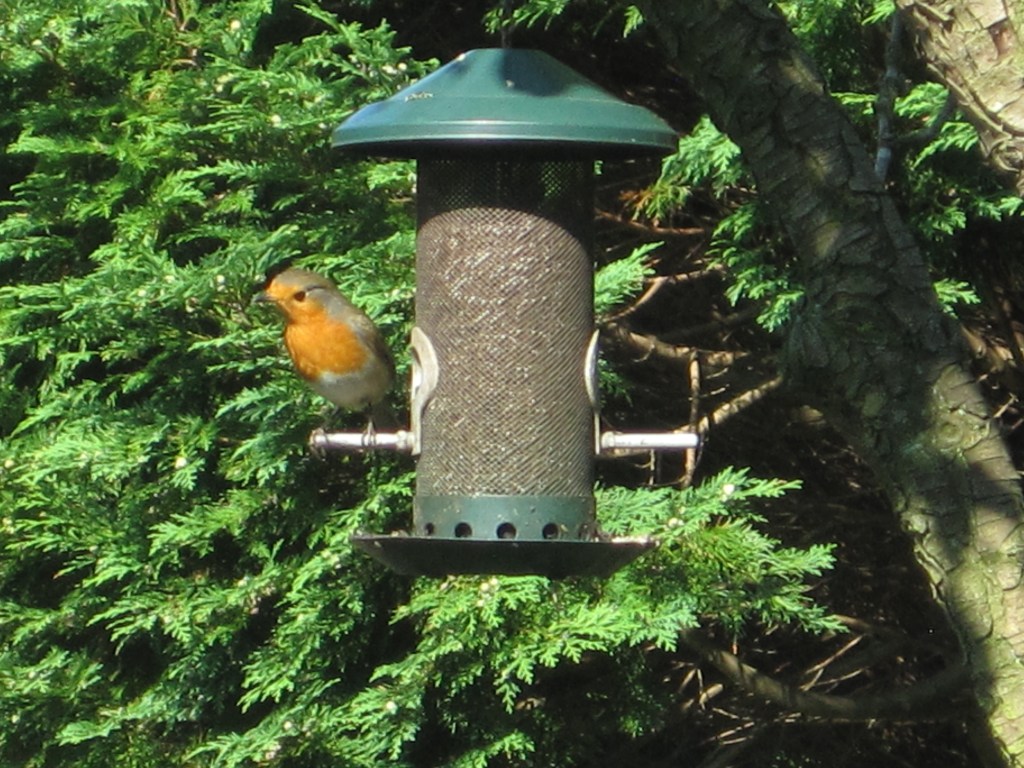
The smaller birds take mixed seed, peanuts and sunflower seeds from the feeders hanging in the pear tree behind the garden room. We have a lovely view of their antics. Of course the squirrels want more than their fair share and there’s a lot of hanging upside down to catch the seeds which fall out as they shake the feeders.
Plenty to look forward to in the garden. Meanwhile, planning and day dreaming during the worst of the weather. I’m sure I’ll also be knitting and painting again until the garden tempts me out.
Here’s a little painting from a previous year to remind us of the pleasures of the Spring garden. Drawn from one of my photos and painted with gouache.
Wishing you all the very best. I hope we all have a great year with good health and happiness and much to enjoy. Bye for now. With you again in a couple of weeks.
Christmas not far off now. Lots going on in my kitchen, home and garden. A busy time but full of little things to bring pleasure and satisfaction.
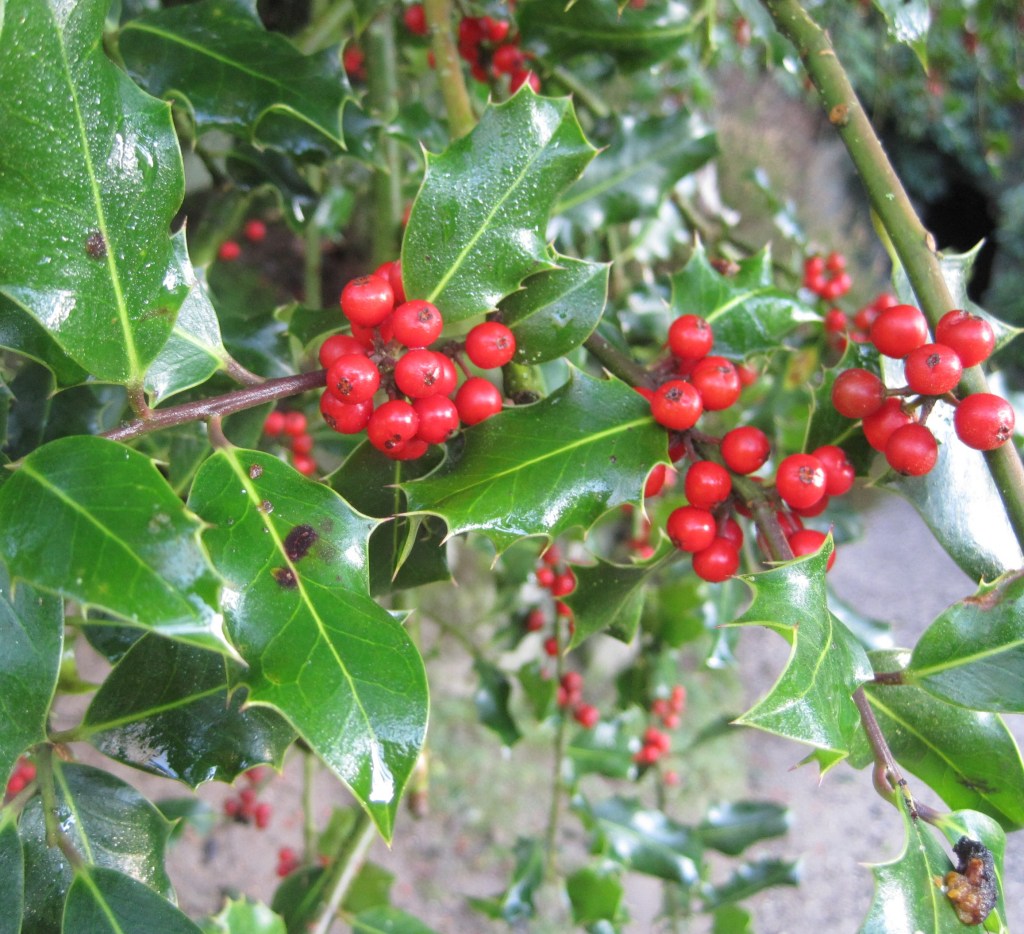
I made a wreath with lovely bits from around the garden for the front of the house. The holly berries were in short supply but I found a few sprigs to bring a little seasonal colour. As it’s been so wet and windy I tied the wires to secure the fronds as tightly as I could.
Here in my part of England we had severe frost for a few days. I was worried that my winter vegetables in the polytunnels might not survive because we’d forgotten to cover the mesh doors. Usually in late Autumn Allan staples a thin fabric over the mesh panels on the tunnel doors to help to keep out the frost. For some reason, this year we forgot! But I needn’t have worried. When the thaw came the plants sprang back and they’re all fine.
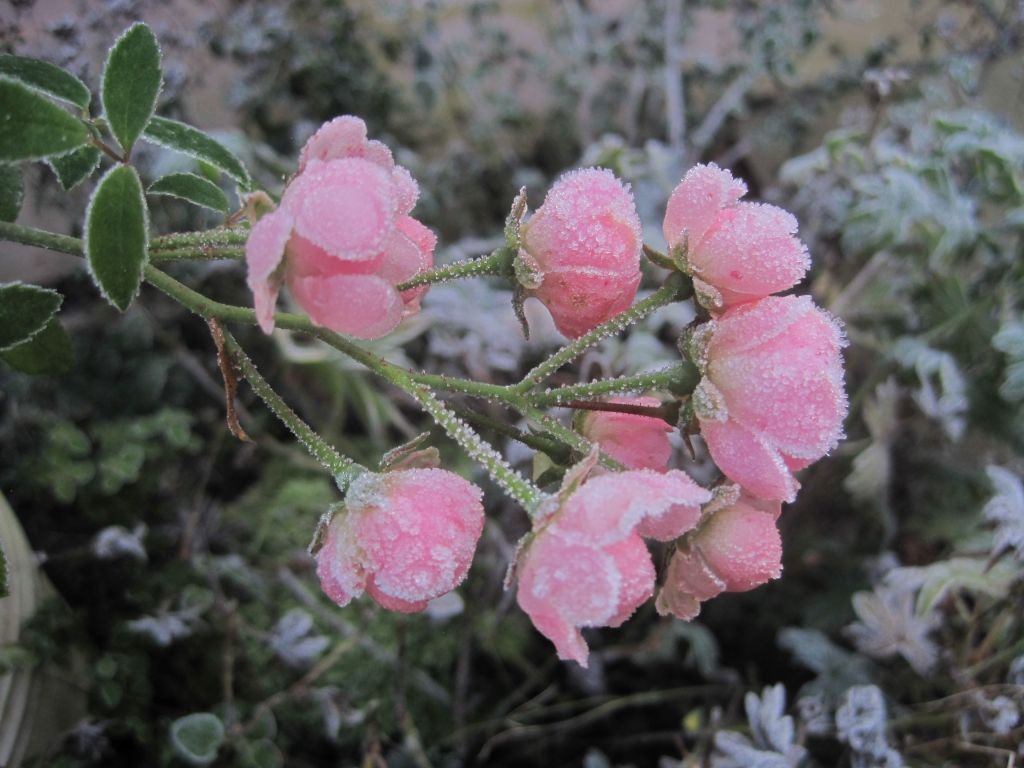
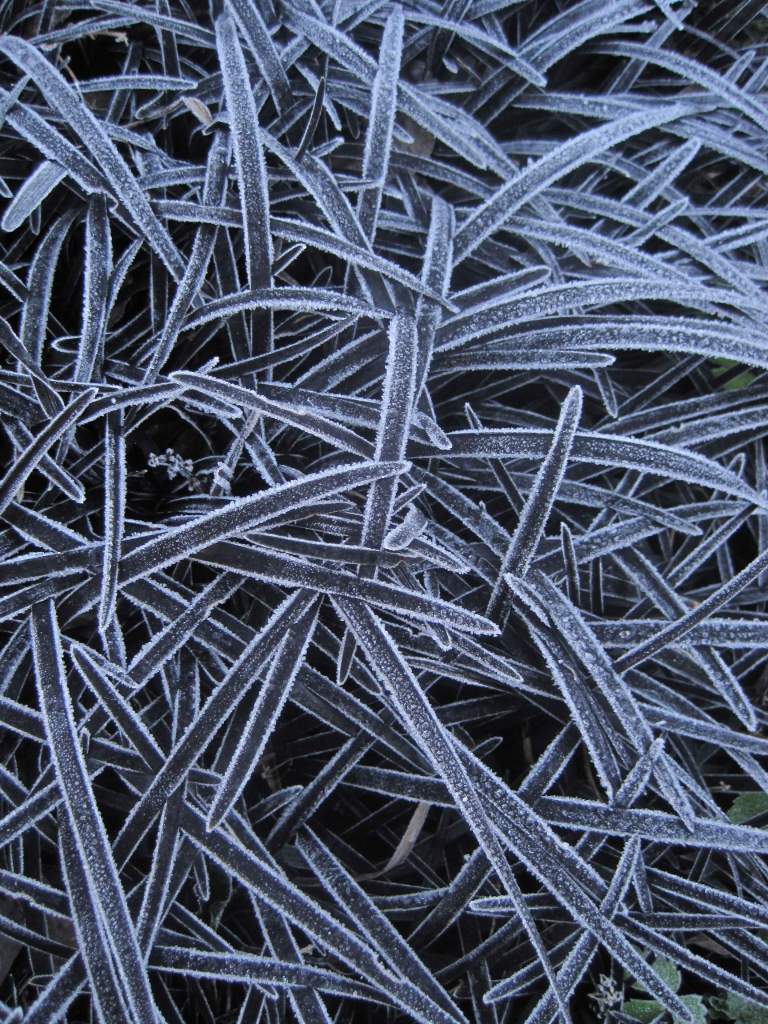
Around the garden there were some lovely sights as the leaves and flowers took on a silver glow.
Even the top of a water butt looked interesting with it’s frosty decoration.
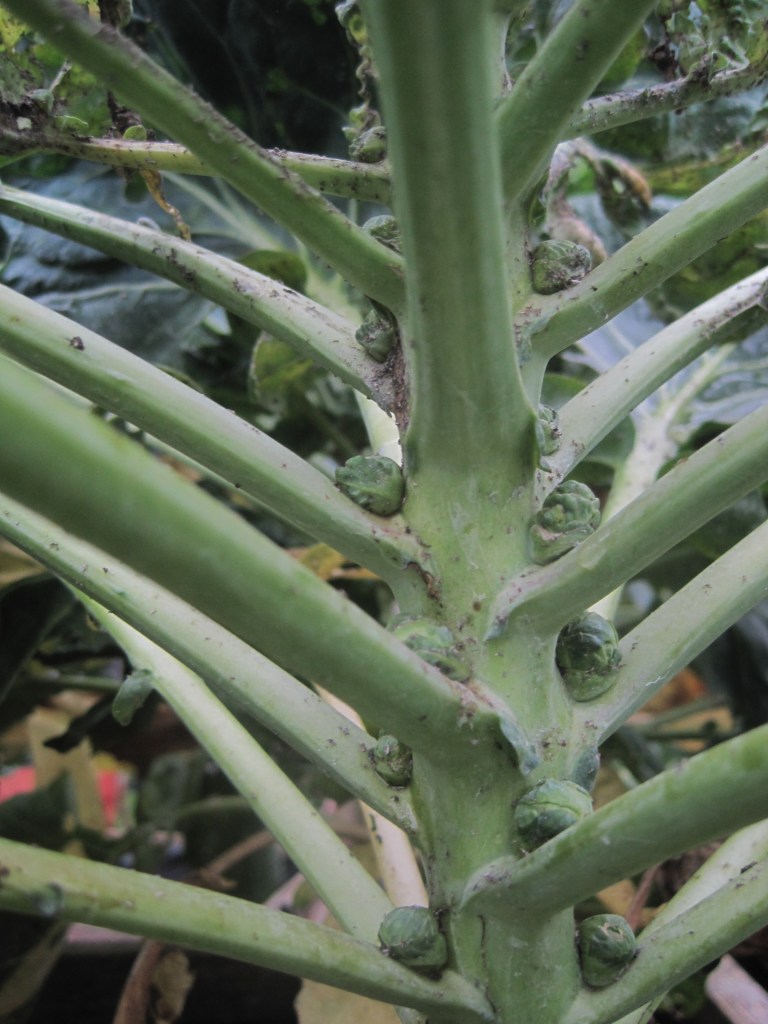
Frost on the sprout plants not only looked lovely but will sweeten up the buttons for my Festive Flan on Christmas day.
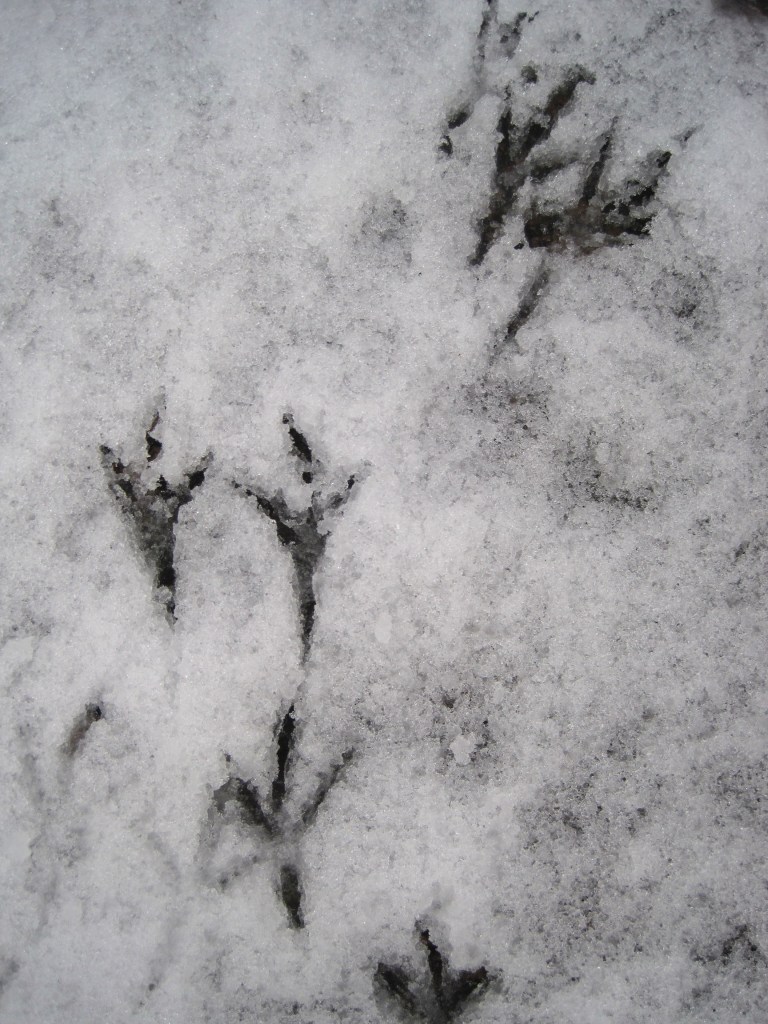
Snow arrived but didn’t last long. That suited me as I’m not fond of snowy conditions. The birds were fed and the ice on the pond was broken so they could drink.
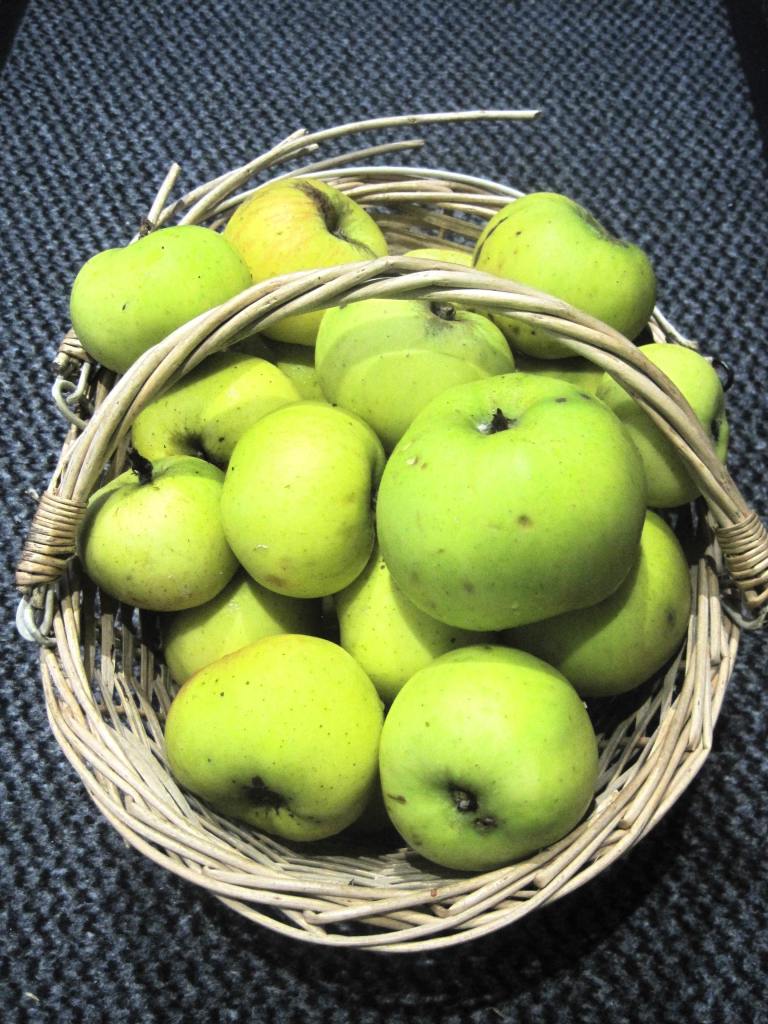
Wildlife in the garden is welcome but it can have drawbacks. Mice got into the shed and nibbled some of the stored apples. A few were left out on the ground for them, after all they’ve got to eat too, but the rest were brought in to use. We didn’t have a lot to store this year and I don’t want to waste them. They smell so appetising. I’ll bake some delicious apple cakes and stew the rest for applesauce or to eat with ice-cream.
Lots of baking going on but I had a bit of a problem with my mince pies!
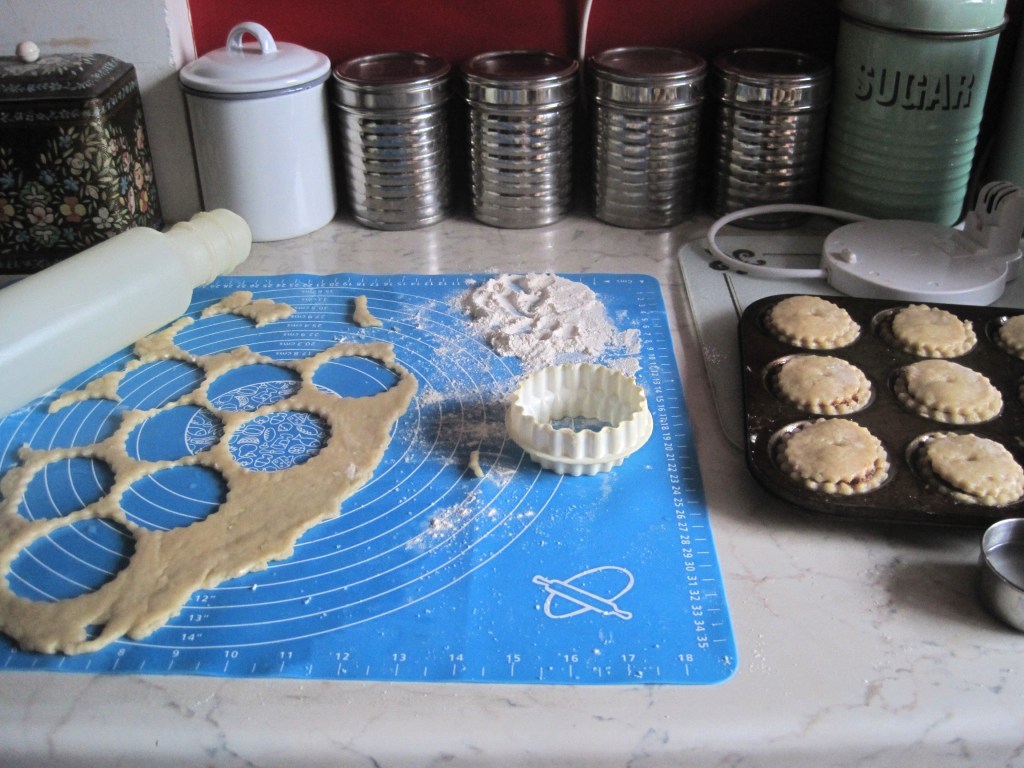
Usually, I make pastry in the food processor using plain flour, sunflower oil and water. It works well and produces good light pastry. This year, I couldn’t be bothered to use my processor so I mixed with a fork. Made the mince pies, baked them and they looked good. But when I tried them the pastry had crunchy bits. Disaster! I hadn’t mixed the pastry ingredients thoroughly enough. A lesson for future baking. I popped them in the freezer and I will definitely eat them but won’t give them to any guests.
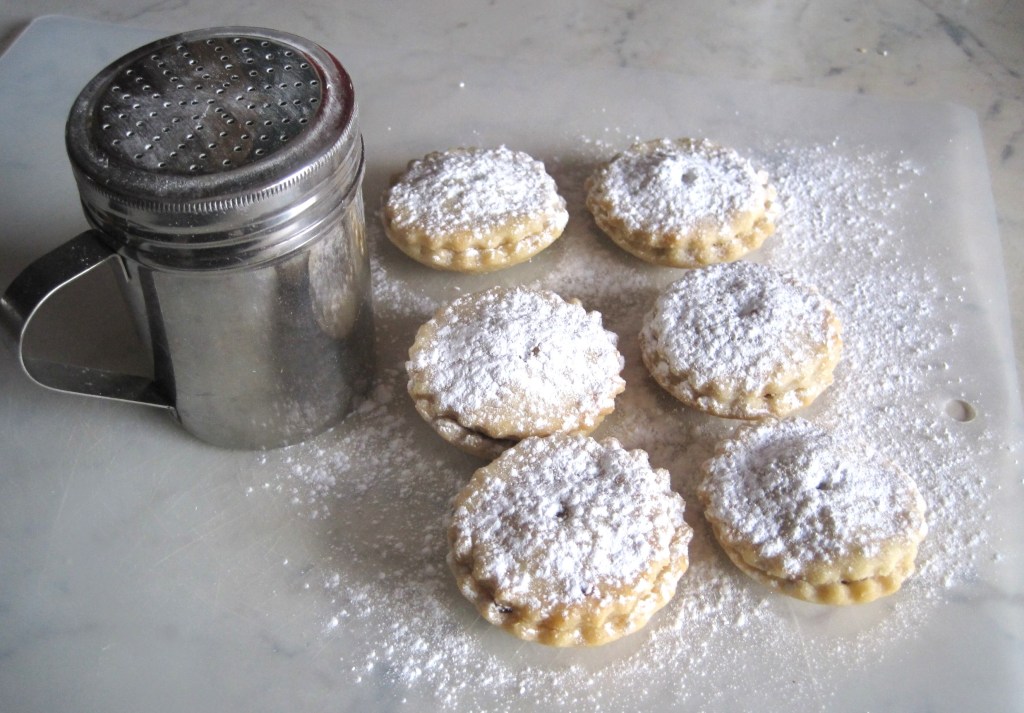
I made more and I’m happy with the results. I always add a little more brandy into my mincemeat before I fill the pies. Makes them moist and tasty.
I’ve poured a little sherry over the Christmas cake, twice, and rewrapped it, replaced in its tin and stored it to mature to a delicious boozy treat. The aroma is wonderful. I don’t ice the cake these days although I did years ago. It tastes fantastic as it is, unadorned.
Some favourite things at Christmas are baking the cake and eating it.
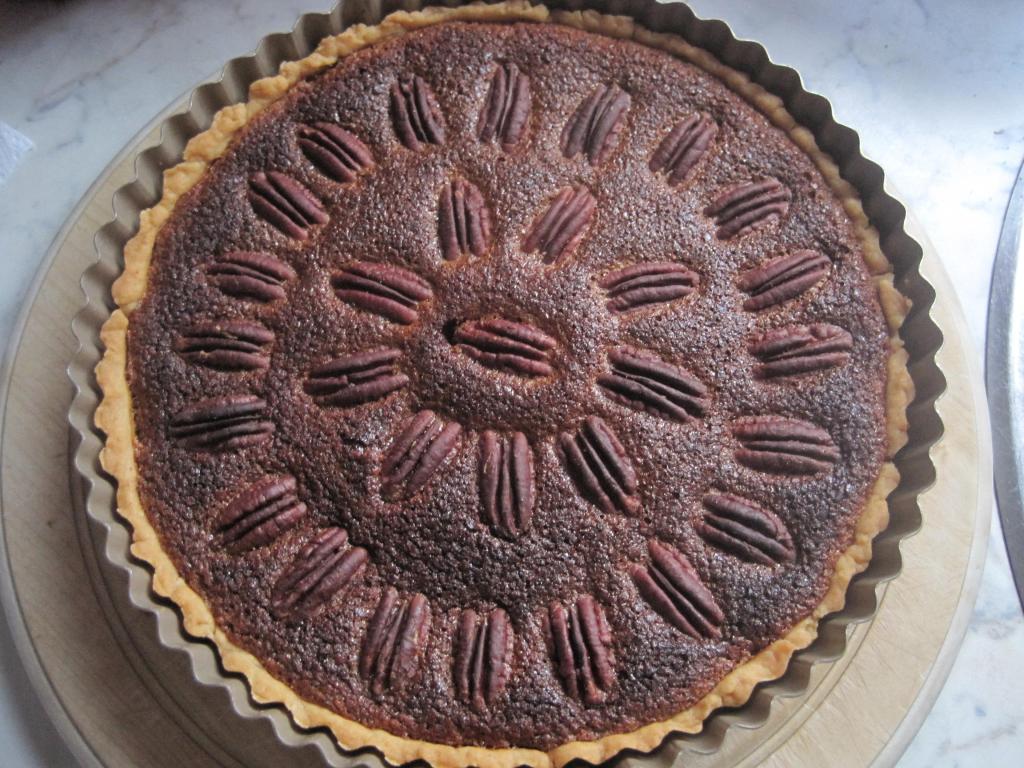
My daughter-in-law loves my pecan pie so I usually make her one at Christmas. This year is no exception, so it’s baked and ready in the freezer. It’s a sensational rich dessert which is always popular. Easy to make and freezes perfectly if it needs to be made ahead. My recipe is in my Earthy Homemaker’s Cookbook.
The trees are decorated with tinsel, lights and glistening baubles. I’ve sent my Christmas cards. Just a few more things to bake and then we’re ready to relax and enjoy the festive treats.
While we take a breather, here’s a little poem I wrote a while ago about the frost.
Frosty Morning

The crisp, curled leaves
Lie frozen on the garden path,
Their steamy breath rises
In the morning sun.
Silver-edged, their crumpled beauty
Enfolds the icy remnants
Of nature's latent bounty.
Too cold to shiver in the breeze
They stiffly stand guard
Above the sleeping soil.
I hope all your preparations are going well and you’re enjoying them. I wish you all a very Merry Christmas.
My next blog should fall on Christmas Day so I will not be with you again until the beginning of the new year. Bye for now.
Making the Christmas cake is my idea of celebrating my November birthday. My daughter Sam helps me. It’s a tradition we began years ago and we love to do it. The kitchen smells of Christmas as we chop and mix together.
If you would like the recipe, you’ll find it by scrolling back to my post from last November with the title, “Christmas Cake, Leaves and Landscaping”. It’s not too late to make it. Personally I find cakes baked months ahead taste stale and unappetising. Perhaps that’s why some people think they don’t like Christmas cake. The cake should taste fresh, fruity and boozy. Have a go at making your own if you haven’t tried it. You’ll be amazed at the difference.
Time to think about other Christmas food too. For a few years Allan and I have enjoyed a vegetarian dinner on Christmas Day. We do have meat on other days but my Festive Flan is so delicious that it’s become a must-have. I serve it with homemade cranberry sauce, roast potatoes and parsnips and my parsnip wine.
You might think this is a lacklustre Christmas dinner if you enjoy a traditional meal but honestly it’s truly delicious and we look forward to it every year. Button sprouts, leeks, carrots and apple with a creamy cashew sauce in a pastry case. In case you’d like to try it for Christmas Day or any other celebration meal, here’s my recipe.
Festive Flan

Shortcrust pastry to line a flan dish.
Make the pastry and line the greased flan dish and prick pastry all over. Rest in the fridge for 20 minutes.
Heat the oven to 190C/170C for a fan oven.
Bake the pastry for 10minutes, no longer.
Prepare the rest of the ingredients while the pastry is baking.

50g Cashew Nuts
2 Carrots, peeled and sliced
1 medium Leek, chopped
A few Baby sprouts, trimmed
small bunch of Parsley, finely chopped
1 large Cox Apple, peeled, cored and chopped into small chunks.
1 Vegetable Stock Cube ( I use Kallo organic)
Salt and Pepper

Grind the cashews in a food processor and put aside.

In a large deep frying pan, saute leeks gently, then add carrots.
Add a little water, crumbled stock cube and the chopped parsley.
Simmer for about 8 minutes.
Add sprouts and apple chunks. Cook for 5 minutes.
Add the ground cashews and stir well. You may need to add a little more water to make a creamy sauce.
Put all this mixture into the pastry case.
Bake for 20 minutes.
Serve with roast potatoes and parsnips, and cranberry sauce.
My recipe for cranberry sauce and also rum sauce to serve with Christmas pudding are in my Earthy Homemaker’s Cookbook.
I need to have sprouts, carrots and parsnips available in the garden for maximum flavour and freshness. I hope to have a few carrots ready although the crops are dwindling now. The parsnips and sprouts should be at their best by Christmas. A bit of frost will improve them. I want small tight sprouts to include in the flan and they will be sweet and tasty.
Although the flowers have almost gone the vegetable garden is ongoing. In the polytunnels I have carrots, parsnips and celeriac to use now, while Spring cabbages, cauliflowers and garlic are ticking along slowly for May harvests. These will be adequately protected from the ravages of Winter in the tunnels.
Outdoors I have sprouts and kale to use soon, onions to grow over Winter and I’ve planted out the broad beans I grew from seed. I’ve grown a variety called “The Sutton”. Not used them before but the seeds germinated well and produced sturdy little plants. I covered them with wire netting because pigeons pecked at last year’s leaves.
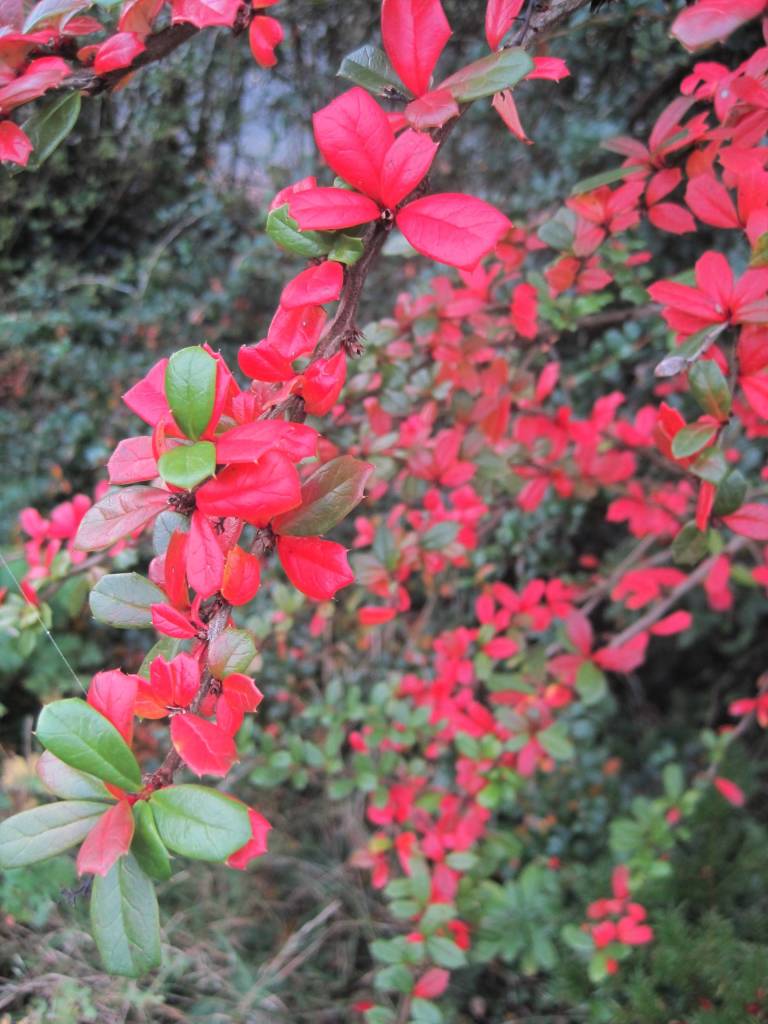
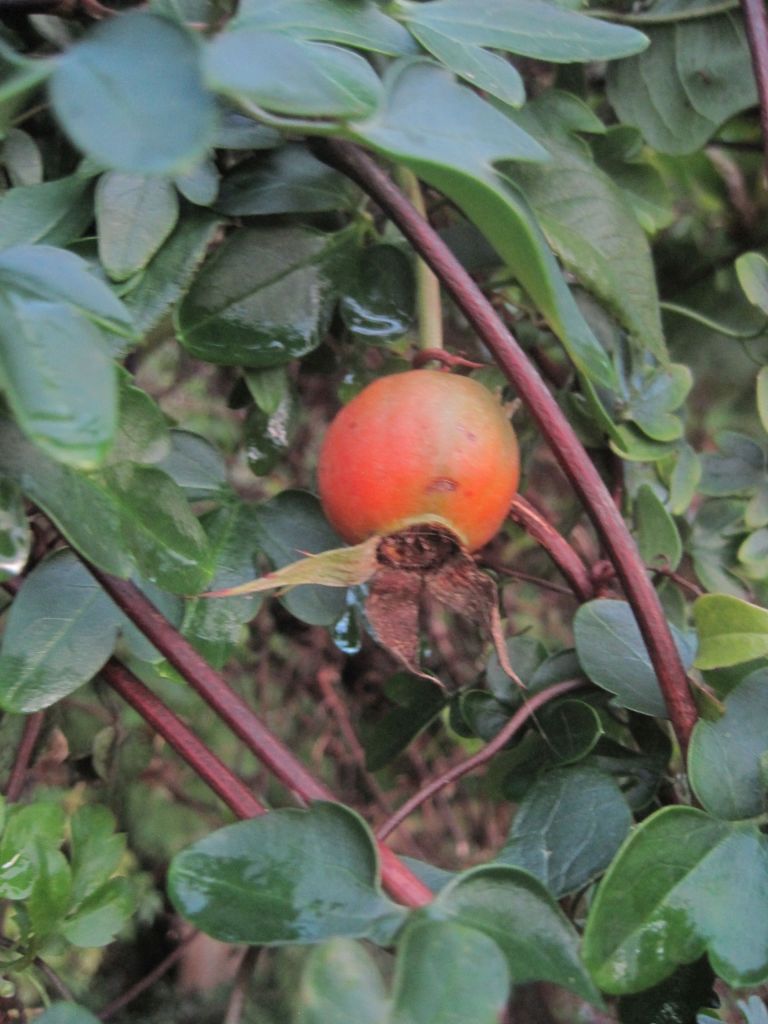
The deciduous trees are shedding leaves rapidly in the wind and the ground is blanketed. The few still clinging are colourful and lovely to see. Berries are hanging on and glowing on the naked branches.
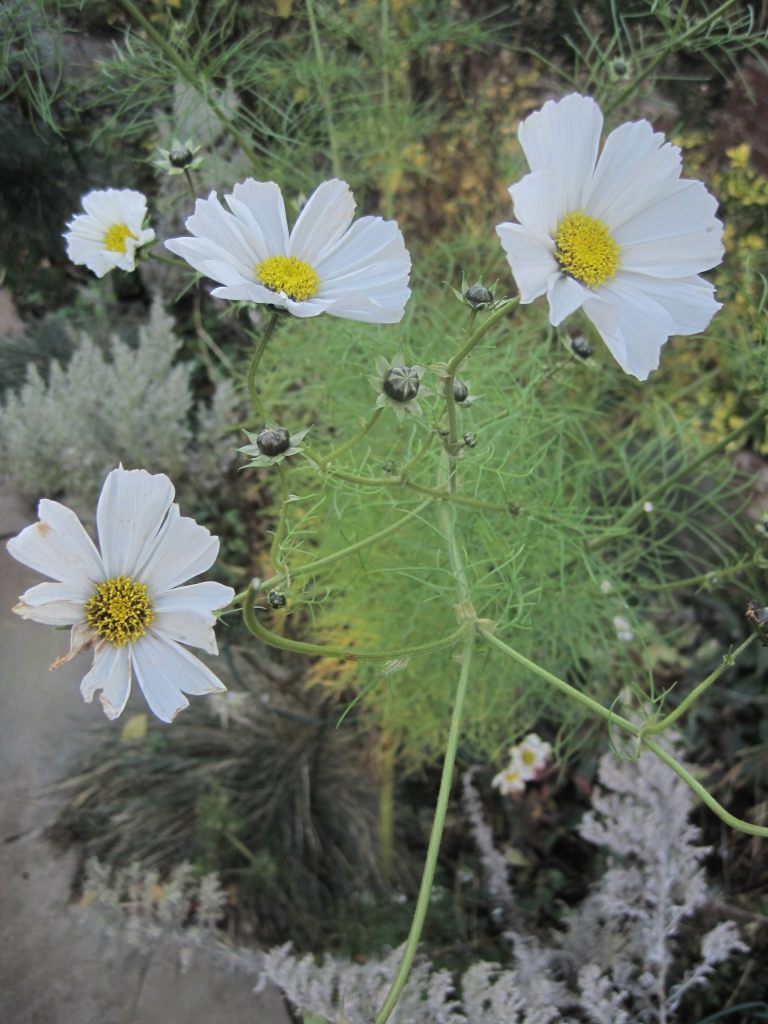
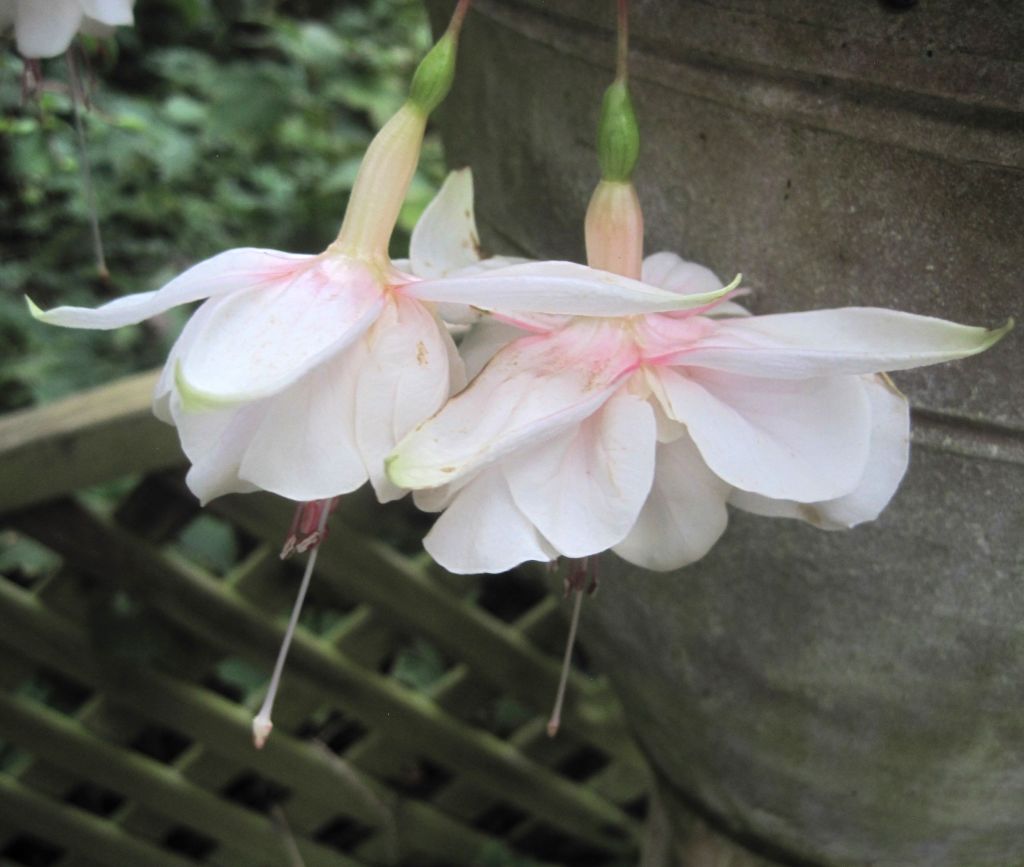
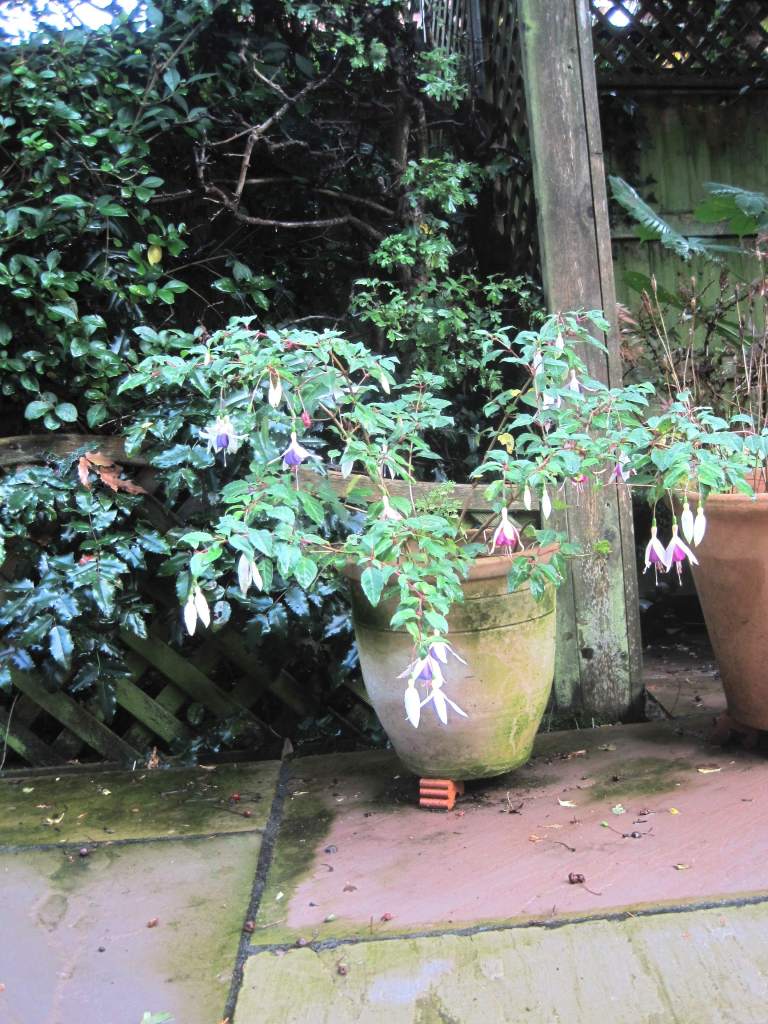
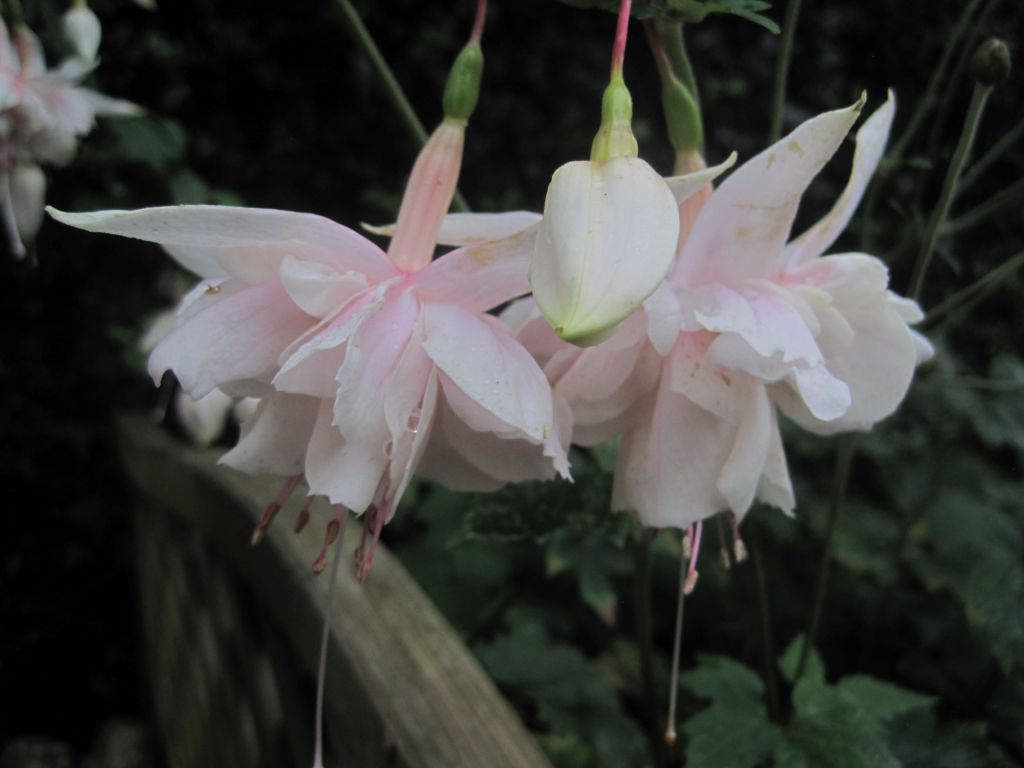
A lone Cosmos plant has been producing plenty of pure white flowers. Frost is forecast so they won’t last long. I took a snapshot of them to save the pleasure. The Fuchsias are also hanging on with their pretty, blousey blooms.
In the neighbouring trees two large crows were calling to each other and flapping about in the branches. They caught my eye as I listened to their caws. I had my camera and zoomed in to try to capture them.
Squirrels are visiting, looking for handouts and attempting to break into the bird feeders. I enjoy watching their antics.
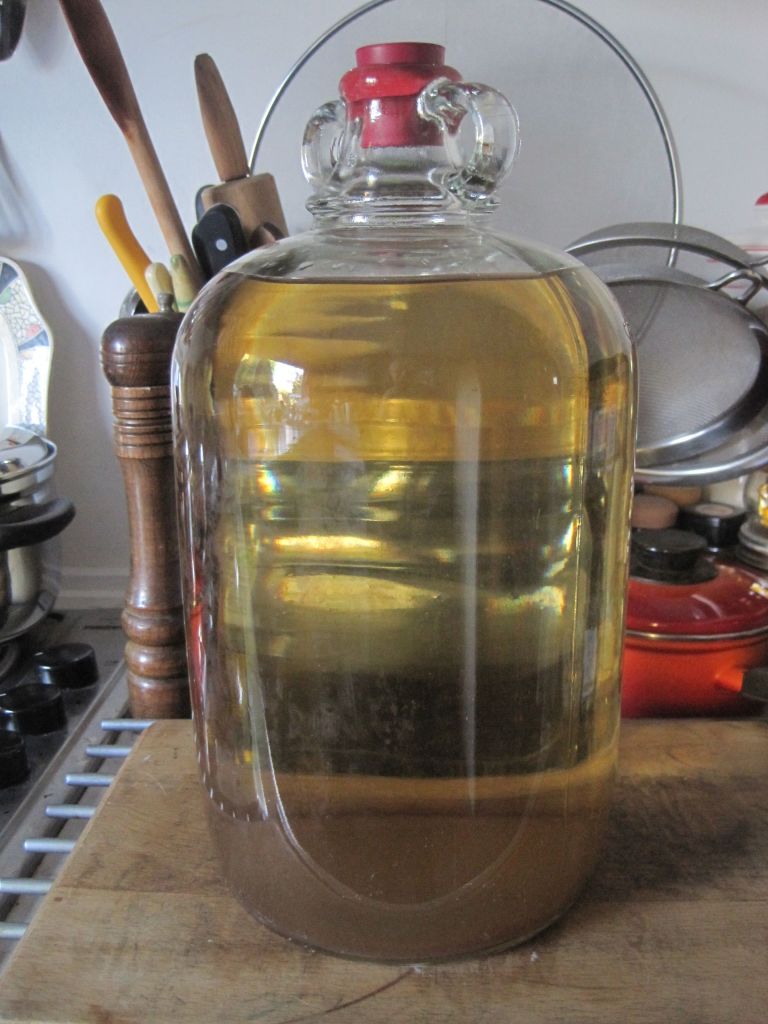
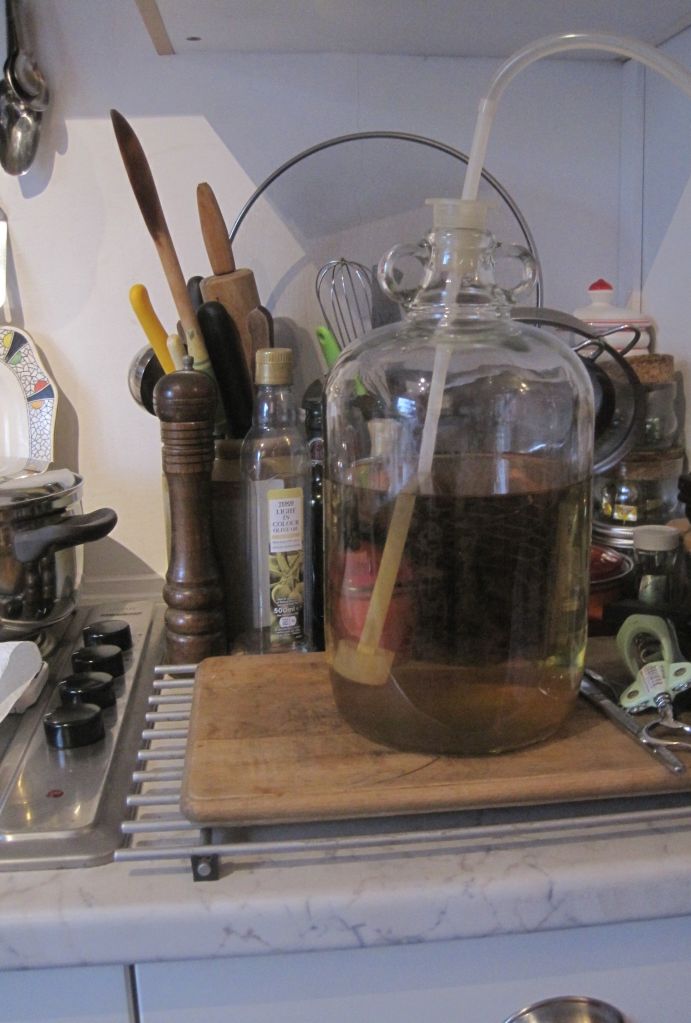
Back indoors I decided it was time to bottle my parsnip wine. It’s been maturing under the stairs for a year and looks perfect. It’s a very easy wine to make and is full of flavour and the satisfying warmth which is so pleasant in Winter. Its wonderful golden colour just glows.
If you keep everything clean and allow the wine to mature, there’s no need to add anything to this wine to produce a perfectly crystal-clear result. It’s a natural process and it doesn’t require chemical interference. Cheap, delicious, beautiful, satisfyingly alcoholic and fun to make. My recipe with detailed instructions and tips are in my Earthy Homemaker’s Cookbook, available with Amazon if you follow this link.
If you don’t want to buy from Amazon, please contact me.
Christmas isn’t very far away now. Must think of something for a family Christmas card. Busy fingers. I usually make one but I might plump for one of my photographs this year instead of a hand-painted design. Here’s an old one I painted a few years ago.
I hope your own preparations are going to plan. Stay warm, stay well and enjoy the season. With you again in a couple of weeks. Bye for now.
November, the month of remembrance, when we give thanks to those who gave their lives for us. We must never forget.
The year is winding to a close but there’s work to be done before a new year begins. Christmas preparations are underway so it’s a busy time for many of us and outdoor work still needs to be done.
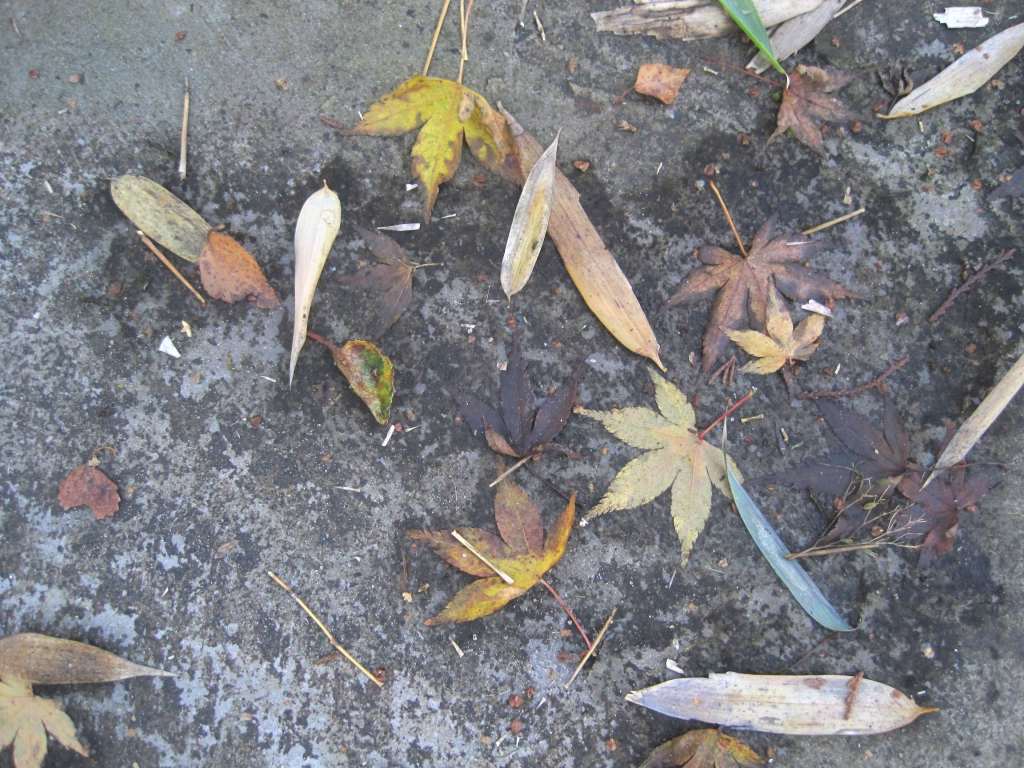
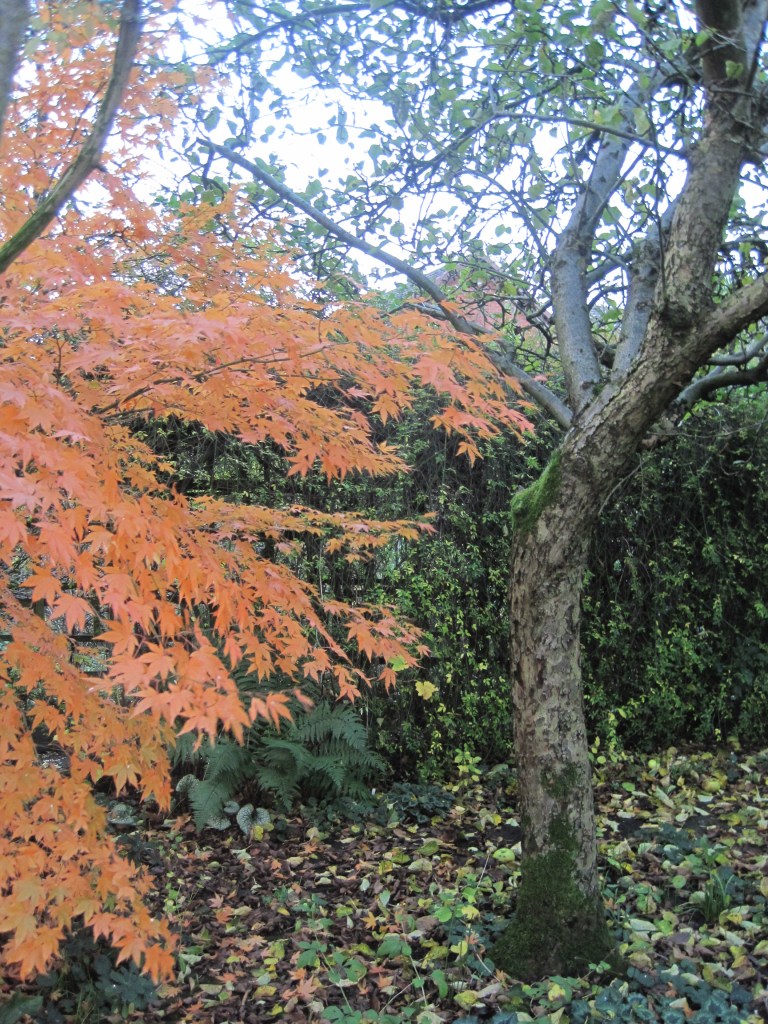
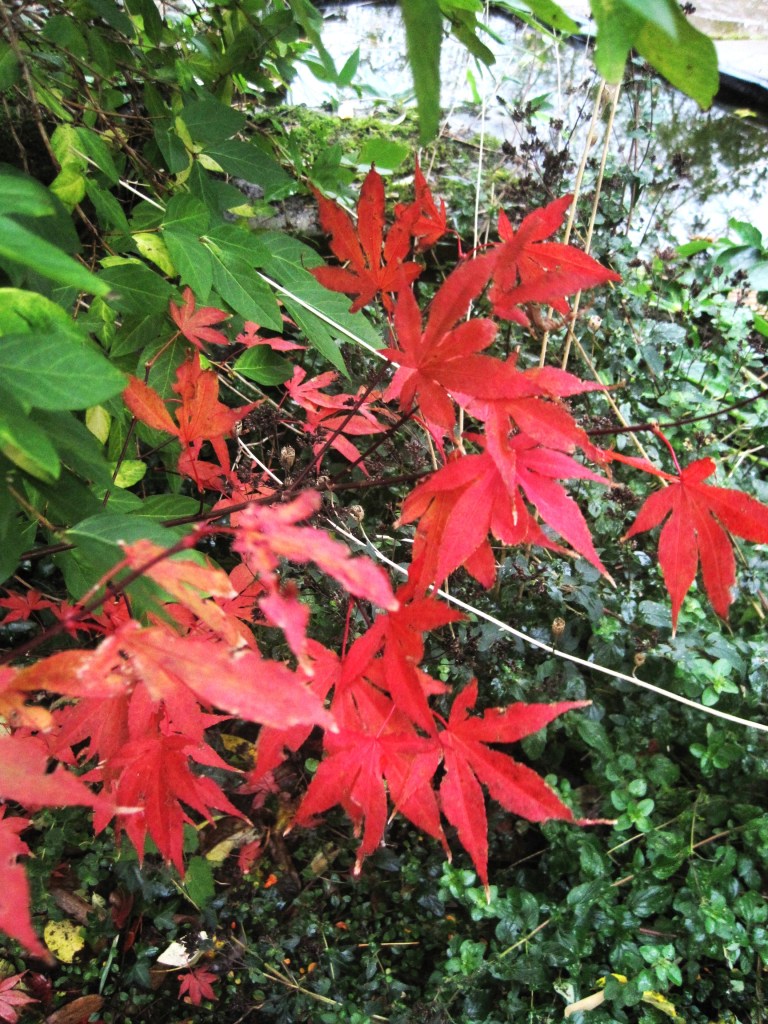
This month the Acers put on a fabulous show with their autumn colours and the falling leaves are beautiful as they settle on the ground.
I found a lovely assortment of leaves lying in a puddle on the paving. So pretty.
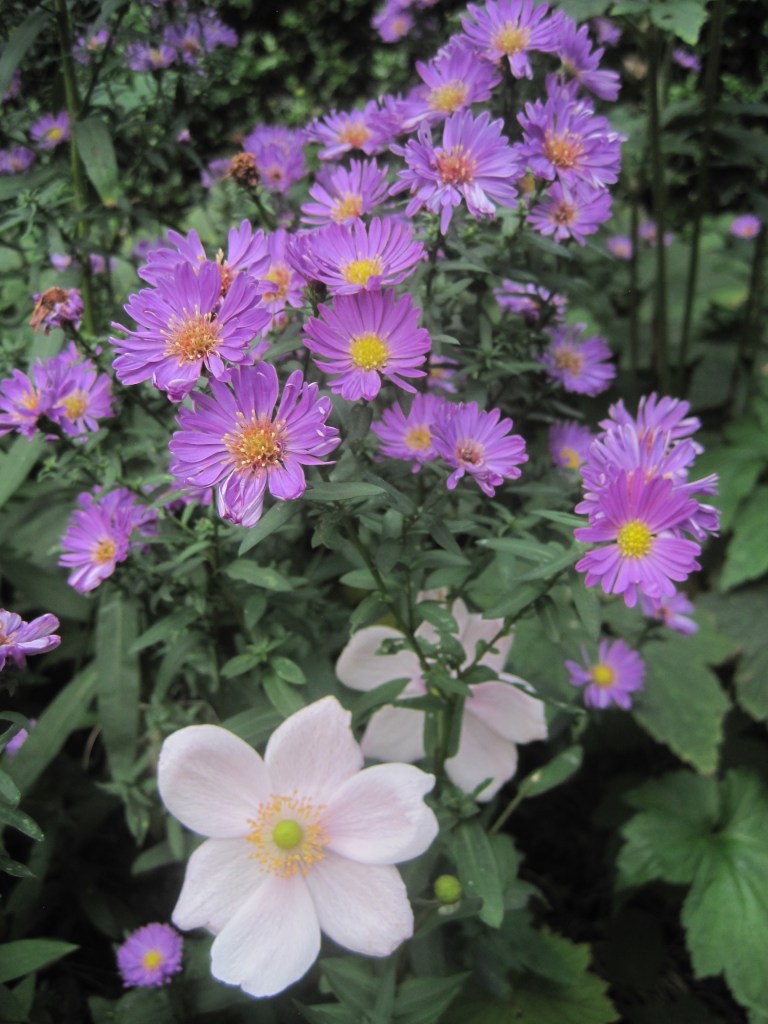
Not many flowers blooming now but my white Asters and a Cosmos are still looking lovely. I brought in a selection of white and silver flowers and stems to enjoy in the house while the rain poured down.
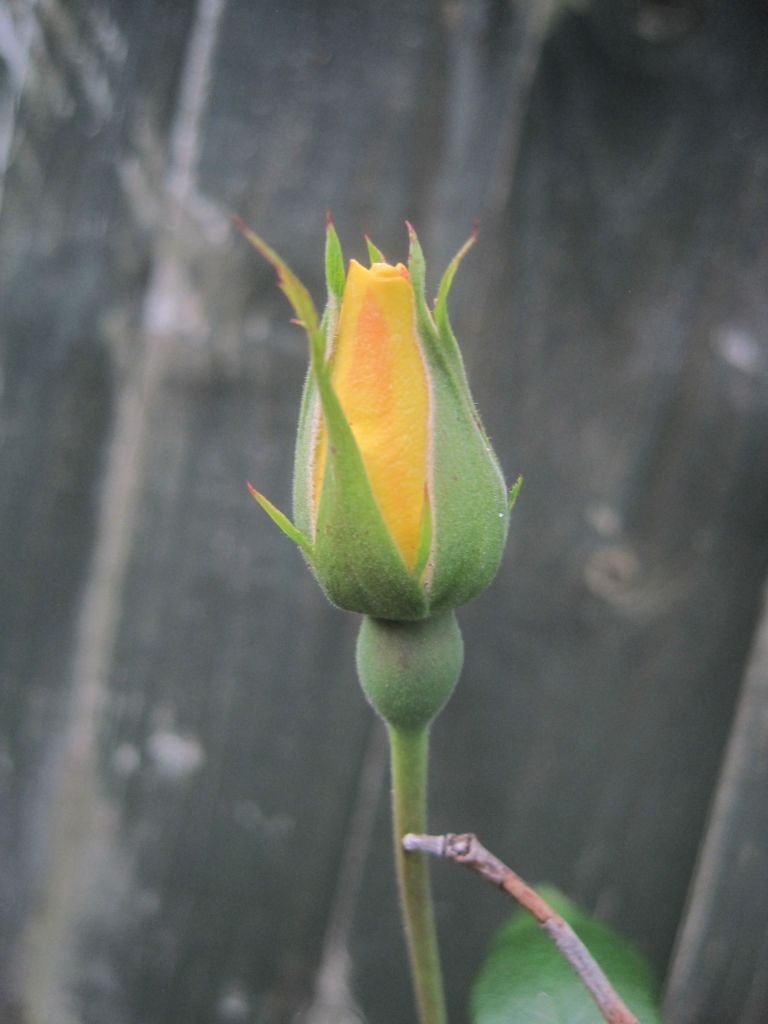
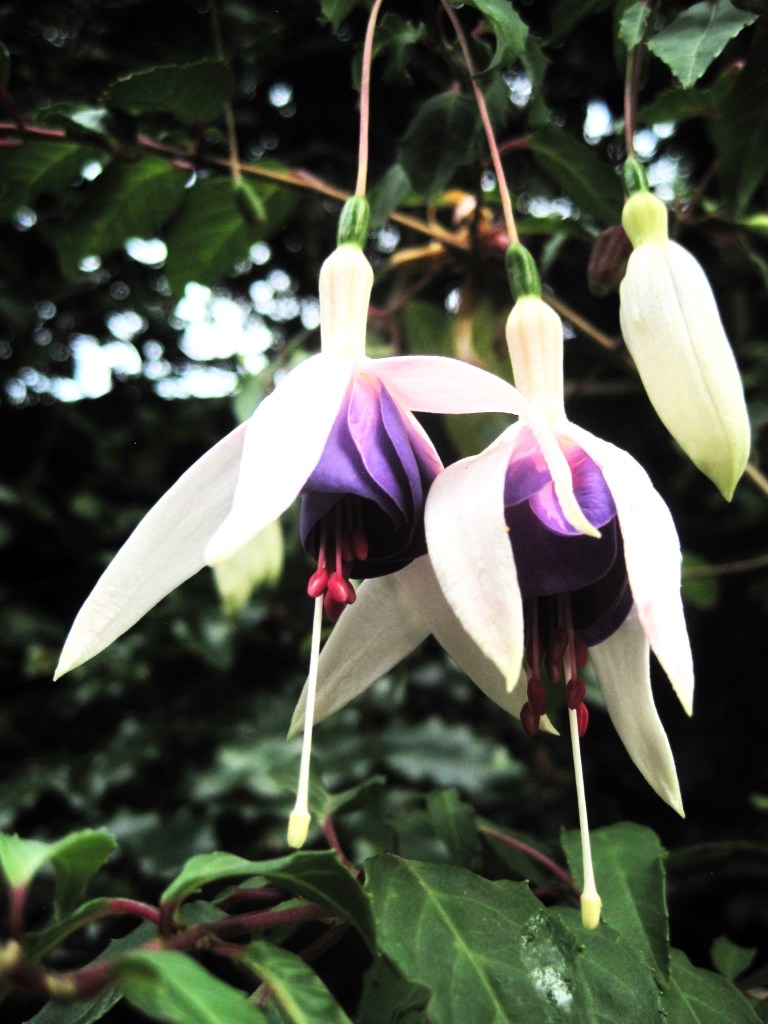
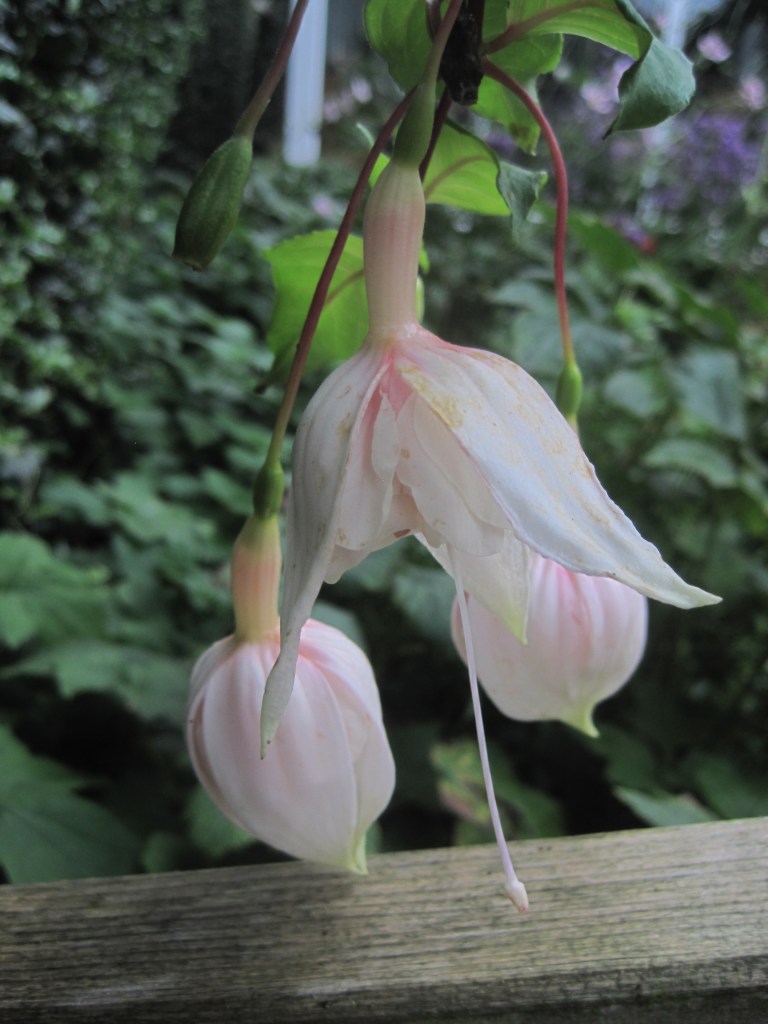
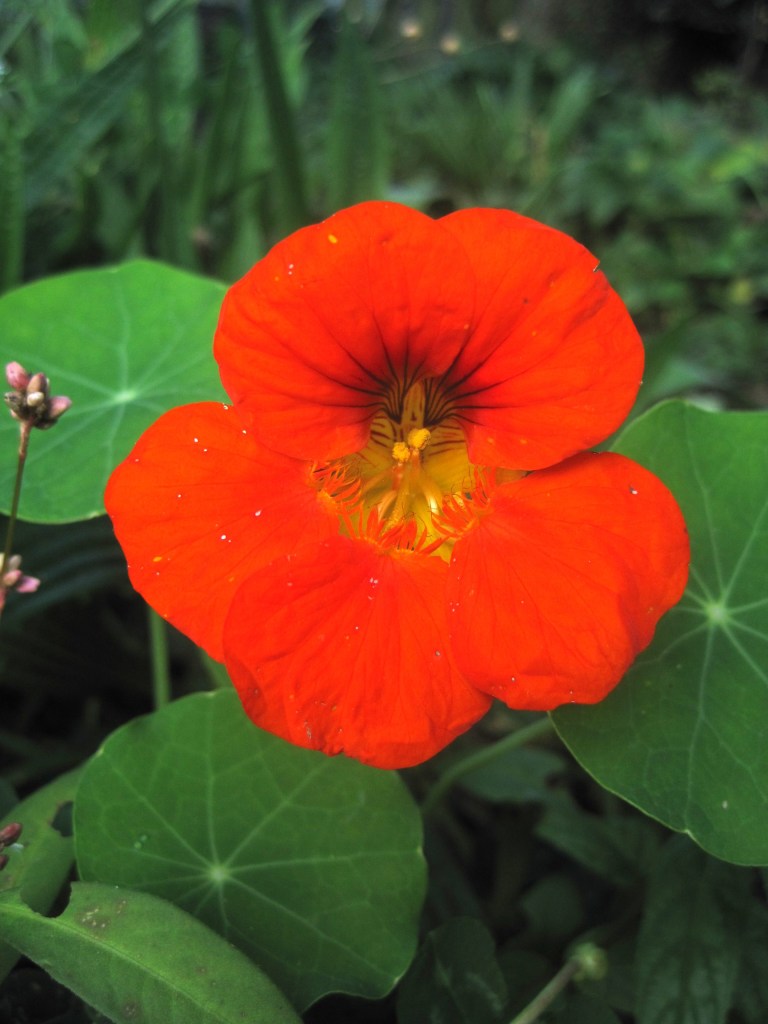
A solitary Nasturtium poked its pretty head up through the raindrops and a yellow rosebud stood tall against the fence. Fuchsias are still holding out against the wet weather.
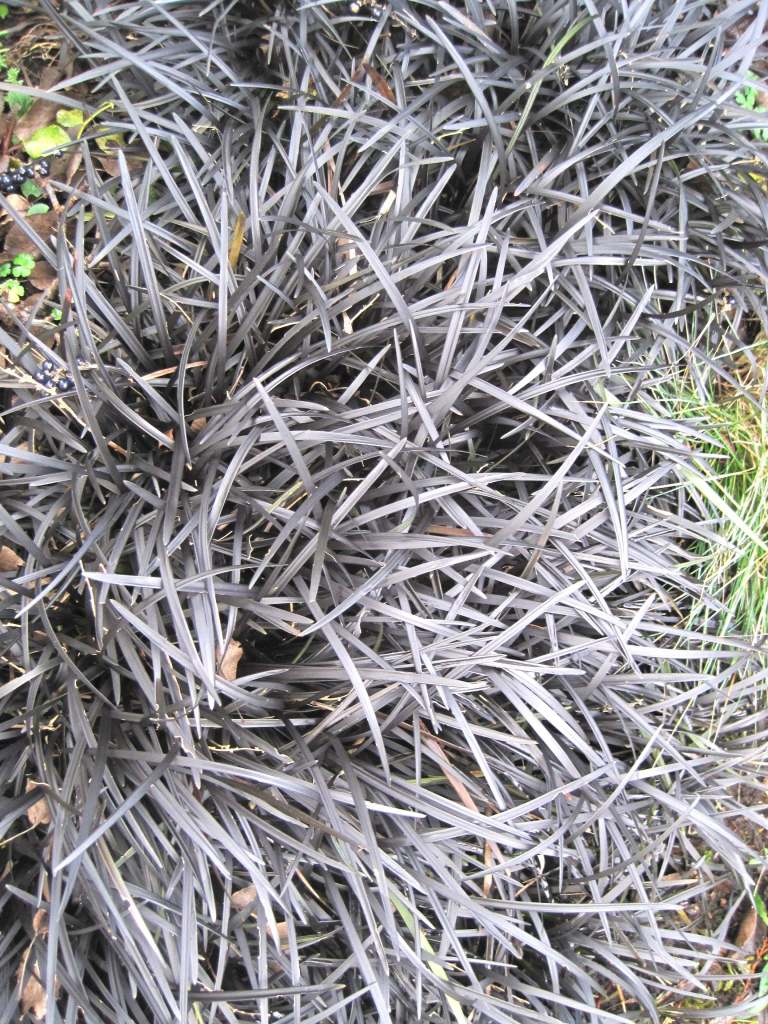
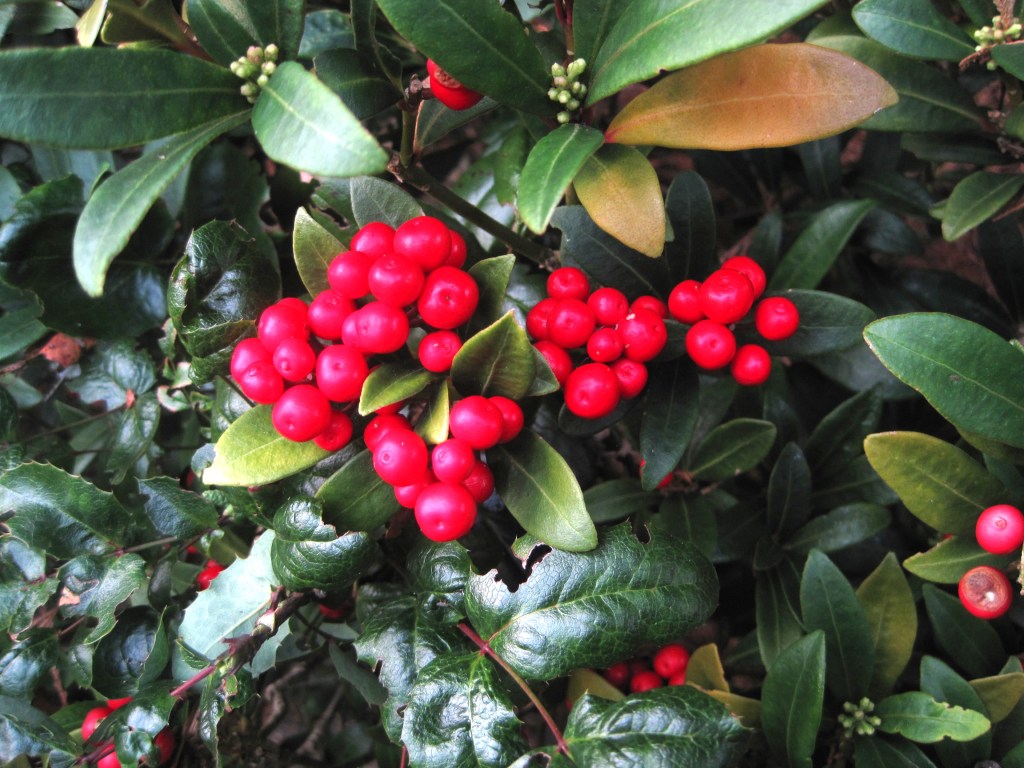
There are still textures and berries to enjoy here and there. The Garrya eliptica is growing its long tassels for a Spring show. The black grass Ophiopogon is always lovely at any time of year and the Viburnam and Skimmia have vibrant red berries.
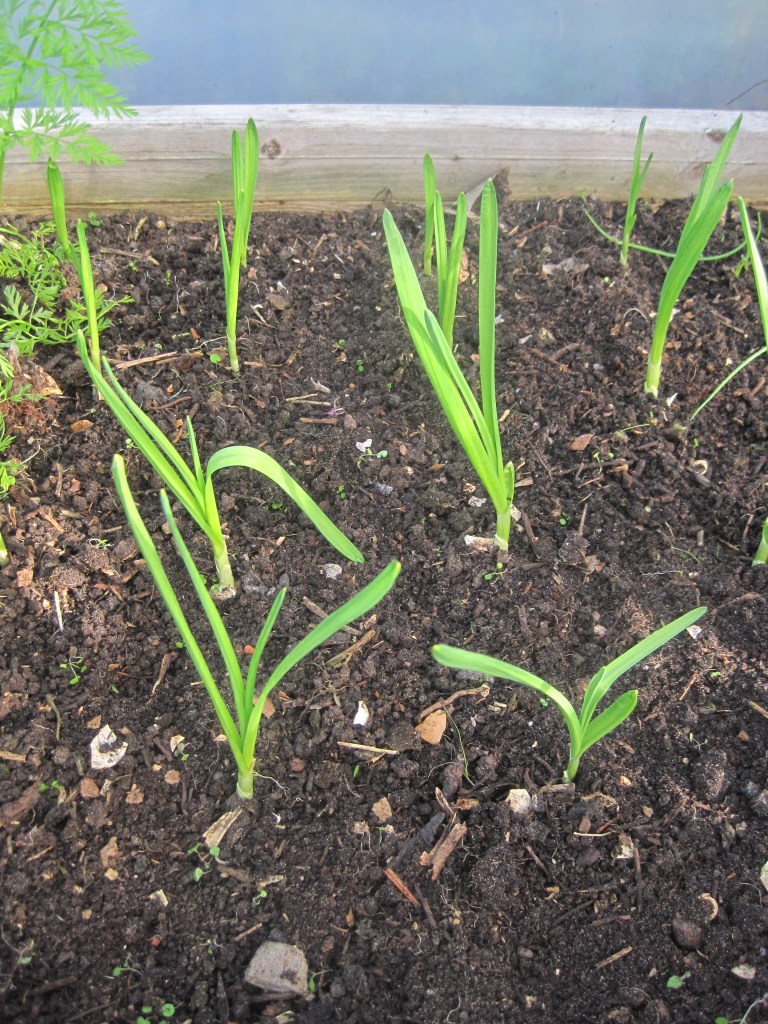
In the vegetable garden, I still have a few carrots. I’ve pulled most of the big ones but the smaller ones are still delicious and very welcome. The garlic is growing well in the polytunnel and the broad bean seeds have germinated and are coming along nicely on the greenhouse bench.
I will plant out the broad beans when they grow a bit bigger and while the weather is not too cold and frosty. They are hardy plants and will grow slowly until early Spring when they will put on a spurt. Beans will be ready to enjoy in late May or June.
Indoors it’s time to make Christmas puddings and cake. I will be doing these over the next two weeks. A nice Christmas activity, with delicious aromas and a festive atmosphere.
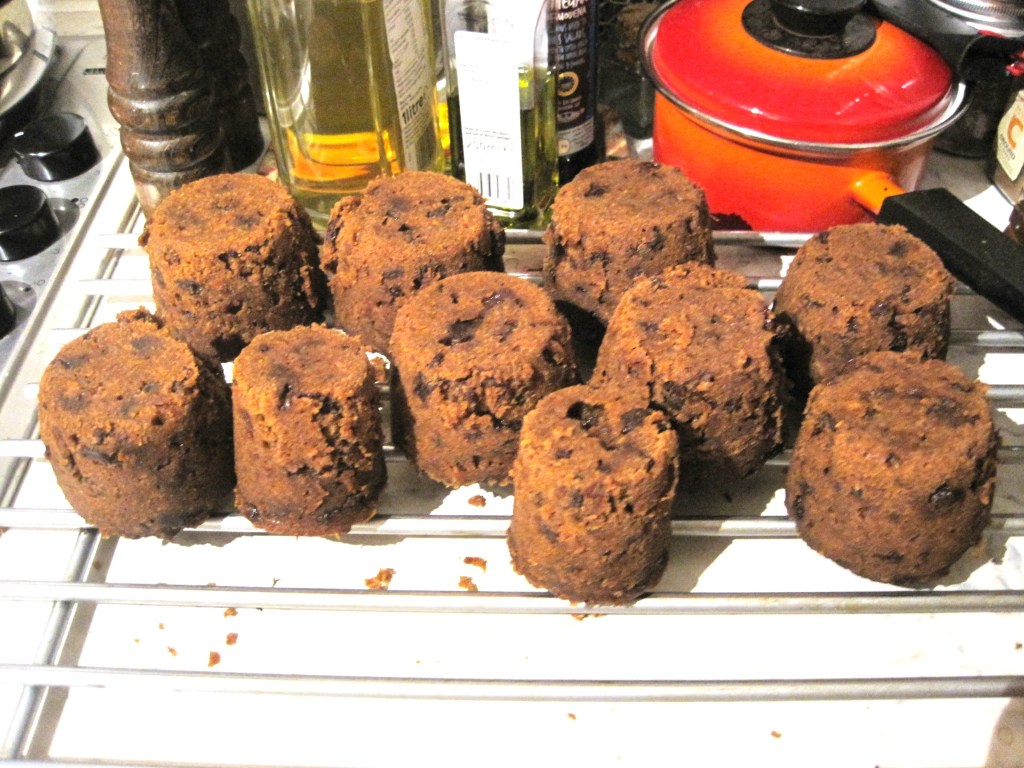
If you would love to make Christmas pudding but find all that steaming and condensation too much of a hassle, try my recipe. It makes individual puds which steam under foil coverings in the oven. No steamy kitchen or watching that the pan doesn’t boil dry.
The puddings are fruitier and more open-textured than bought ones. Very simple and the results are tasty, freeze well and heat for just one minute each in the microwave oven, straight from the freezer. We eat these throughout the year when a quick pudding makes a meal that bit more special.
Here’s my recipe. It’s also in my Earthy Homemaker’s Cookbook which you can find with this link. https://geni.us/eANQu
You will need wide foil, a large, deep roasting tin and about ten individual pudding bowls. My bowls are aluminium and fit nicely in the roasting tin.
Individual Christmas Puddings

200g Self-raising Flour
2 teaspoons Spice (I mix cinnamon, ground ginger and ground cloves)
pinch of Salt
150g Breadcrumbs
50g chopped Pecans
2 Cooking or sharp Apples, chopped small or grated
300g Raisins
300g Sultanas
80g approx. mixture of chopped Stem Ginger, grated Orange and Lemon peel and Candied Peel
4 large Eggs
Juice of 2 Lemons
2 tablespoons Black Treacle
350g Dark Sugar
150g Butter
4 tablespoons of Rum or Brandy (or a mixture of both)

Finely chop stem ginger and candied peel.
Zest the orange and 1 lemon. Mix with the ginger and candied peel to make approximately 80g.
Put into a large mixing bowl. Grind or chop the pecans and add to bowl.
Add raisins and sultanas.
Mix flour, spices, salt and breadcrumbs and add to bowl.
Beat eggs. Add the black treacle and juice of both lemons.
Melt the butter and stir in sugar. Add to the bowl with the egg mixture.
Add rum and/or brandy.
Stir well and leave to stand for 30 minutes or longer. Heat the oven to 190C/170C fan oven.
Stir mixture again and spoon into greased individual pudding tins.
Stand the tins in a deep roasting tin and cover each bowl with foil.
Boil a full kettle and pour the boiling water around the tins to about a third of their height.
Cover the top of the roaster with a large piece of foil, tucking it well around the edges.
Carry carefully to the oven to prevent the hot water from splashing out.
Bake for 2 hours.
When time is up remove carefully from the oven and allow to cool before removing foil.
Lift puddings out of the water. When they're cool remove foil and slide a knife around them to loosen and tip out.
Freeze when completely cool and reheat for serving.
I serve these with Rum Sauce. (Recipe in my cookbook).
It might sound like a lot of work but it’s really simple once the chopping and grating are done. It helps to organise ingredients beforehand so there’s not too much fetching and carrying. Creative processes are always satisfying with their reward at the end.
Talking of creative processes I have knitted another toy rabbit. A little bit more work to this one and it was tricky to sew together but I’m pleased with the end result. These little toys make use of oddments of yarn leftover from bigger projects and bags of mixed colours bought for this purpose.
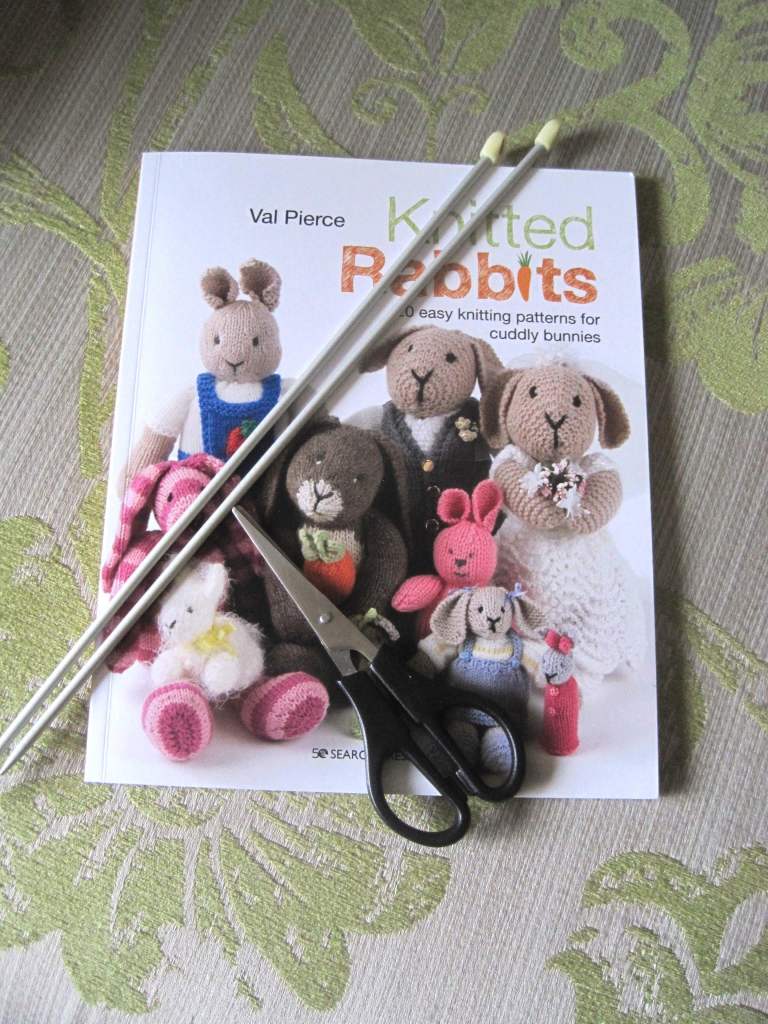
Again, I used Val Pierce’s book “Knitted Rabbits”. Very easy and clever patterns which don’t take long to knit.
I just need to find homes now for the teddies and rabbits. I’ll ask local charities if they know of children who might need them.
Now it’s time to think about other Christmas activities. Food, gifts and making a card for family and friends will occupy my thoughts over the next few weeks.
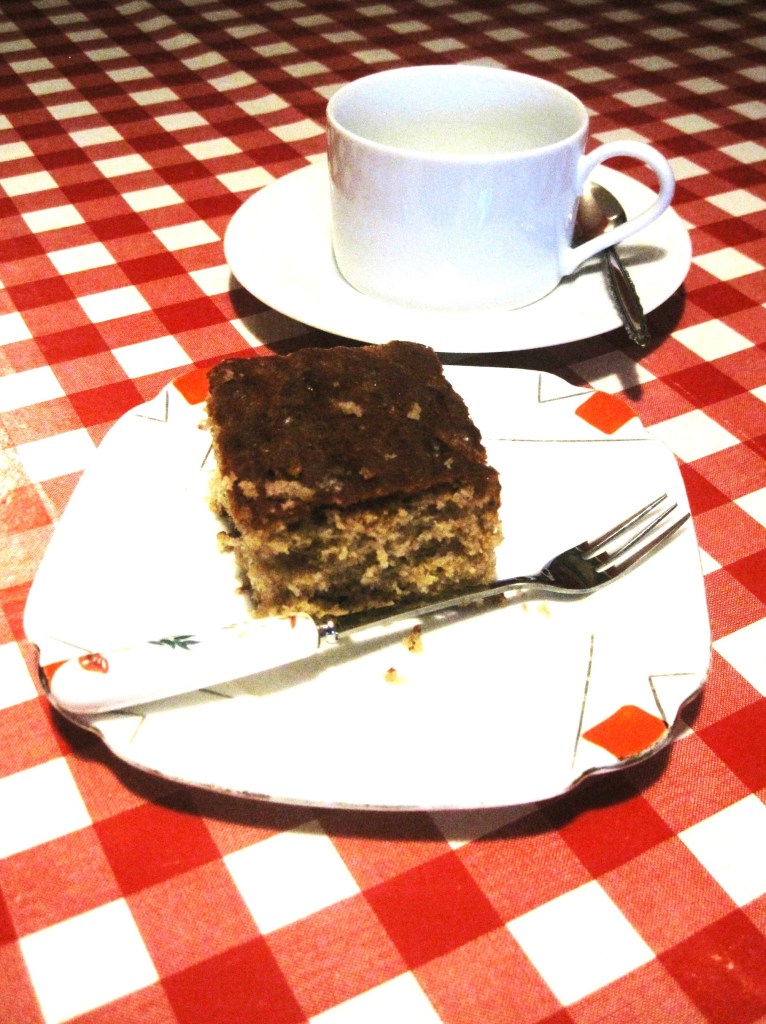
Of course good food should be enjoyed every day and I like to have a stash of cake in the freezer, so I baked my Ginger Squares. This is delicious cake with flavours of golden syrup and ground ginger. Easy to make and even easier to eat. Also makes a lovely pudding. Cold with custard or cream, warm with vanilla ice cream. The recipe is in my Earthy Homemaker’s Cookbook along with other sweet treats and practical, homely meals.
That’s all for now. I hope you enjoy your own festive creativity to compensate for the colder weeks ahead. Bye for now. With you again in a couple of weeks.
A few years ago, my daughter Samantha persuaded me to write a blog. Sounded scary and far too technical for me but eventually I gave it a try and this month marks the third anniversary of those first steps.
I’m so grateful for the lovely responses from my readers. Without them it would be a pointless exercise. The pleasure of sharing my thoughts, photos and crafts with others is still fresh and I hope to continue for as long as I’m able.
This year is passing swiftly and Autumn is well under way. Wet leaves cover the garden. The scent of damp earth and fallen leaves is a pleasure even though the garden looks untidy. The paths are slippy with velvet moss and moisture and I have to tread carefully.
Most of the leaves will be stored in the leaf-bin to make valuable leaf-mould. When it’s fully broken down to a dark crumbly texture I can use it to make seed compost and add to the garden where the soil needs humus. The bin is a simple structure of four posts with wire netting sides. Does a perfect job as it allows the rain, wind and frost to do their work.
The flowers are fading now and I treasure any lingering blooms. Here are some still catching my eye.
I’ve replaced the pelargoniums with winter pansies. Last year I bought the big pansies and was disappointed by their performance. They flopped in the rain and didn’t please me. I resolved not to buy them again but forgot when I visited the nursery. However, later, I needed a few more and this time I remembered and bought the little violas. So pretty, delicate looking but stand up well to winter conditions.
Mellow tones of faded beauty are appearing here and there. The silver Artemisia is looking pretty with its seedheads. Leaves are changing colour and raindrops enhance whatever they fall upon.
In the vegetable garden, I transplanted the kale from the polytunnel to an outside bed. They’re winter hardy and sometimes they develop powdery mildew if I leave them in the tunnel, so I prefer them outside. They will have more room and the rain will do the watering. Next to them the sprouts are coming along. Only tiny sprouts on the plants yet but I hope to have a few for my festive flan at Christmas.
I haven’t grown red cabbage for years but I fancied pickling some. I love pickles and I enjoy making them. It’s really easy to do. So I bought a head from the supermarket . Not as fresh and organic as it would be from the garden but tasty.
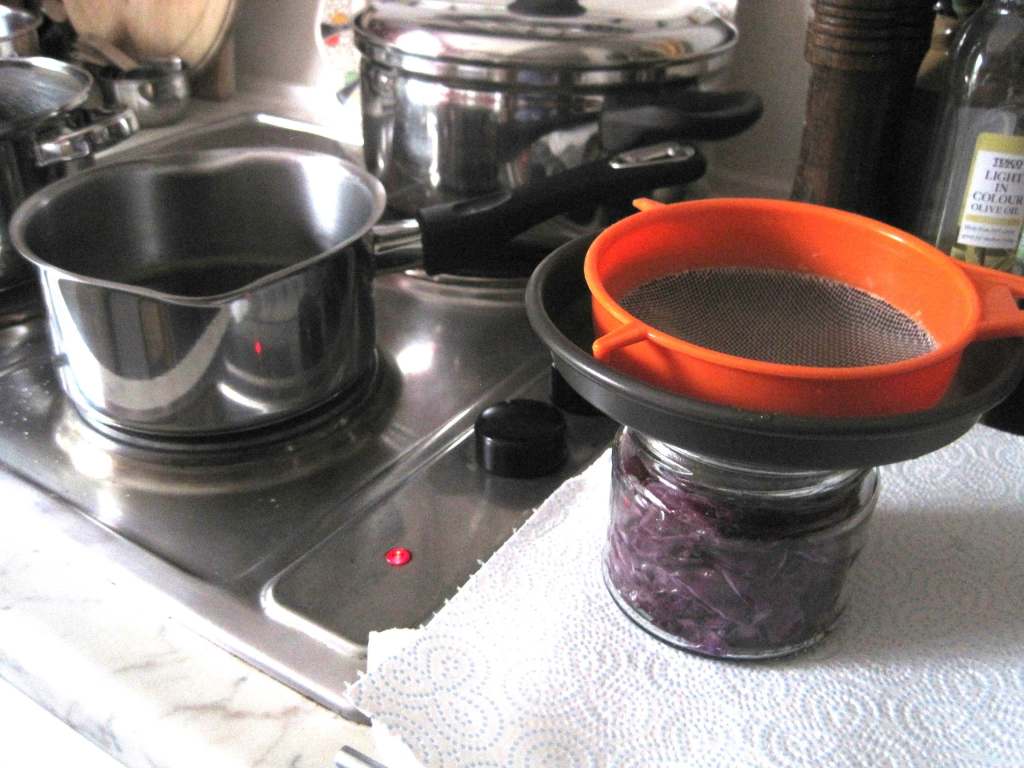
I just peeled away the outer layer of cabbage, sliced it, cutting away any of the thick white parts and placed it in a bowl. Sprinkled sea-salt over it and left it for an hour or two, then drained it. Meanwhile, I heated some well-washed and rinsed jars in a cool oven and brought malt vinegar to boiling point with a good pinch of pickling spice. I filled the hot jars with cabbage, packing it down well and with a plastic sieve placed over a funnel I poured the vinegar in. I left a gap at the top and screwed the lids on immediately so the cooling vinegar would seal the jars.
It will soften if left for a few weeks but then it takes on a stronger vinegar taste. I prefer it freshly made and slightly crunchy. Probably the easiest pickle to do and in my opinion very satisfying.
This week was oven-cleaning time. For this job I save fine wood-ash from the log stove. It works like magic to remove grease. Although I don’t do roasts any more I do find that baking anything coats the oven walls with a greasy film. The ash is alkali and quickly dissolves the greasy residues. Plus, any little stubborn specks on the glass doors rub off in a trice. I also use fine wood-ash to clean the electric hob. Sprinkled on and moistened, then left for a few minutes to react, it easily cleans the surface. I keep a jar-full so it’s handy when I need it.
We haven’t had a log fire yet. It hasn’t been cold enough and we’re saving the wood for winter. Our supplier is having trouble with his stock so we are waiting for more before we use the fire. There is some doubt now about the use of wood fires and I can see the sense in that. However, we’ve only got electricity and if there’s a power-cut we’re left without heat of any kind. There is something wonderful about a real fire on a winter’s night. There’s nothing quite like it for comfort and contentment.
I like making up the fire, with kindling from our own garden, paper and logs, with a small amount of ash and charcoal underneath. Putting a match to it on a cold night and watching it burst into life is very satisfying.
Knitting is ongoing now that the garden is winding down. I’ve made another small teddy. He’s a bit fatter than his brother because I probably was carried away with the stuffing. Extra cuddly! I’ve also knitted a rabbit. It doesn’t look very rabbity except for the tail but I’m sure some little person will find it acceptable as a little friend.
I used Val Pierce’s book, “Knitted Rabbits”. Easy patterns, quick to knit and enjoyable but I always find the hardest part of toy-making is stitching a face. Took three attempts with the rabbit.
That’s all for this week. I hope you’re finding pleasure in falling leaves and Autumn pastimes. Bye for now.
October. Time for misty mornings and the sound of rustling leaves as Autumn sweeps in. The garden is winding down and other activities fill my thoughts as Christmas edges nearer.
Before the festive season occupies my time though I have jobs to do in the garden. I have kale to plant out and broad bean seeds to sow. Bare soil needs to be covered and leaves to be swept up and stored for leafmould.
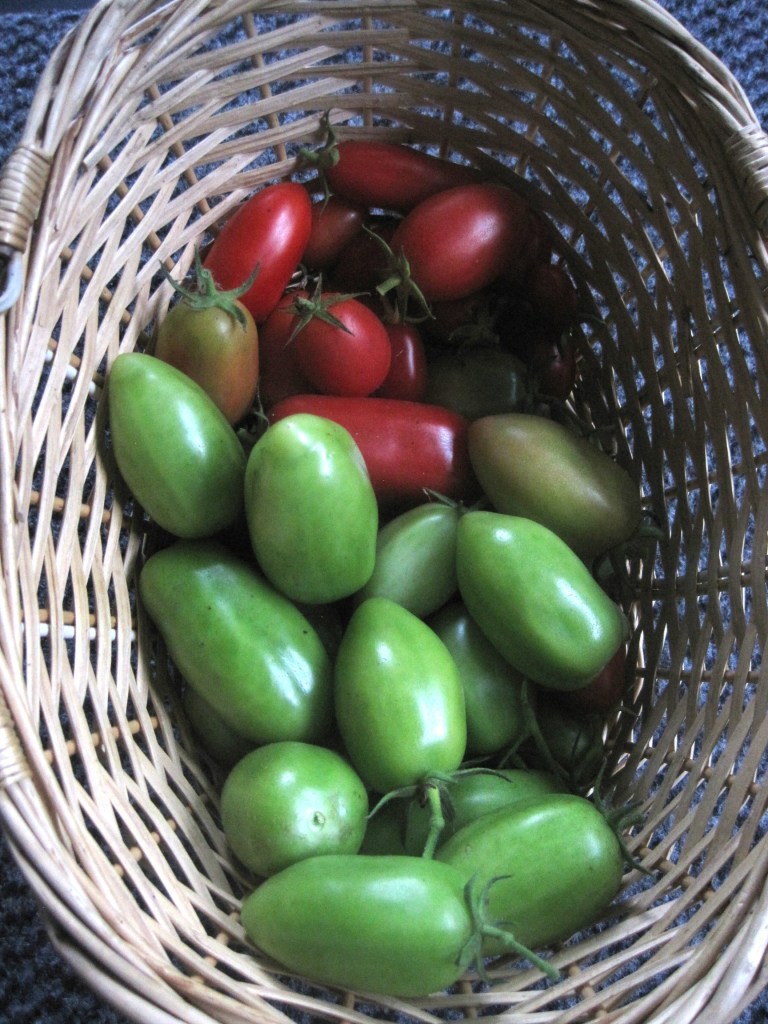
I picked the last of the tomatoes. A few were ripe and I found some large green “Roma” ones to bring in to store in a basket. They will slowly turn red in a cool room.
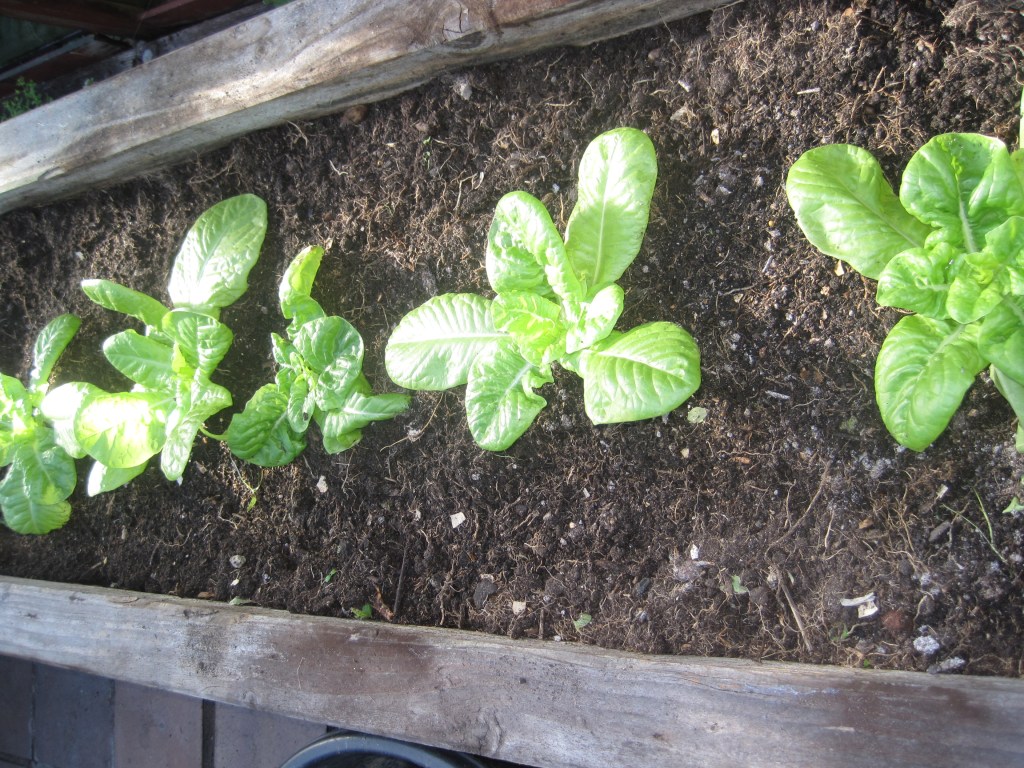
Then I removed the tomato plants and composted them. I spread a little fresh homemade compost on the greenhouse bed and planted winter lettuce.
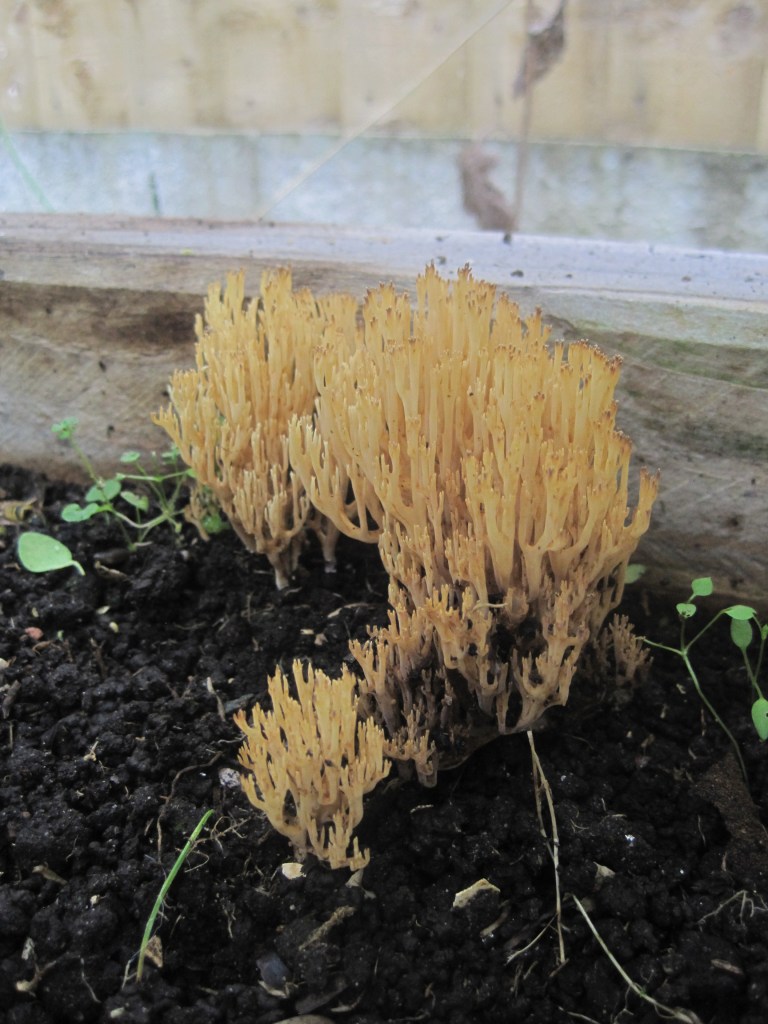
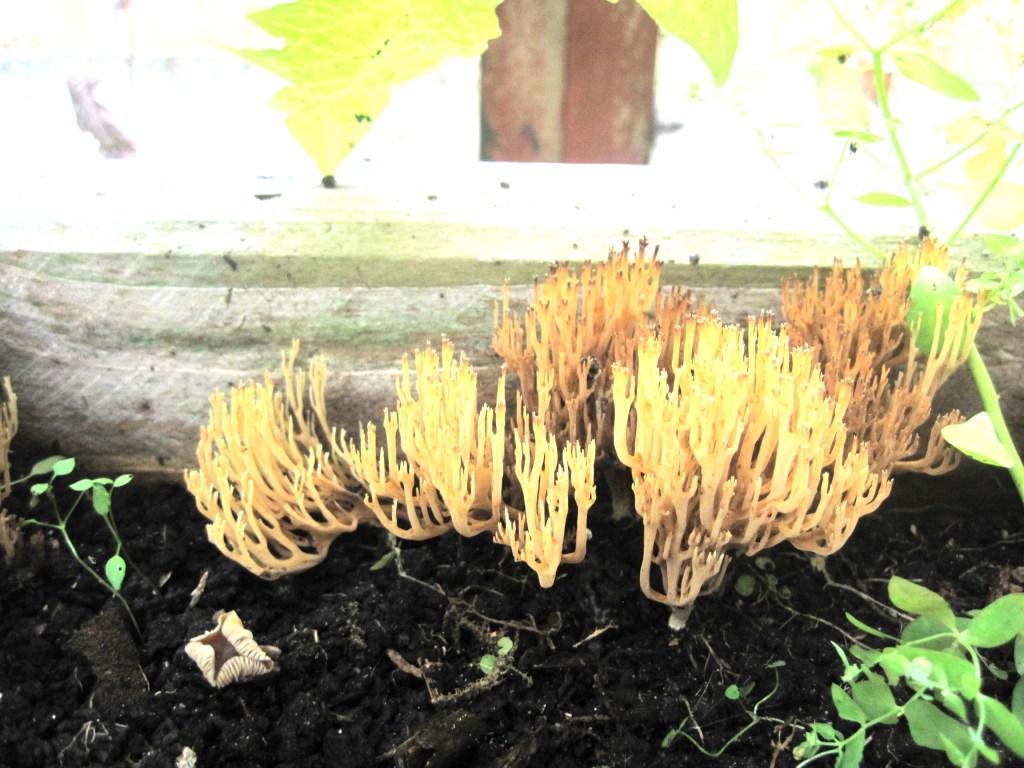
Behind the tomato plants I found some fascinating fungi. I looked them up and I think they’re Coral Fungi, possibly Ochre Coral. A bit unusual, it seems.
I’ve planted garlic cloves in the tunnel. These need the cold months of winter and will be harvested in late May or June. I will need to protect them from Allium Leaf Miner with fine mesh cloches around the end of February. I’ve lost two leek crops previously to this new pest in our area so I hope I can prevent them from ruining the garlic which is also an allium. Homegrown garlic is so delicious. Well worth growing.
I’ve planted the onions I grew from seed in an outside bed. These will be vulnerable to allium leaf miner as well so I’ll protect them later on.
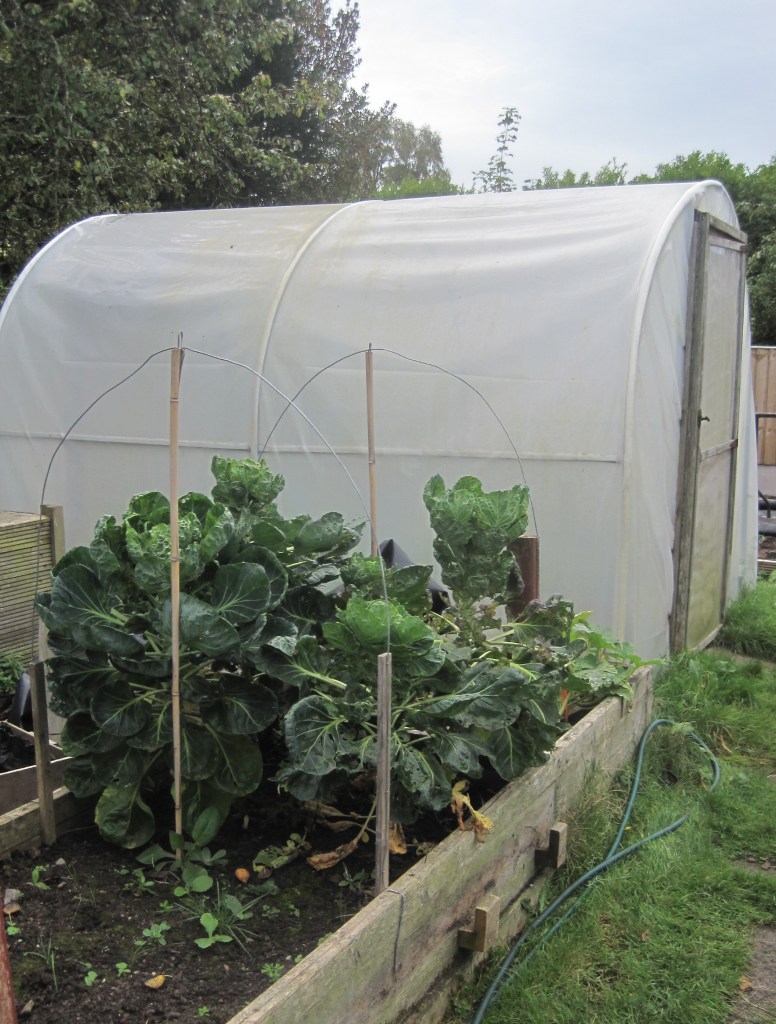
The Cabbage White butterflies have finished their reproductive cycle at last. I’ve been able to expose the sprouts and feed them with some chicken manure pellets. These are very stinky but are a good source of the nitrogen which green leafy vegetables need. The rain at the beginning of the month has washed it into the soil and tiny sprouts are forming.
Aphids have been a serious problem this year. They can damage plants if left alone. I just squash them as soon as I find them because they reproduce rapidly. You can see them on my photo of the growing sprouts.
The fruit-cage has been dismantled and most of the old blueberry bushes removed. This part of the garden will be used for something else next year. Lots of weeds to remove first and the soil replenished with compost.
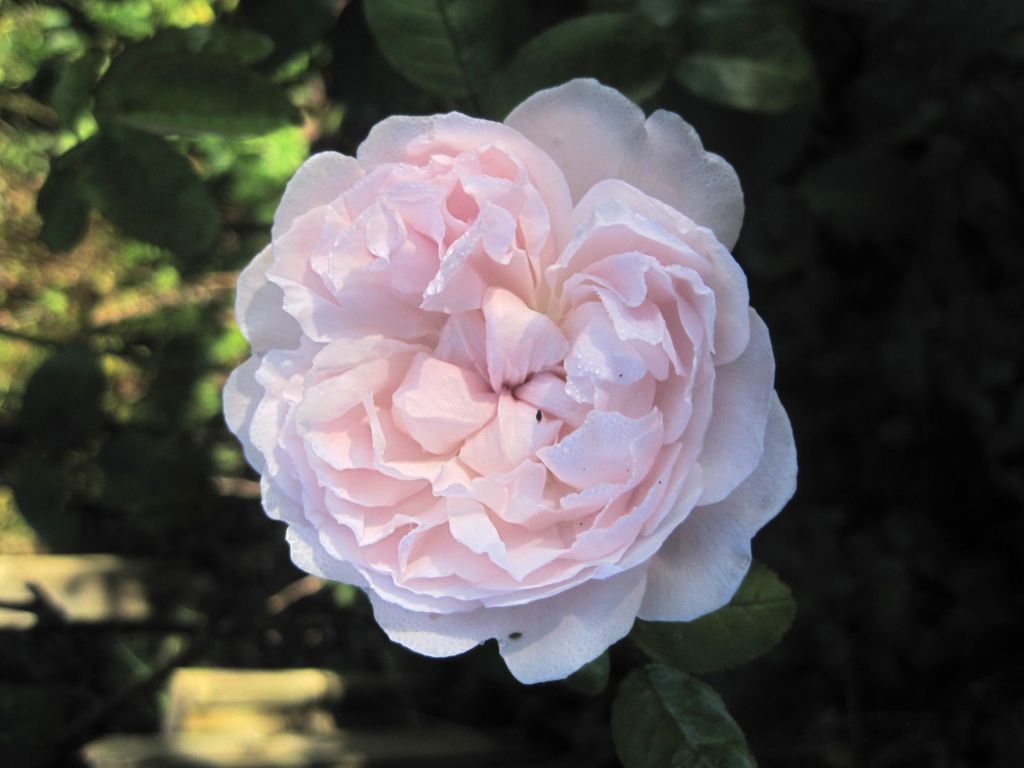
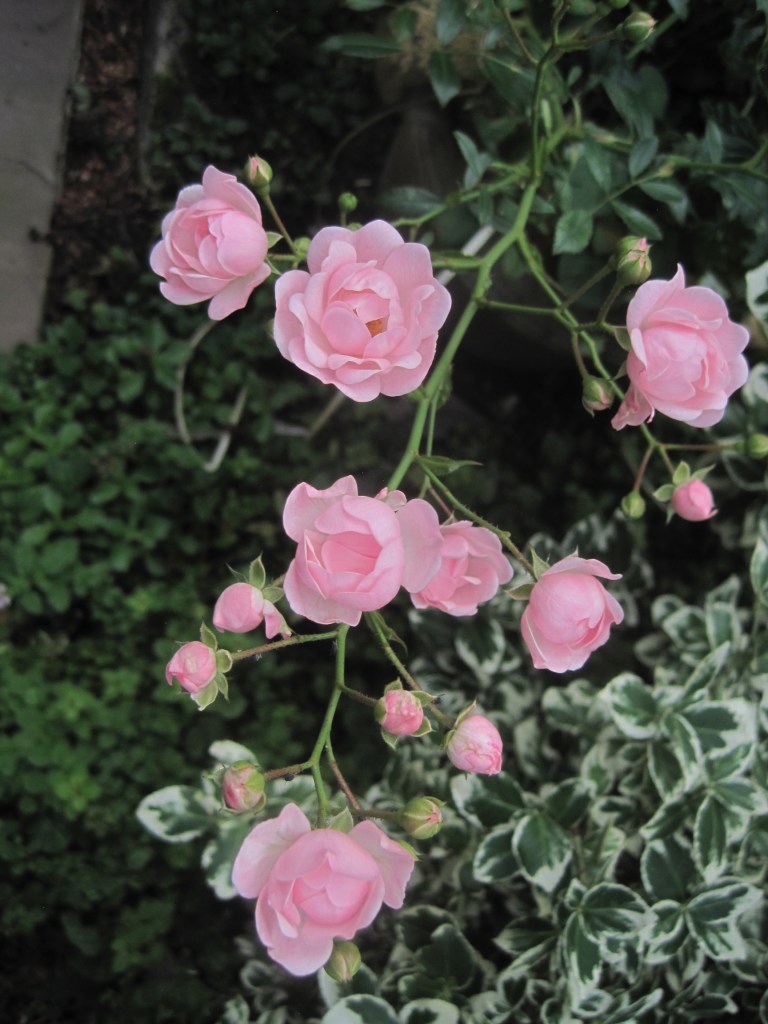
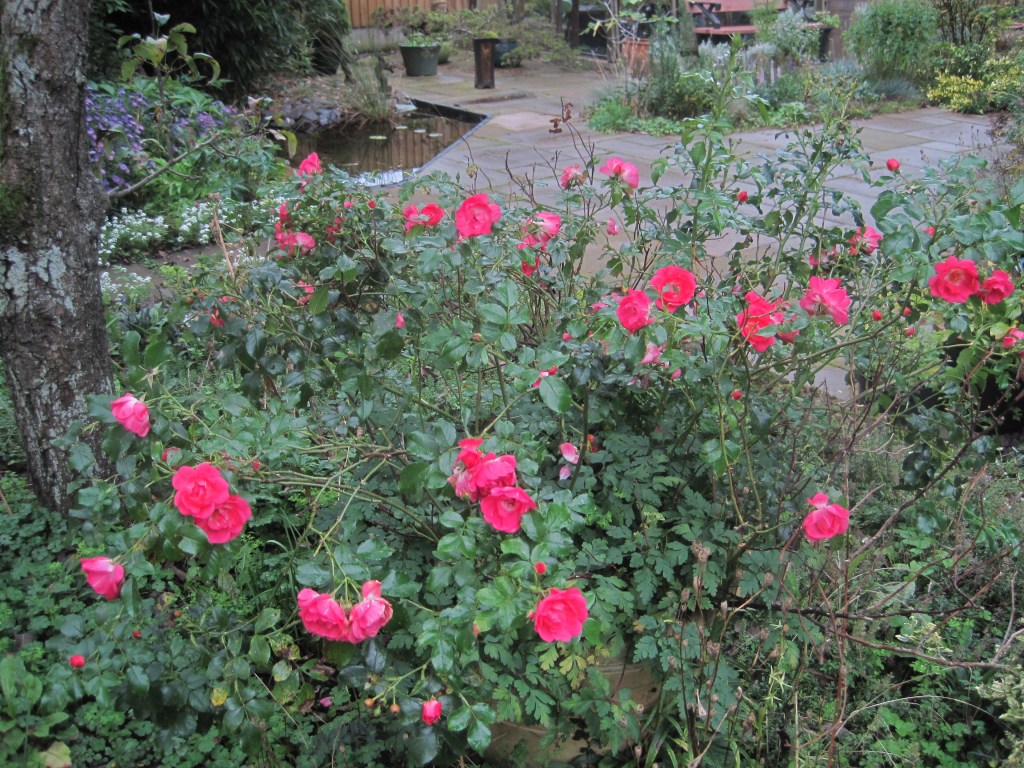
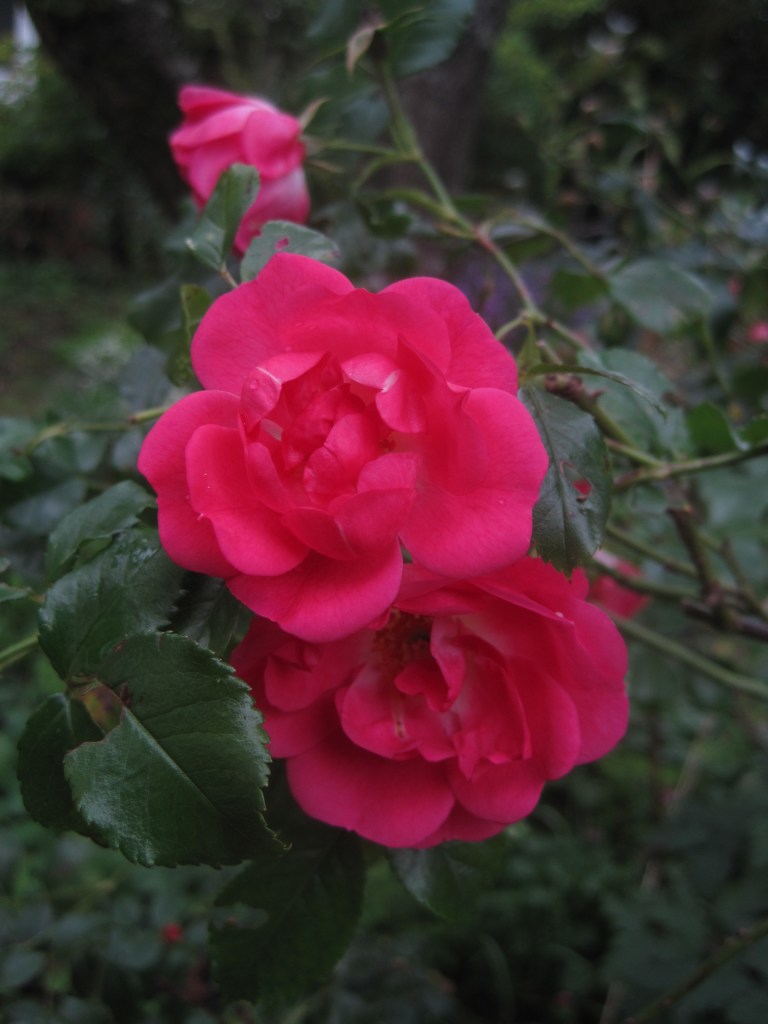
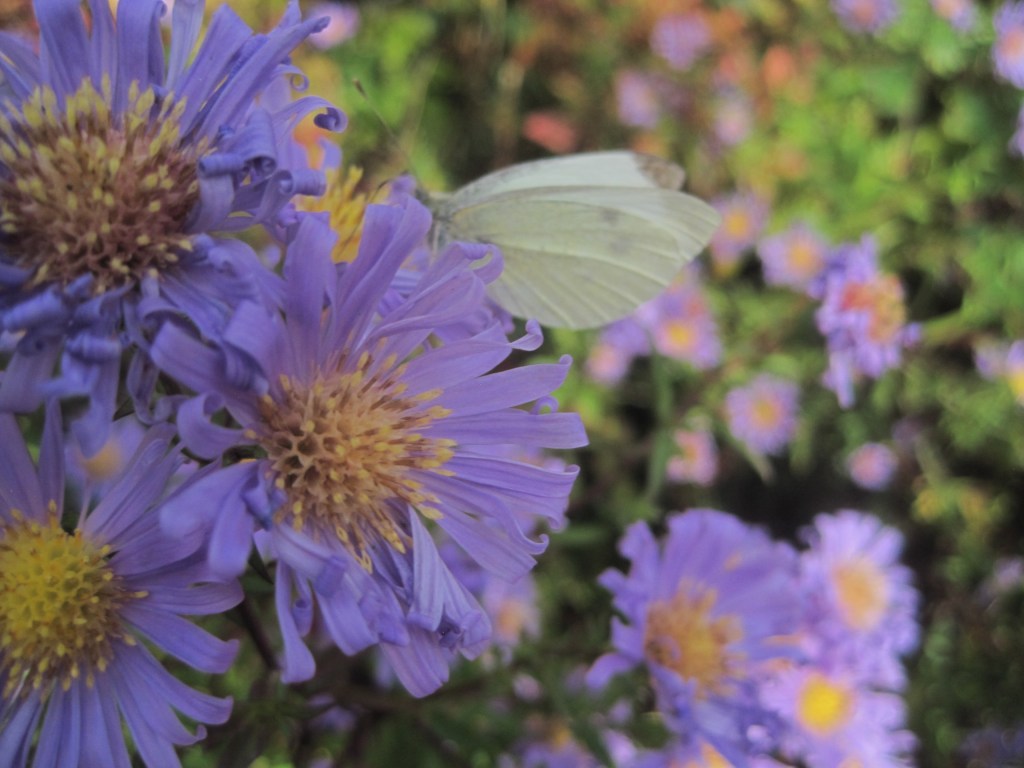
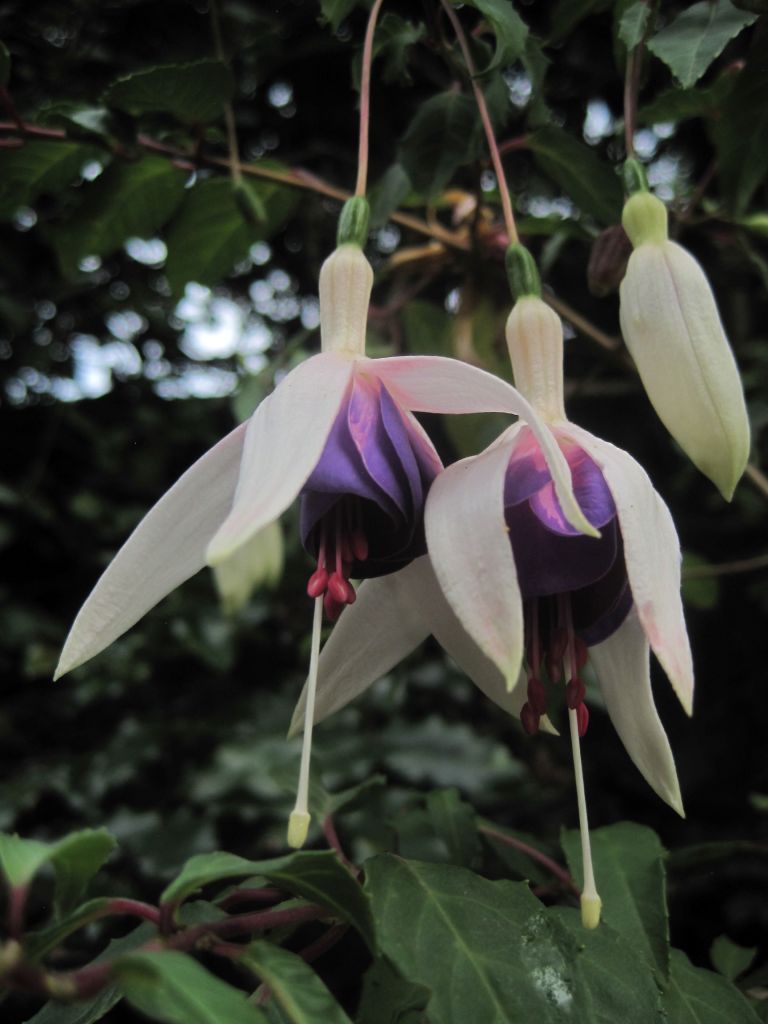
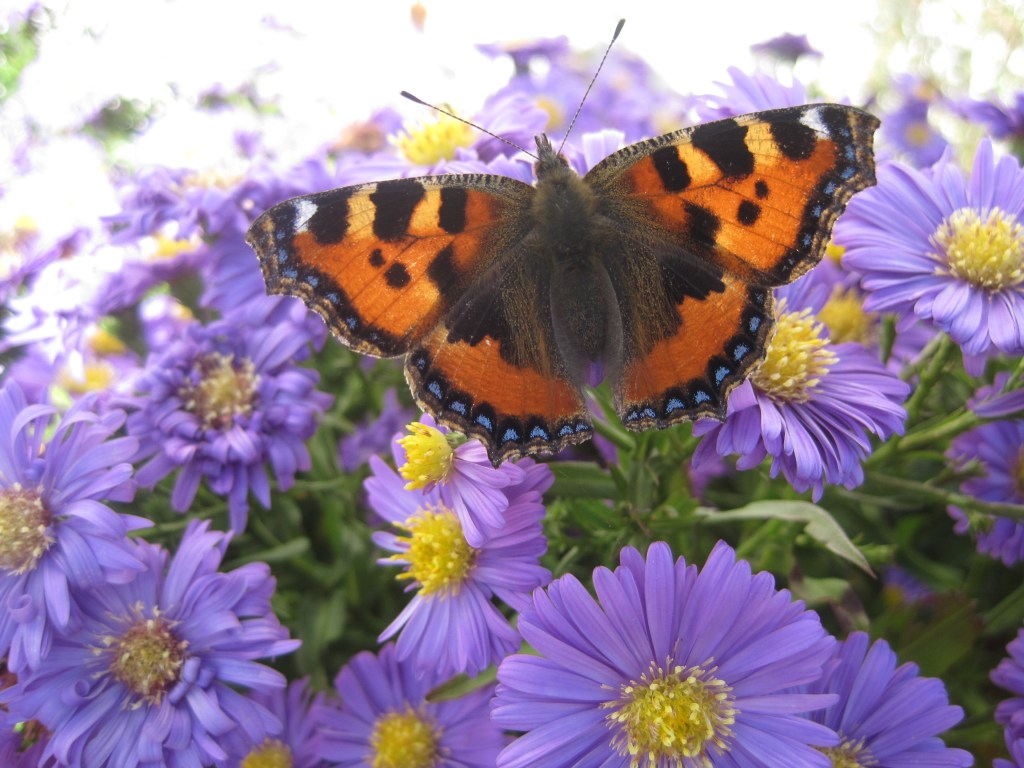
The roses have had their late summer show but a few pretty flowers continue to give me pleasure. The asters have been wonderful this year. They seem to have benefited from the wet July. Fuchsias are also lovely at this time of year.
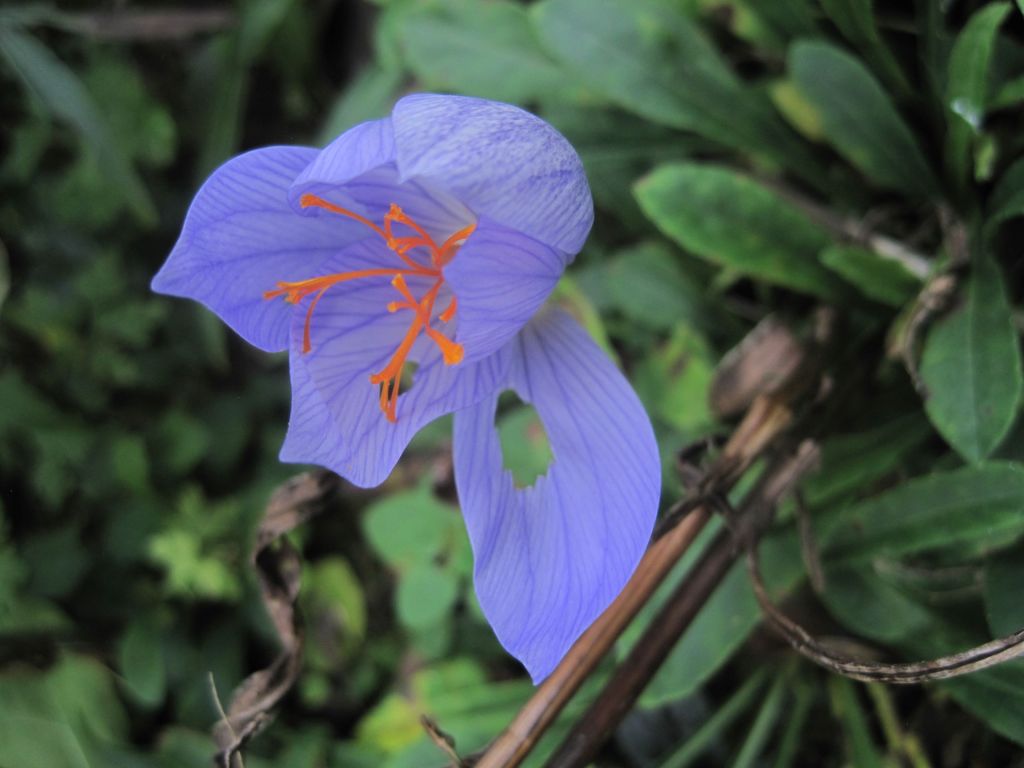
This warm damp weather has confused some plants. They’re reacting to Spring-like conditions. For example, I found a crocus flowering.
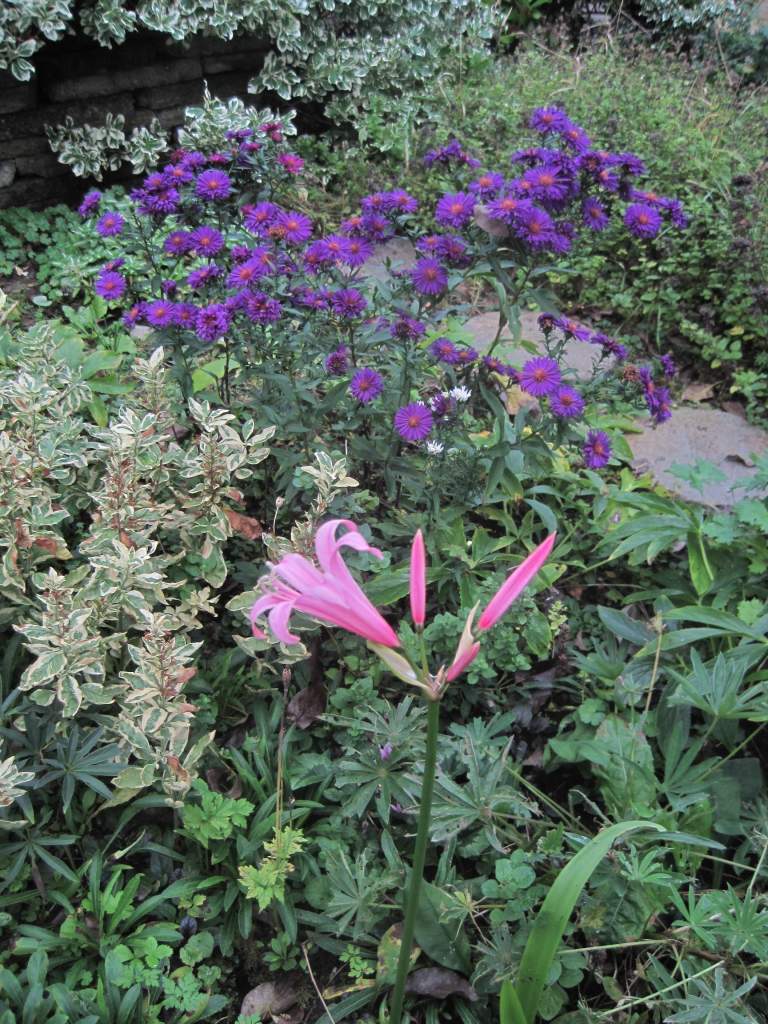
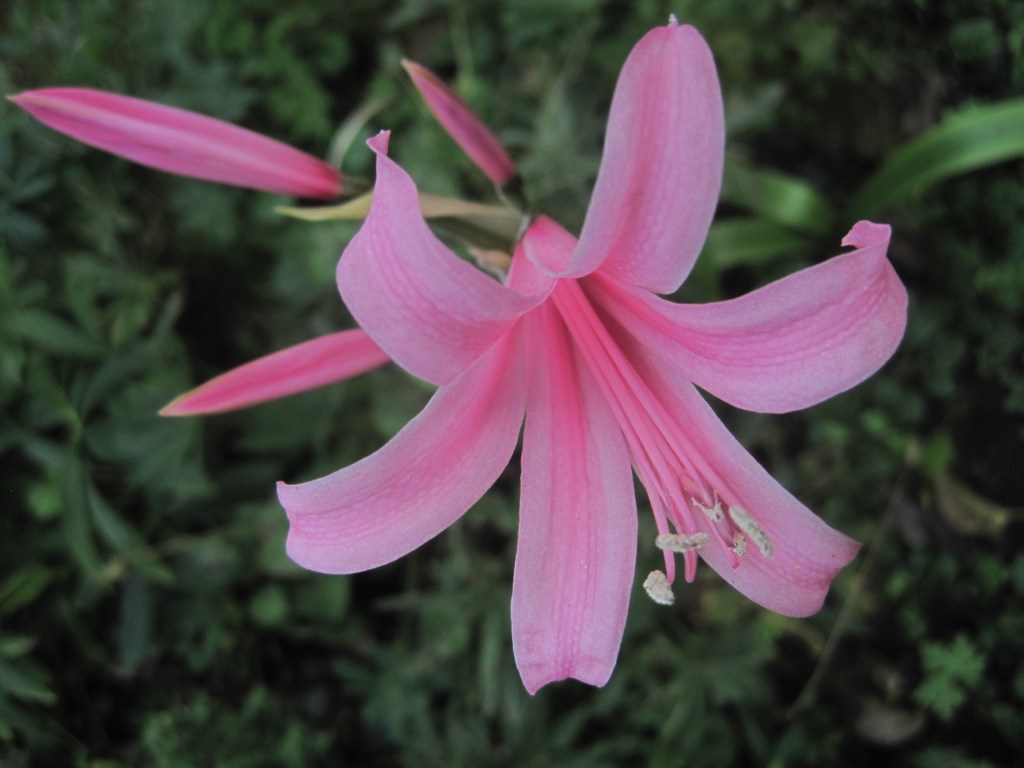
A few months ago I planted a few Nerine bulbs. Sadly, only one has produced a flower stem. But what a beauty!
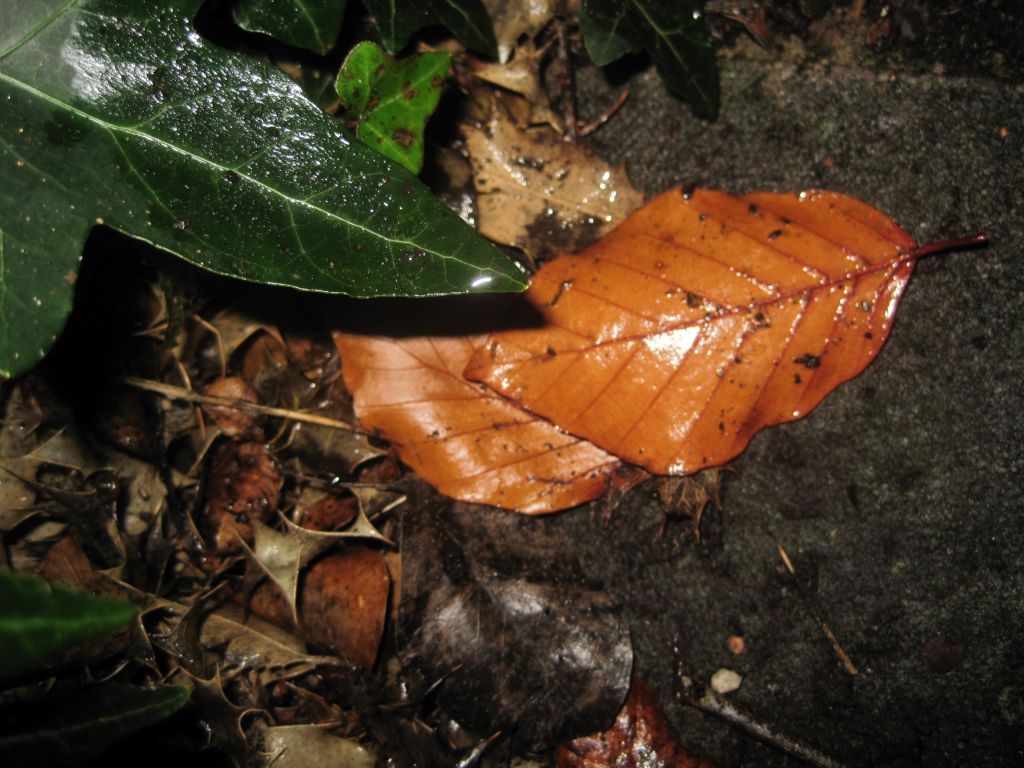
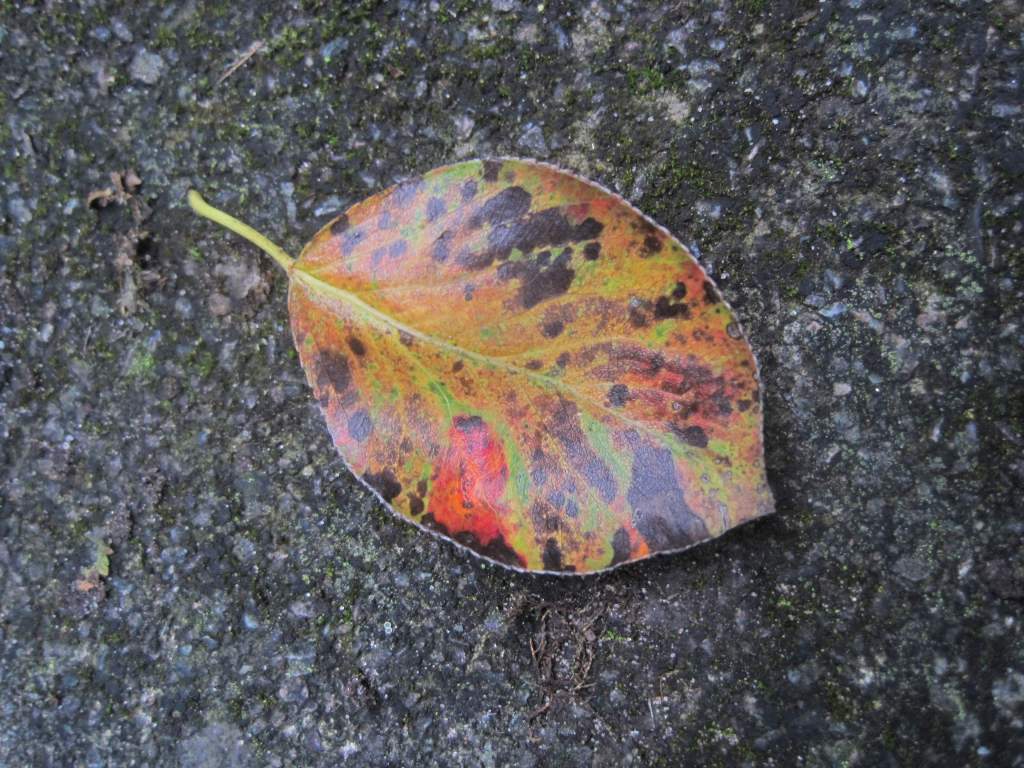
Some lovely leaves are falling. Pleasing shapes, like a fig leaf and an acer leaf which fell on the wet stones, and others showing their autumn colours.
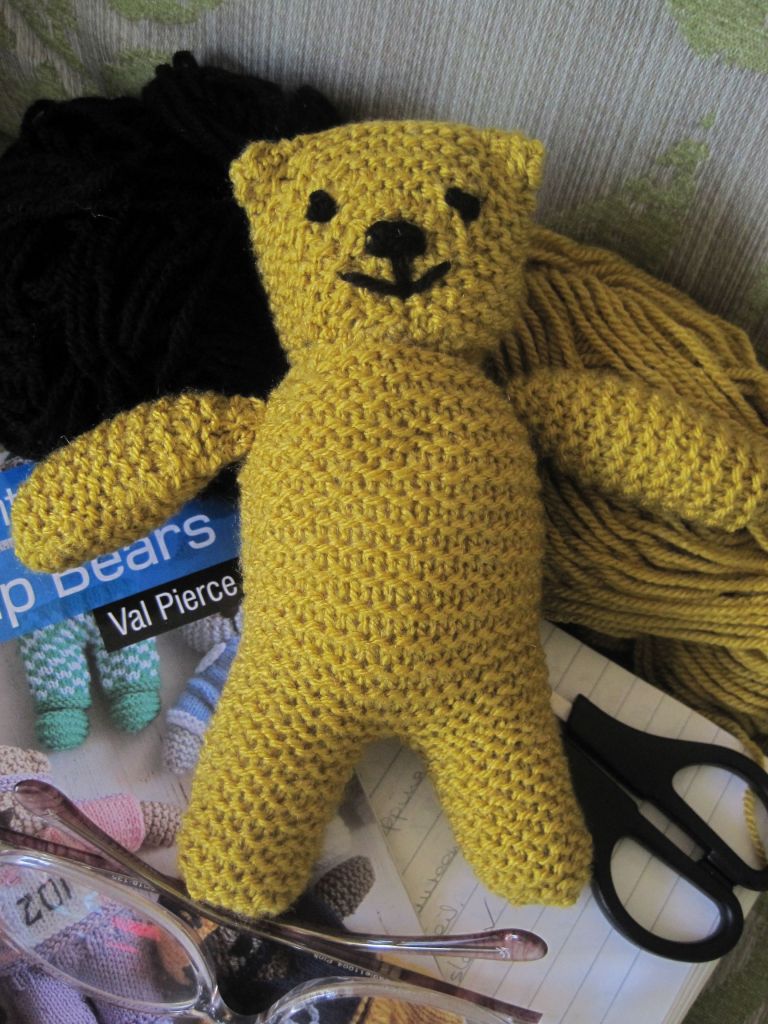
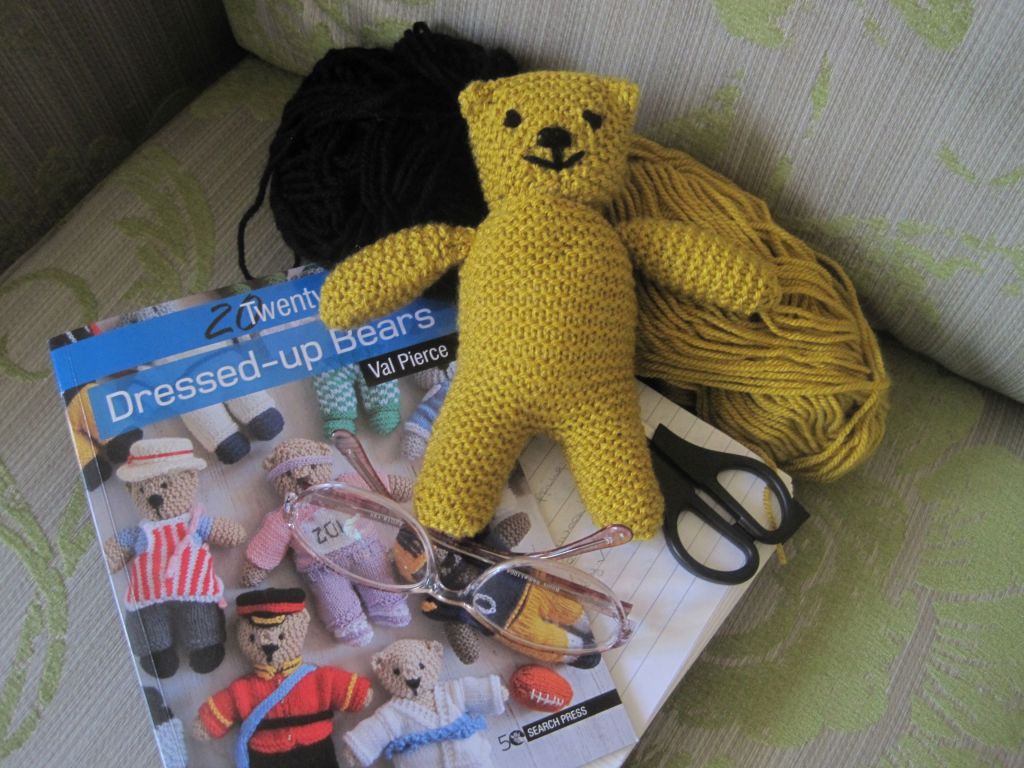
Indoors, when it was too wet to work in the garden I did some knitting. I’m making toys again to give away at Christmas. I’ve made a small teddy and I intend to do a few more.
The pattern is from Val Pierce’s book “Dressed Up Bears”. It’s very easy. Worked in garter stitch throughout and really simple to make.
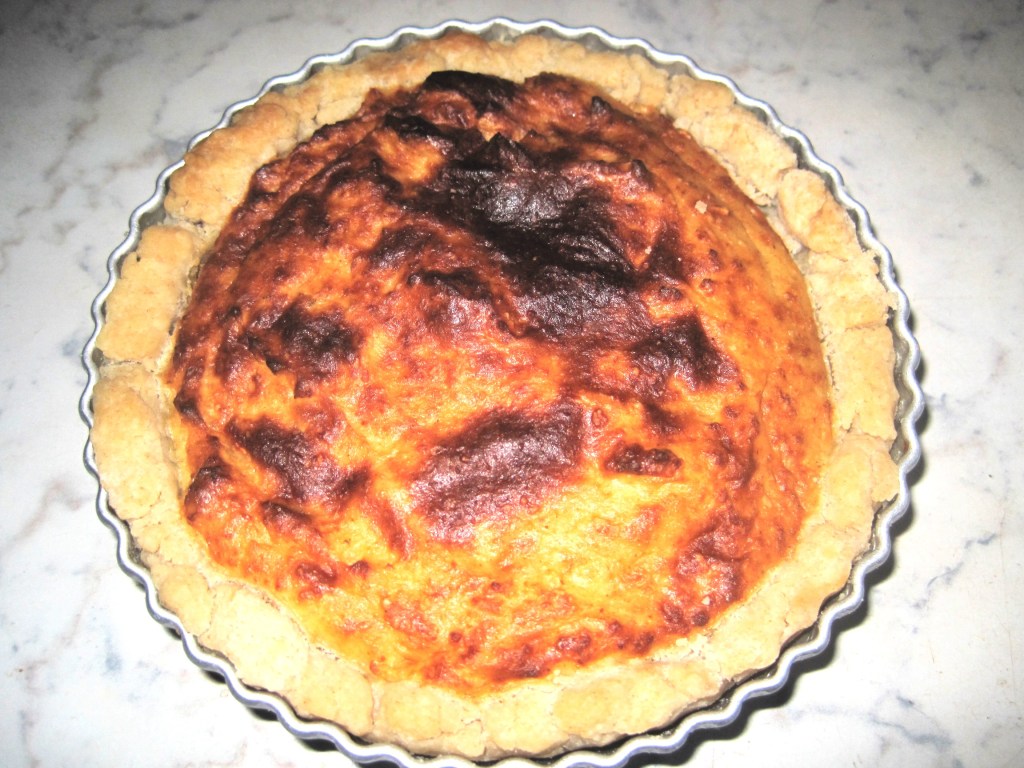
Food is always on my mind and I’m keen to keep experimenting with my airfryer. My recipe for a delicious parsnip flan is included in my Earthy Homemaker’s Cookbook but was intended to be baked in a conventional oven. I wanted to try it in the airfryer but as mine is so small I wasn’t confident. Well, nothing ventured, nothing gained!
I reduced the amounts of ingredients and used a little flan tin which luckily just fitted into the airfryer basket. I realised it would be difficult to lift out the hot tin after baking so I put a folded sheet of aluminium foil underneath with flaps to hold onto. That worked well. I baked the flan at 167C for about 23 minutes. It was a great success although the pastry was a bit pale.
In my original recipe I used creme fraiche. I hadn’t any handy so I used a spoonful of oat cream. A dash of milk would probably have done as well. It was so tasty and the filling set perfectly.
If you have a big airfryer which would take a normal sized flan tin, you could follow my recipe and cook it for about 25 to 30 minutes instead of the 40 minutes in the conventional oven.
Here are my original ingredients.
Creamy Parsnip Flan.
Pastry for a flan dish approximately 8 inches/22.5 cm in diameter.
Approx. 500g Parsnips
80g Cashews
1 small Onion
1 Vegetable Stock Cube (I use Kallo)
1 large Egg
half to a whole small red Chilli or Chilli Powder
Salt and Pepper
2 heaped tablespoons Creme Fraiche

Line the flan tin with pastry.
Wash, peel and slice parsnips. Cook in a little water for about 10 minutes.
Drain and cool the parsnips and put into a food processor. Add nuts, egg, crumbled stock cube, sliced onion, creme fraiche, chopped chilli or chilli powder, (quantity according to how hot you want it), and salt and pepper. Combine well on high speed.
Fill the pastry case.
Preheat the airfryer to about 167C on Bake setting.
Add the flan when airfryer is ready and bake for about 25 minutes.
Very satisfying and goes well with a good home-made chutney. A lovely Autumn meal.
Seasonal changes always make me reflect. Often I’m inspired to write a poem. Here’s one about October which I composed a couple of years ago.
October Days

Sunny spells and sudden rain.
Rustling leaves and drooping flowers.
That time of year is here again
With daylight's fleeting hours.

Spider webs are glistening wet.
The moss is emerald green.
Sombre clouds, a constant threat
And whipping winds are keen.

Then the sun bursts through again,
Golden light upon the wall,
Glowing on the windowpane
Where the raindrops fall.

Scents of earth fill the air.
Damp morning mists arise.
Trees are almost bare
As the restless wind sighs.

Darker days lie just ahead
And though Winter may be cruel
We need not fear or dread
As we plan for Spring's renewal.
Bye for now. I hope you enjoy the changing season. With you again soon.




















































































 Living a contented creative life.